








India has 24.69 crore students studying in 14.71 lakh schools. But only 64.7% of these schools have working computers, and only 63.5% have internet access. Rural schools have 29% fewer connections than schools in cities, meaning many children miss out on learning tech skills.
Only 12% of Indians over 15 years old know basic computer skills like sending emails with attachments, and just 1.4% can write simple computer programs. To fix this, some of the best schools in Gurgaon need to do more than just teach typing. They should create real "tech-savvy" programs that teach coding, digital creativity, and online safety starting from a young age.
Also Read: Rising Strong: Building Resilience in the Classroom and Beyond
Why Tech Skills Matter for Indian Kids?
Tech savvy kids solve problems better. They break big tasks into small steps, like fixing a buggy robot arm. Coding builds this logic, helping students think clearly in math and science too.
Such tech-related programs boost creativity. Students design games through Scratch programming language or apps in Python, turning ideas into working projects. They also learn teamwork by coding together, sharing fixes in group challenges. Future jobs need these skills as India wants leaders in AI and tech, but low computer literacy holds kids back. Early training gives them an edge in high-demand fields.
What Makes a Good Tech Program in Schools?
A strong technology program is not just about having expensive laptops in every room. It is about how students use them.
From Watching to Making
Most kids today watch videos or play games. A good school program changes this. It teaches students to make their own games, edit their own videos, or build websites. When students change from users to makers, they feel more confident. They stop wondering, "How does this magic box work?" and start saying, "I can control this machine."
Coding Is a New Language
Learning computer languages like Python or Scratch is as important as learning English or Hindi. Coding is the language of the future. It helps students understand logic and patterns. Good school programs start coding simply. Second graders might use blocks to move a character on the screen. By seventh grade, they might type real code to study data or build a calculator.
Being Safe and Responsible Online
Being good with technology also means staying safe. Schools must teach "Digital Citizenship" because there is more cyberbullying and scams today. Students learn how to protect passwords, be kind online, and spot fake news. A student who can code but does not stay safe online is like a driver who knows how to speed but does not know how to use brakes.
Ending Rote Learning
For many years, Indian schools made students memorize facts. Technology helps students escape this. In the tech lab, there is no one right answer to memorise. When students write code that does not work, they fix it and try again. This is called debugging, and it teaches them to keep trying. It helps students see that failing is just a step toward success. This change in thinking is the most important part of tech education.
Also Read: From Skills to Success: Role of Value Added Programs
Successful Government and School Programs to Develop Tech Skills in Students
Since 2021, the government in Goa has trained 450 schools in robotics and AI through the CARES scheme. Students there build projects that encourage thinking like people in the 21st century.
In 2024, Haryana set up STEM labs in 50 schools for students from grades 6 to 12. These kids use tablets and WiFi to learn block-coding and to experiment, which makes learning fun and helps reduce dropouts.
Madhya Pradesh's CM Rise Schools installed robotics labs in 52 schools. More than 250 teachers took part in a five-day training, and now students work on real projects, like creating AI robots. In Rajasthan, pilot projects such as CRY’s solar labs helped increase the number of girls enrolling in school by 15%.
Odisha trained 1,000 teachers to run Code Clubs that reach 32,000 children. These clubs hold weekly Scratch coding classes, and the number of groups has quickly grown to 950.
Steps to Start Tech Programs in Your School
- Start by choosing easy tools. Use free Scratch programming language for grades 3 to 8, where kids drag and drop code to make games. You only need a web browser; fancy computers are not necessary.
- Organize a weekly club that meets for one hour after school. Begin with 20 kids and give them projects like coding a dancing cat to help them learn quickly. Train two teachers using online videos.
- Get robotics kits costing less than Rs 5,000 for each group and let different classes share them. Work with local NGOs to get free tablets, just like Haryana did.
- Test the kids before and after the program and try to have 80% of them understand the basics in six months. Share pictures of their projects to attract more students and funding.
- Arrange bus trips for kids from villages to visit labs in the city. Hold girls-only sessions to reduce the 13% difference in device use among young people.
A Model for Success: The Bit-Byte Club at AMPS

Many best CBSE schools in Gurgaon schools find it hard to put these ideas into practice, but the American Montessori Public School (AMPS) in Gurgaon shows how to do it well. They created the Bit-Byte Club, a special place where young students learn to become digital experts.
The Bit-Byte Club is more than just a regular computer class. The school calls it an "exciting innovation platform." Instead of just listening to lectures, students go on a learning journey. The club helps students become tech fans of the future by letting them use real digital tools.
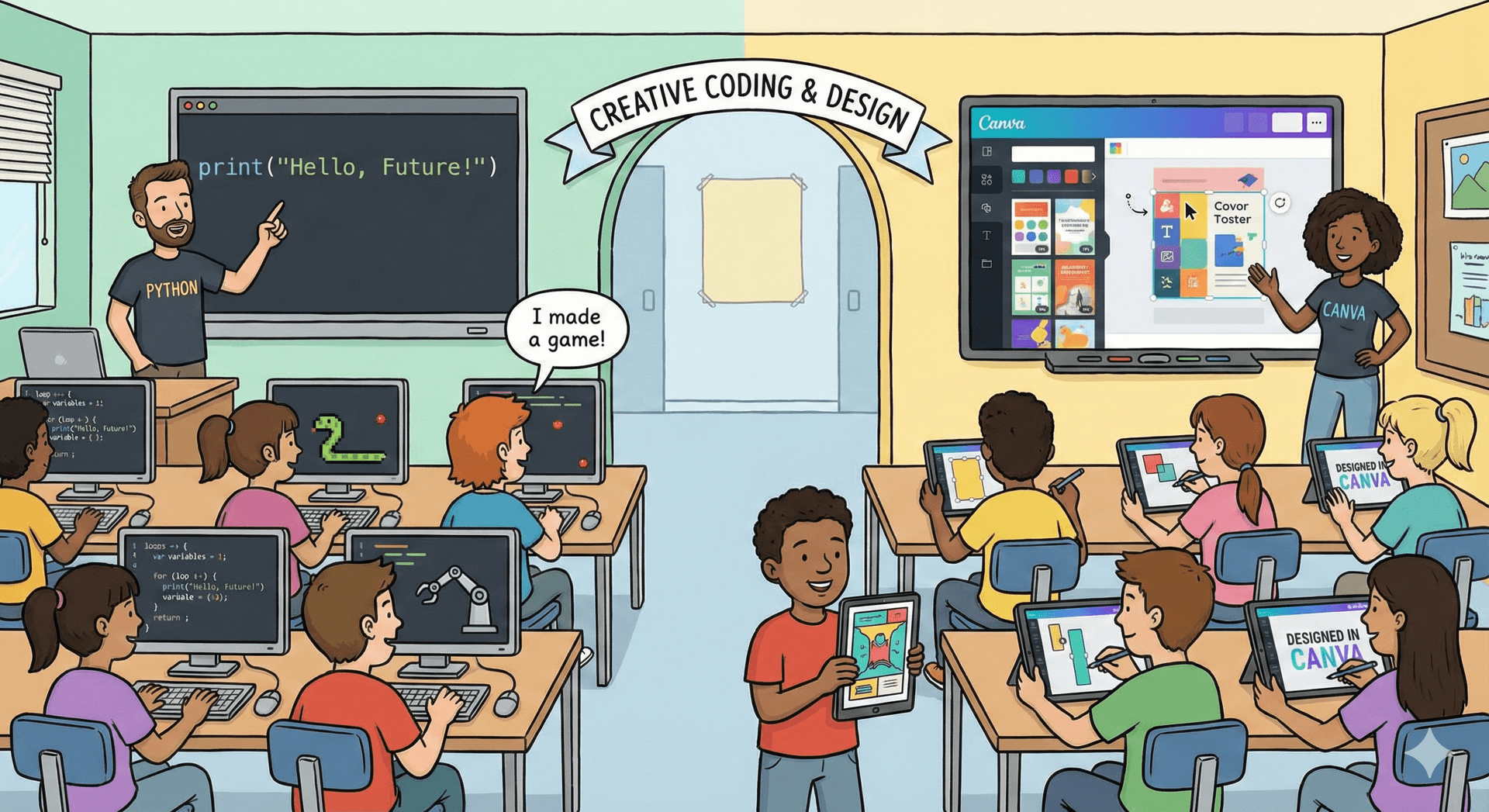
The club teaches important tools like Python, Scratch, and Canva.
Coding: Older students learn Python, a popular programming language used by companies like Google and Netflix. Younger students start with Scratch, a fun and easy visual coding language that feels like playing with Lego blocks.
Creativity: Tech is not only about numbers; it’s also about design. The club teaches Canva, a tool for making posters, presentations, and digital art, mixing technology with creativity.
Collaboration Over Competition
The club also focuses on teamwork, not competition. Just like real software engineers work in teams, club members work together on fun projects. They might build games or design digital campaigns. This teamwork helps students share their tech ideas with others, a skill that is very important.
By grade 7, members of the Bit-Byte Club are not just students. They become junior developers and digital artists. They build their own project portfolios, giving them a big advantage before high school.
Conclusion
There is a big gap between the tech skills people need and what schools in India teach. Only 38% of Indian homes know about digital technology, and less than 15% of schools teach more than just basic typing. This needs to change fast. Schools should not wait for new rules, they must start acting now.
The Bit-Byte Club at AMPS shows that when schools give students the right tools, like Python and Canva, and let them work together on projects, students do really well. They stop just watching screens and start making things on their own.
Parents and teachers should encourage making things instead of just using things. If you are a student, don’t just play a game today. Try to learn how to make one by watching a simple guide. If you are a parent, ask your school if they have a club like Bit-Byte that teaches how to think and design, not only how to type. The future belongs to those who can create it, one line of code at a time.
To learn more about this and other schools nearby, see this list of the top schools in Gurgaon.







 as a preferred source on