








In the blink of an eye, it has transformed from a mere accessory to the architect of our future. As industries become more tech-driven, having a strong foundation in coding is no longer an added advantage but a necessity. StayQrious Neoschool recognizes that coding is often misunderstood as a skill solely for programmers and engineers, but in reality, it is a fundamental literacy skill that can benefit every child.
One school that understands this changing landscape is StayQrious Neoschool, one of the best online schools in India, which integrates future-focused subjects like coding into its curriculum. The school ensures that they are equipped with the skills necessary to thrive in the digital age by introducing students to computer programming, logical thinking, and problem-solving.
In this article, we explore why coding is an essential subject for young learners, its benefits, and how institutions like StayQrious Neoschool are revolutionizing education by making coding an integral part of the learning process.
Know More | Supporting Social Health in Children: StayQrious Neoschool’s Approach
Why Coding is the Language of the Future
In a world where technology influences every aspect of life, coding is often referred to as "the new literacy." Just as reading and writing were essential skills in the past, coding is now considered a fundamental skill that prepares students for the future. Here’s why coding is an essential skill:
- Enhances Problem-Solving Abilities: Coding requires logical thinking and teaches students how to break down complex problems into smaller, more manageable parts. It develops a structured approach to problem-solving, which can be applied to real-life situations beyond computers.
- Encourages Creativity and Innovation: Writing code is similar to creating a digital masterpiece—it allows children to build games, animations, and apps from scratch. It fosters out-of-the-box thinking, enabling students to develop creative solutions to real-world problems.
- Improves Mathematical and Logical Thinking: Coding strengthens a child’s understanding of math concepts as it involves working with algorithms, patterns, and sequences. It enhances logical reasoning skills, making subjects like mathematics easier to grasp.
- Boosts Confidence and Resilience: Learning to code teaches students how to handle failure and persist until they find a solution. It instills a growth mindset, where children learn that mistakes are part of the learning process.
- Prepares for Future Careers: Many of the high-paying and in-demand jobs today require coding skills. Introducing coding at a young age gives students a head start in tech-driven fields like AI, cybersecurity, and software development.
- Encourages Collaboration and Teamwork: Coding is not just about individual skills—it also involves working on projects with peers, debugging together, and sharing ideas. It teaches students the importance of teamwork and effective communication, skills that are essential in any profession.
How Schools Are Integrating Coding into Learning
Many forward-thinking schools have recognized the importance of coding education and are making it a core part of their curriculum. Here are some effective ways schools are incorporating coding into learning:
- Game-Based Learning Platforms: Schools use platforms like Scratch, Tynker, and Code.org to make coding fun and engaging for children. These platforms help students create interactive stories, animations, and mini-games, making learning enjoyable.
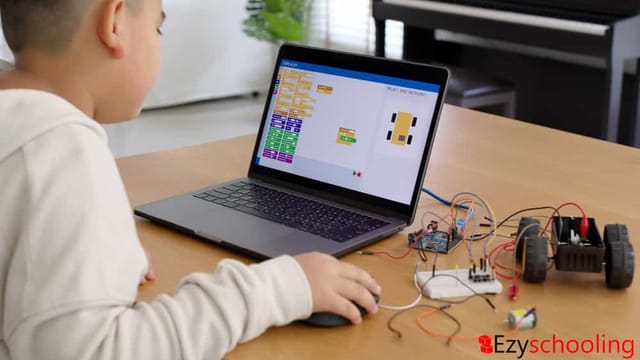
- Robotics and AI-Based Learning: Robotics classes introduce students to the world of artificial intelligence, automation, and engineering. Hands-on projects help students understand how coding can be applied in real-world scenarios.
- Coding Bootcamps and Hackathons: Schools host coding events, hackathons, and competitions to encourage students to test their skills and develop innovative solutions. These activities provide exposure to real-world coding challenges and build problem-solving abilities.
- Integrating Coding with Other Subjects: Coding is now being linked with mathematics, science, and even art, helping students see its real-world applications. For example, students can use coding to create animated stories for language learning or simulate scientific experiments.
- Project-Based Learning and App Development: Many schools encourage students to build their own mini apps, websites, and digital tools, helping them apply what they learn in a practical way. This hands-on approach fosters entrepreneurial thinking and digital literacy.
The Benefits of Early Coding Education
When children start coding at an early age, they develop valuable skills that go beyond just writing code.
- Encourages Logical Thinking: Coding helps children analyze problems step-by-step, enhancing their ability to think logically and strategically.
- Develops Digital Literacy: In a world dominated by technology, coding equips children with the knowledge to navigate the digital space responsibly.
- Enhances Focus and Patience: Debugging code requires attention to detail, patience, and persistence, skills that benefit students in all areas of life.
- Teaches Algorithmic Thinking: Understanding algorithms helps students apply structured thinking in real-life problem-solving.
- Bridges the Digital Divide: Students who learn coding gain a competitive edge, ensuring they are not left behind in a rapidly evolving tech landscape.
StayQrious Neoschool: Leading the Way in Coding Education
Established in 2022, StayQrious Neoschool offers a comprehensive virtual learning experience designed to complement and enhance conventional education. The Neoschool operates on principles derived from learning science and behavioral economics, ensuring that students not only grasp academic concepts but also develop critical thinking and problem-solving abilities.

One of the standout features of StayQrious Neoschool is its favorable student-teacher ratio of 8:1, which allows for personalized attention and tailored instruction. Students engage remotely with their peers and coaches for approximately three hours daily, fostering collaboration and community.
StayQrious Neoschool's curriculum is aligned with the Cambridge IGCSE standards, catering to students from classes 4 to 6. The school emphasizes the development of skills often overlooked in traditional settings, such as design thinking, collaborative problem-solving, and scientific inquiry. By integrating these competencies into its programs, StayQrious aims to equip students with the tools necessary for success in an ever-evolving global landscape.
StayQrious Neoschool is committed to introducing its students to the vast and exciting career opportunities available to coders, from creating immersive gaming experiences to designing intuitive user interfaces and developing intelligent machines. Through its computational thinking projects, such as the 'Quiz Master Prodigy app,' students learn to apply programming concepts like event-based programming, nested loops, and debugging to real-world problems. This hands-on approach not only makes learning more engaging, but also builds aspiration and motivation in students to pursue these careers. Plus, by incorporating math concepts like geometry and algebra, StayQrious Neoschool shows students how coding intersects with other subjects to solve real-world challenges.
For more information on this and other similar schools, check out this list of the best online schools in India.














 as a preferred source on