




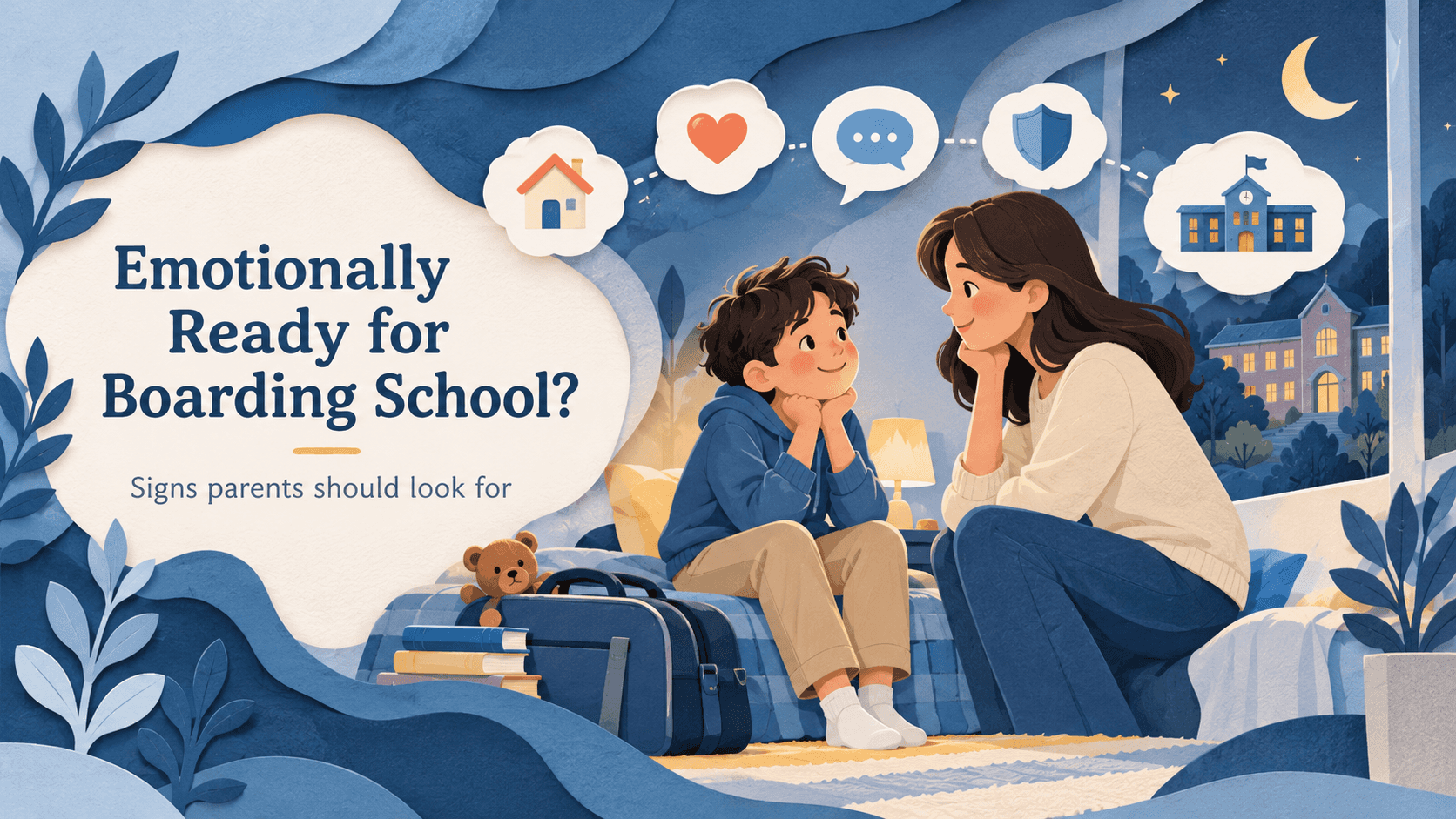

Your child is excited about joining a boarding school, but one question keeps coming up: "What if I miss you at night?" As a parent, you may wonder whether your child is truly prepared to live away from home.
Choosing residential education involves more than comparing academics and facilities. Parents exploring Redbridge International Academy(Redbridge), Bangalore, or other boarding schools should also consider their child's emotional needs.
Emotional readiness does not mean children never feel nervous. It means they are gradually learning to manage unfamiliar situations, communicate their feelings, and seek support when needed.
What Does Emotional Readiness for Boarding School Mean?
Every child responds differently to change. Some enjoy new surroundings immediately, while others need more time to feel comfortable.
Emotional readiness involves several developing abilities:
- Expressing feelings: Talking about fears, excitement, or discomfort.
- Seeking support: Approaching a trusted adult when something feels wrong.
- Managing responsibilities: Handling simple daily tasks with age-appropriate guidance.
- Adjusting to change: Becoming familiar with new people, routines, and surroundings.
According to the American Academy of Pediatrics, homesickness can occur even among children who have previously spent time away from home.
Therefore, occasional worries should not automatically be treated as signs that a child cannot manage boarding life.
There is also no universal age at which every child becomes emotionally ready for residential schooling.
Five Signs Your Child May Be Ready for Boarding Life
Rather than treating readiness as a test, parents can observe how children handle everyday situations.
1. They Can Talk About Their Feelings
A child who says, "I am worried about making friends," is already communicating an important emotional need.
Encourage these conversations without immediately dismissing their worries.
2. They Know When to Ask for Help
Children do not need to solve every problem independently.
What matters is recognising when they need assistance, whether they are feeling unwell, confused about homework, or uncomfortable with another child's behaviour.
3. They Can Manage Simple Responsibilities
Packing a school bag, organising belongings and following basic hygiene routines can help children become familiar with everyday responsibilities.
Forgetting something occasionally is normal. Independence develops through practice.
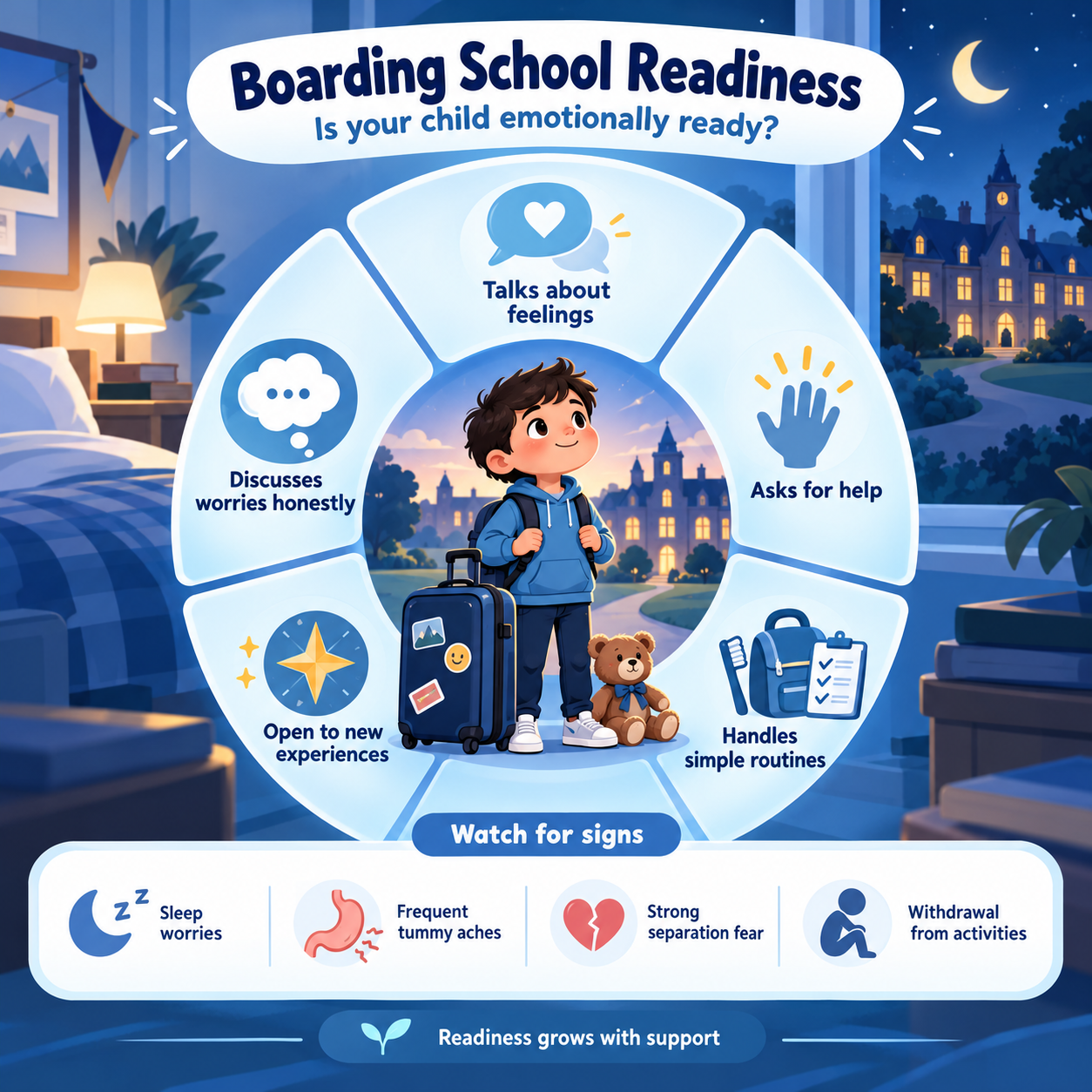
4. They Show Interest in New Experiences
A willingness to participate in school trips, meet new classmates, or explore unfamiliar activities may indicate growing confidence.
However, naturally cautious children can also adjust well when given appropriate support.
5. They Can Discuss the Boarding Decision
Ask your child what excites them and what concerns them about residential life.
Their willingness to discuss both matters more than whether they appear completely enthusiastic.
These indicators are conversation starters, not guarantees of successful adjustment.
When Should Parents Offer Additional Emotional Support?
Feeling homesick during the first few days away from family can be understandable. However, persistent distress deserves attention.
The UK's National Health Service advises parents to seek support when childhood anxiety becomes severe, worsens, or interferes with everyday activities.
Watch for patterns such as:
- Repeated sleep difficulties or frequent nightmares.
- Ongoing stomach aches or other physical complaints associated with worry.
- Strong fears about separation that do not improve with reassurance.
- Withdrawal from activities the child previously enjoyed.
- Difficulty eating, concentrating or managing ordinary routines.
These signs do not necessarily mean boarding school is unsuitable. They suggest that the child's needs should be understood before making a major transition.
Speak with your child, involve relevant school staff, and consider consulting a paediatrician or qualified mental health professional when concerns persist.
Avoid forcing a child into residential schooling simply to make them more independent.
How Can Parents Prepare Children for Boarding School?
Emotional preparation is most helpful when it begins before the first day of boarding.
Start With Honest Conversations
Instead of repeatedly saying, "You will be fine," ask specific questions.
"What part of boarding school sounds exciting?"
"What would you do if you felt lonely after dinner?"
Listen carefully and discuss possible solutions together.
Practise Independence Gradually
Encourage children to organise their belongings, follow a bedtime routine and complete manageable household responsibilities.
Where appropriate, supervised school trips or short stays with trusted relatives may provide opportunities to practise spending time away from home.
Do not use separation as a test that children must pass.
Create a Support Plan
Discuss whom your child can approach if they feel upset, unwell or unsafe.
Before admission, ask the boarding school:
- Who supports children experiencing homesickness?
- How can students contact their families?
- When are parents informed about serious emotional concerns?
Clear answers can help families understand the support available.
Make Room for Familiar Comforts
Depending on school rules, a familiar photograph, favourite book or small personal item may help children feel connected to home.
Discuss communication schedules honestly rather than promising unrestricted calls or visits.
Most importantly, remind your child that asking for help is a strength, not a failure.
Boarding Life at Redbridge International Academy, Bangalore
Parents searching for a Top Boarding School in India or comparing options for the Best Boarding School in India should examine residential care alongside academics. Redbridge International Academy(Redbridge), Bangalore, located near Electronic City, describes a structured boarding routine that includes study, sports, recreation, and rest.

Its official website also mentions house parents, counsellors, trained wardens, and medical support. These published arrangements give families useful starting points for questions about emotional adjustment. Parents should ask how individual students are supported during homesickness and how concerns are communicated to families.
Conclusion: Readiness Develops With Support
Boarding school readiness is not about being fearless or completely independent. Children need patience, reassurance, and trusted adults while adjusting to unfamiliar surroundings.
Begin with one honest conversation about your child's expectations and concerns. Together, identify what might help them feel secure.
Whether boarding begins now or later, the goal is to make a decision that respects your child's well-being, needs, and growing independence.
For more information on this and similar schools, check out this list of the best boarding schools in India.

 as a preferred source on