







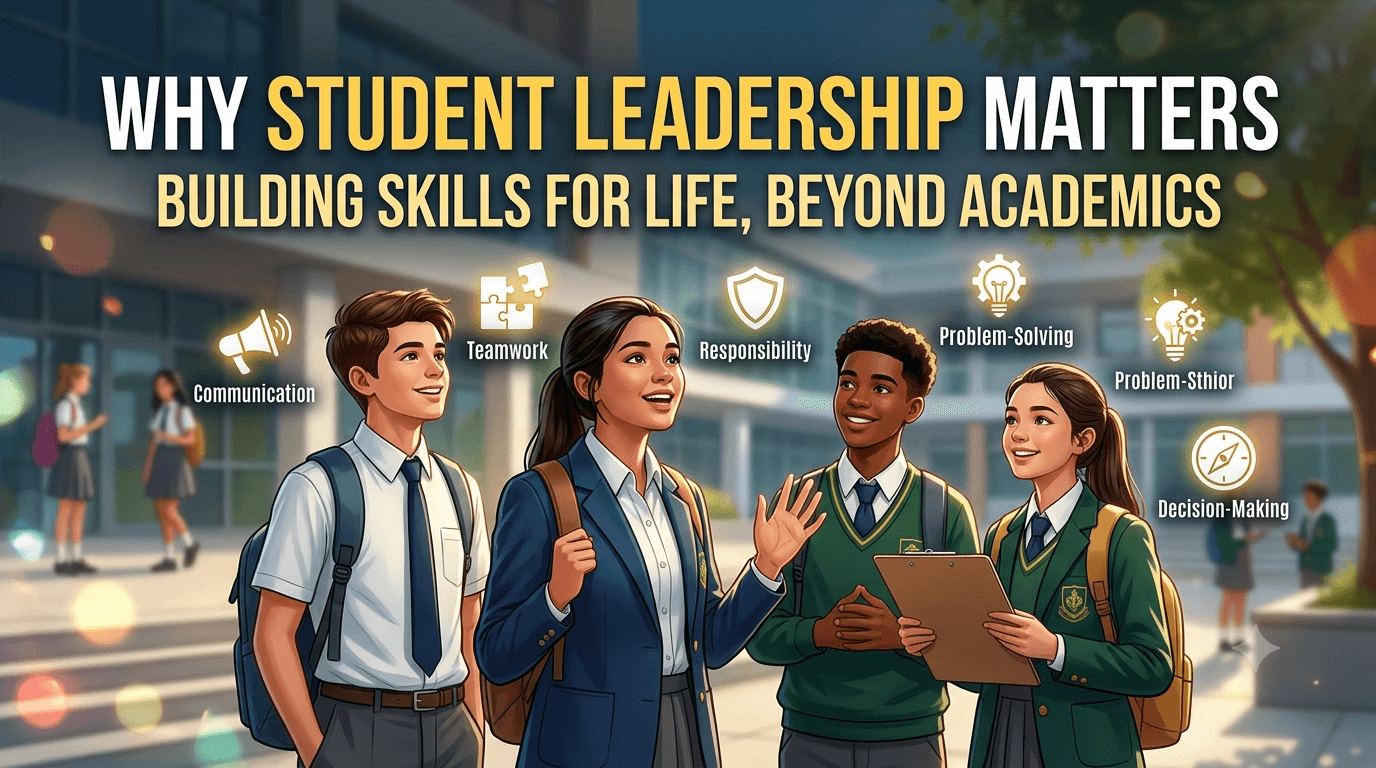

School is not only about learning lessons, completing assignments, and preparing for exams. It is also where children gradually learn how to communicate, cooperate, make decisions, and take responsibility. For parents considering schools such as Aadya Academy - The Residential School, Bangalore, these opportunities can be an important part of understanding how a child's development extends beyond academics.
One such opportunity is student leadership. While the term may bring to mind a school captain or class monitor, leadership at school can mean much more. When children are trusted with responsibilities and given opportunities to contribute, they begin to understand how their choices affect others. These experiences can help them develop skills that remain useful long after their school years.
Also Read| Why Residential Education Matters
What Does Student Leadership Really Mean?
Student leadership is not simply about giving a child a title or putting a badge on their uniform. It is about giving students meaningful opportunities to participate, contribute, and take responsibility.
A student may lead a group project, help organise an event, represent classmates, coordinate a club activity, or support younger students. Even small responsibilities can teach children how to listen to others, share ideas, and complete a task responsibly.
This is important because leadership is not one fixed personality trait. Children can gradually develop leadership-related skills through practice, guidance, and real experiences.
5 Important Skills Children Can Develop Through Leadership
1. Communication Skills
Good leaders need to communicate clearly, but communication is not only about speaking confidently.
Children in leadership roles may have to explain an idea, listen to different opinions, speak during a meeting, or communicate instructions to their peers. These situations encourage them to think about what they want to say and how they should say it.
Over time, such experiences can make children more comfortable expressing their thoughts while also teaching them the importance of listening.
2. Responsibility and Accountability
Being given responsibility also means learning that someone has to follow through.
If a child is responsible for organising part of an event or coordinating a group activity, they have to remember deadlines, communicate with others, and deal with unexpected problems.
Sometimes things will not go according to plan. That is part of the learning process. Instead of expecting children to get everything right immediately, schools can use these experiences to help them understand how to take ownership of both successes and mistakes.
3. Teamwork and Empathy
Leadership does not mean telling everyone else what to do.
A child who leads effectively needs to understand that different people may have different opinions, abilities,s and concerns. Working with classmates can therefore teach children to listen, compromise, and find solutions that work for the group.
Leadership experiences can also help children understand how their actions affect others. This can encourage empathy and make them more thoughtful when working as part of a team.
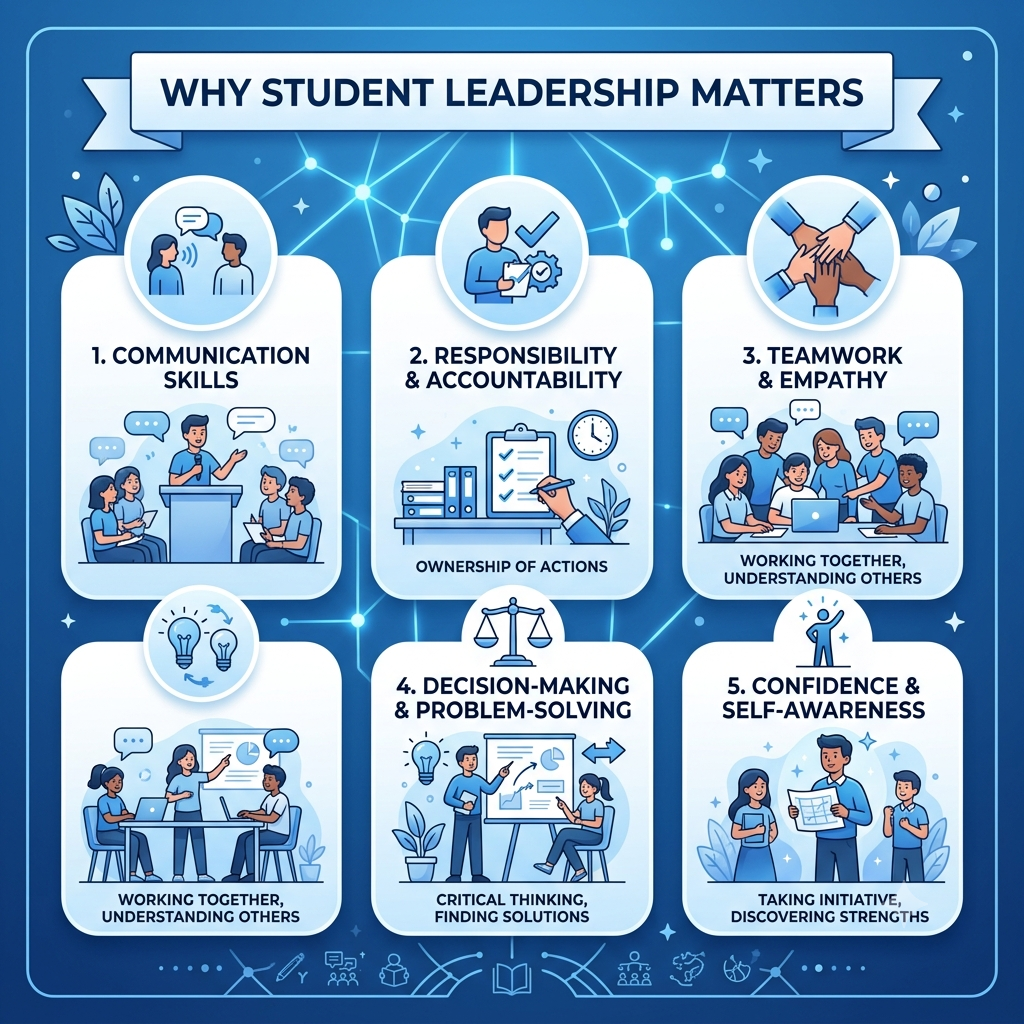
4. Decision-Making and Problem-Solving
Children make simple decisions every day, but leadership responsibilities can expose them to more complex situations.
For example, a group may disagree about how to organise an activity. An event may need to be changed at the last minute. A student may have to decide how to divide responsibilities among team members.
These experiences encourage children to think through different options instead of immediately waiting for an adult to solve the problem.
5. Confidence and Self-Awareness
Leadership opportunities can help children become more comfortable taking initiative.
Importantly, confidence does not have to mean being the loudest person in the room. A quiet child can also be a thoughtful leader who listens carefully, understands others, and contributes useful ideas.
This is why schools should create different kinds of leadership opportunities rather than assuming that only naturally outspoken children can lead.
What Do Meaningful Leadership Opportunities Look Like?
Schools can provide leadership experiences in many forms. These may include:
- Student councils
- House responsibilities
- Club leadership
- Class representatives
- Sports teams
- Event organisation
- Peer mentoring
- Group projects
- Community initiatives
- School campaigns
The important thing is not the title attached to the position. It is the actual responsibility given to the student.
A leadership role becomes more meaningful when children are allowed to contribute ideas, make appropriate decisions, work with others, and reflect on what they have learned.
Schools can also make these opportunities more valuable by providing guidance. Children should have enough independence to make decisions, but they should also know that teachers are available when they need support.
Should Every Child Get a Chance to Lead?
Leadership does not need to look the same for every child.
One student may enjoy speaking in front of a group, while another may be better at planning, organising or helping others. A third child may become more confident only after receiving smaller responsibilities.
Parents should therefore look for schools where leadership is not treated as an exclusive opportunity for a handful of high-achieving students.
The goal should be to give children age-appropriate chances to practise responsibility and discover their own strengths. Even a small role can become a useful learning experience when children are trusted to contribute.
What Should Parents Look for in a School?
When comparing schools, parents can ask a few simple questions:
- Do students receive responsibilities beyond academics?
- Are there opportunities for different types of learners to participate?
- Are children encouraged to share their ideas?
- Do teachers guide students when they face challenges?
- Are children allowed to learn from mistakes?
- Does the school value teamwork and empathy alongside achievement?
- Are leadership roles connected to real responsibilities?
These questions can reveal more about a school's approach to student development than simply looking at how many leadership titles it offers.
Also Read| Voices That Matter: How ‘The Talk Show’ Inspires Expression
How Aadya Academy Supports Student Leadership
At Aadya Academy - The Residential School, Bangalore, students get opportunities to take part in structured leadership activities through the school's Student Council. Students can contest and vote in council elections, present their ideas through manifestos, and take on responsibilities such as representing classmates, planning events, identifying problems and suggesting solutions.

With roles including prefects, house captains, class representatives and club representatives, the school provides students with different ways to practise communication, teamwork and responsibility. For parents exploring a Top boarding school in India, these opportunities can be worth considering, as they give children practical experiences beyond the classroom. This approach also connects with what parents may look for when considering a Best boarding school in India—not simply academic learning, but opportunities for children to gradually develop responsibility and leadership skills.
Conclusion
Student leadership is not about preparing every child to become a leader in the traditional sense. It is about helping children become more responsible, thoughtful, and capable of working with others.
When schools provide meaningful opportunities to participate and take responsibility, children can learn through real situations rather than only through textbooks. They may make mistakes, rethink decisions, solve problems, and discover strengths they did not know they had.
For parents, the key is to look beyond the title of a leadership position. What matters is whether the child is genuinely given opportunities to participate, contribute, communicate, and take responsibility.
These small experiences during school years can become valuable building blocks for how children approach challenges, relationships, and responsibilities in the future.
For more information on this and similar schools, check out this list of the best boarding schools in India.




 as a preferred source on