







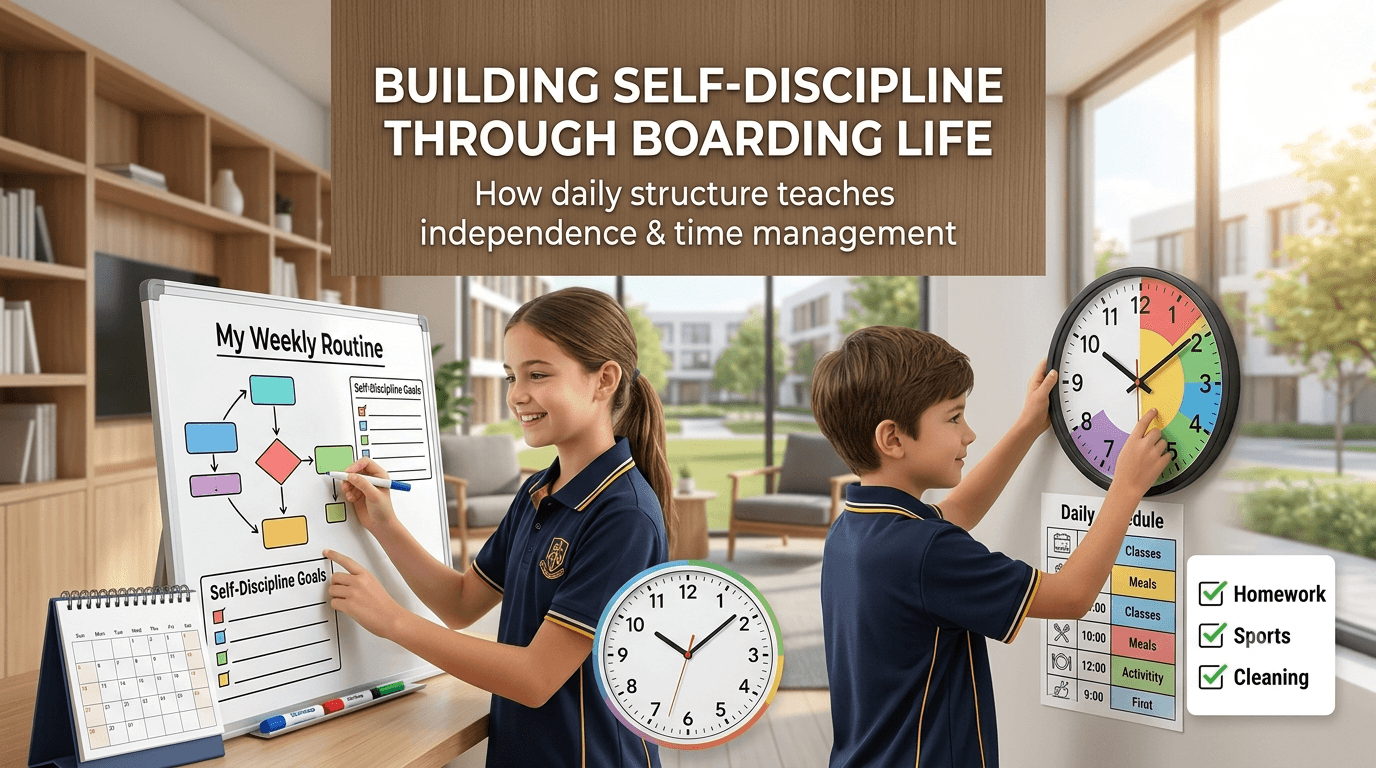

A child does not become organised simply because someone tells them to be. Learning to manage time, complete responsibilities, and make sensible choices takes regular practice. This is one reason many parents exploring a Top boarding school in India look beyond academics and consider what everyday school life can teach their child.
In a boarding environment, students spend much of their day following routines, balancing studies with activities, and taking care of personal responsibilities. Over time, these experiences can give children opportunities to become more independent and disciplined.
However, boarding school does not automatically make every child self-disciplined. The real value comes from giving children the right structure while gradually allowing them to take ownership of their choices.
Also Read| What Happens When Parents Stop Being the Family’s Reminder System?
How a Routine Helps Children Understand Time
Young children often experience time through reminders from adults: "Finish your homework," "Get ready," or "Pack your bag." A structured school environment can gradually change this pattern.
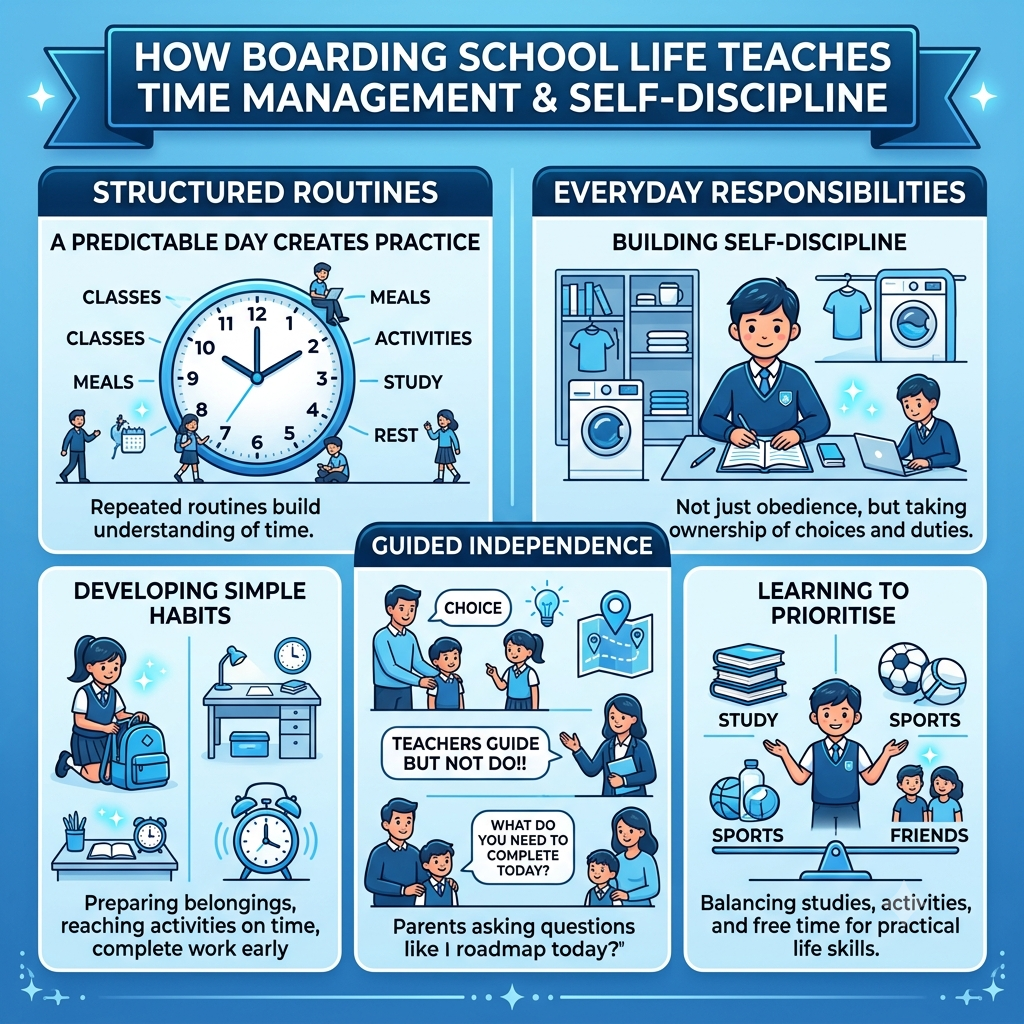
When a child's day has regular periods for classes, meals, activities, study,y and rest, they begin to understand how different responsibilities fit together. Instead of simply being told what to do, they get repeated opportunities to manage what needs to happen next.
For example, a student may have an assignment to complete before attending an evening activity. Over time, the child learns that waiting until the last moment can create unnecessary pressure.
This is an important part of time management: understanding that how you use your time affects what you can do later.
A Predictable Day Creates Practice
A routine also reduces the need to make every decision from scratch. Children know that certain responsibilities have to be completed at certain times.
With regular practice, simple habits can develop:
- Preparing belongings ahead of time
- Reaching activities on time
- Completing schoolwork before deadlines
- Keeping track of personal items
- Leaving enough time for rest and recreation
These may seem like small things, but repeated small responsibilities can become useful habits.
Everyday Responsibilities Can Build Self-Discipline
Self-discipline is not the same as strict obedience. A child who follows instructions only because an adult is watching has not necessarily learned self-discipline.
Self-discipline develops when children begin to understand what needs to be done and take responsibility for doing it.
Boarding life can provide many opportunities for this. Students may have to organise their belongings, maintain their personal space, remember schedules and prepare themselves for different parts of the day.
The important part is that these responsibilities are repeated. A child gets another opportunity to improve tomorrow if something did not go well today.
Parents can also encourage the same approach at home. Instead of completing every task for a child, they can gradually hand over age-appropriate responsibilities and allow the child to experience the results of their choices.
Balancing Studies, Activities and Free Time
Good time management does not mean filling every minute with work.
Children need time for academics, physical activity, hobbies, friendships and relaxation. Learning to balance these different needs can itself become an important life skill.
Imagine a student who has homework, sports practice and some free time in the evening. The goal is not necessarily to eliminate free time. Instead, the child needs to understand what should be completed first and how much time can reasonably be given to each activity.
This teaches prioritisation.
Learning to Make Choices
As children grow older, they will face situations where nobody is standing beside them giving constant instructions. They may need to decide when to study, when to take a break, and when to ask for help.
A residential environment can give them repeated opportunities to practise these decisions within a structured setting.
The balance matters. Too little structure can make routines difficult to manage, while too much control may leave children with fewer opportunities to make decisions themselves.
The goal should be guided independence.
Adults Still Have an Important Role
Self-discipline does not mean children should be left completely on their own.
Teachers, mentors, and boarding staff can provide structure, guidance, and support while allowing students to gradually take more responsibility. When a child struggles with a task, the most useful response may not always be to do it for them. Sometimes, helping them understand how to approach the problem can teach a more lasting lesson.
Parents can follow the same principle.
Instead of asking, "Did you finish everything?" every few minutes, parents might ask:
- What do you need to complete today?
- How are you planning your time?
- What will you do first?
- Is there anything you need help with?
These questions encourage children to think about their own responsibilities rather than simply waiting for instructions.
What Should Parents Look for in a Boarding School?
Parents considering residential education can look beyond classrooms and facilities. The school's approach to everyday student life matters too.
Some useful questions include:
- Is the daily routine structured and age-appropriate?
- Are students given opportunities to take responsibility?
- Is independent study encouraged?
- Can students seek help when they need it?
- Is there adequate time for sports, hobbies,s and recreation?
- Does the school balance discipline with student independence?
- Are children guided when they make mistakes rather than simply being punished?
The answers can help parents understand whether a boarding environment is designed only around schedules or whether it also gives children opportunities to develop practical life skills.
Also Read| The Role of Structured Boarding Life in Student Development
How BPSK Connects Boarding Life With Independence
Birla Public School Kishangarh(BPSK), Ajmer, is a full-boarding, co-educational CBSE school serving Classes 5–12. Its official and school-profile information describes a focus on holistic development, while its boarding approach provides students with an environment where academic and residential life come together. For parents researching a Top boarding school in India, these elements are relevant because the experience of residential education extends beyond classroom learning.

Families considering the Best boarding school in India can therefore look closely at how a school structures students' daily responsibilities, independence and support, rather than considering academic performance alone.
Helping Children Carry These Habits Beyond School
The real test of time management is not whether a child can follow a timetable while someone else has created it. It is whether the child can eventually use those habits independently.
A student who learns to organise belongings may become better at preparing for college. A child who learns to plan study time may find it easier to manage future deadlines. Someone who learns to balance work with rest may develop a healthier approach to responsibilities.
These skills take time. Children will forget things, underestimate how long tasks take, and occasionally make poor choices. That is part of learning.
Conclusion
Boarding school can provide children with something that is difficult to teach through lectures alone: regular opportunities to practise responsibility.
A structured routine can help children understand time. Everyday responsibilities can encourage self-discipline. Balancing academics, activities and recreation can teach prioritisation. With appropriate guidance, these experiences can gradually help children become more organised and independent.
For parents, the key is to look at boarding education as more than a residential arrangement. The right environment should give children structure and opportunities to take ownership of their growing responsibilities.
For more information on this and similar schools, check out this list of the best boarding schools in India.
 as a preferred source on