







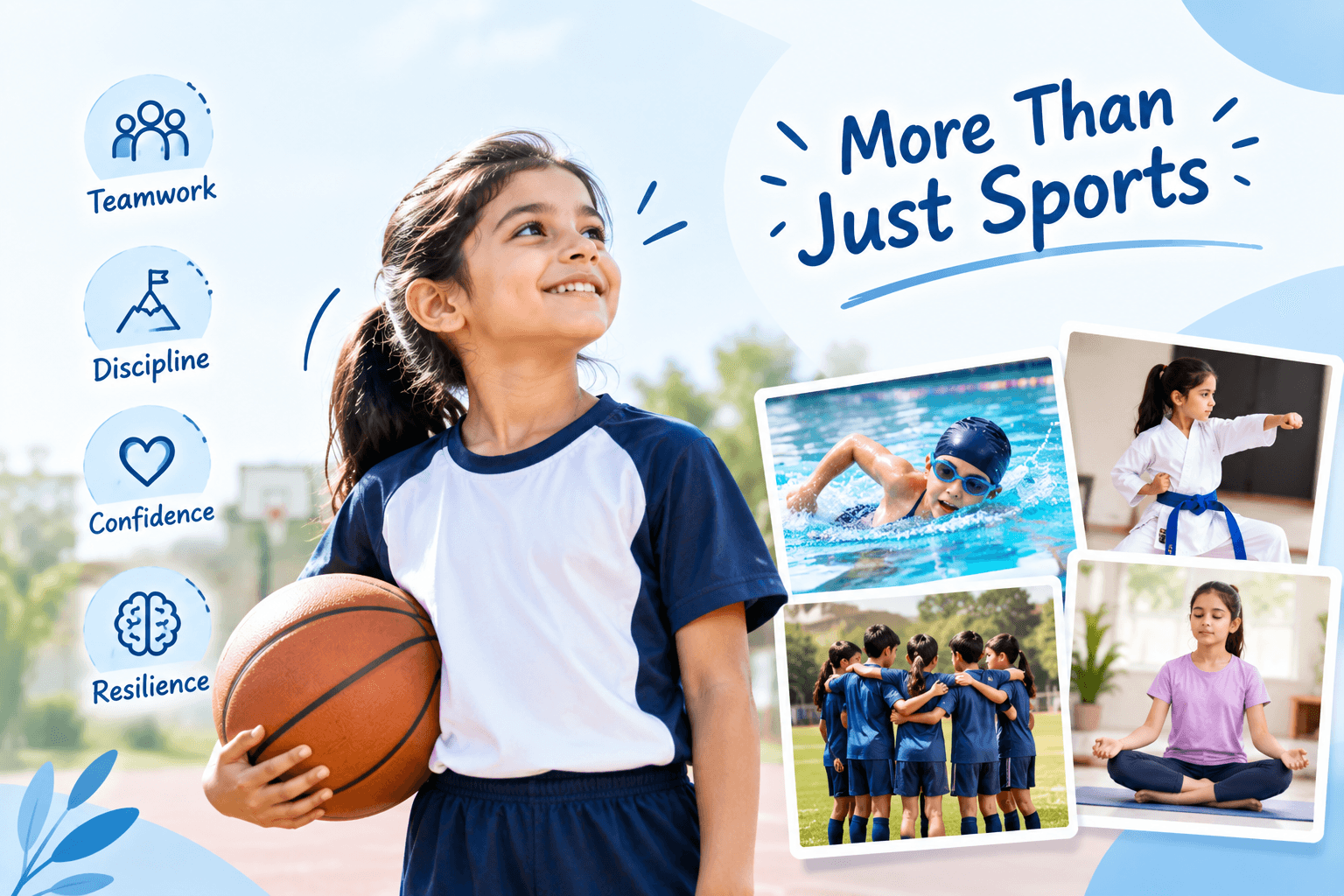

When parents think about school sports, the first thing that often comes to mind is physical fitness. But is that all children gain from running on a field, learning a new sport, or taking part in a team game? Not really. Sports can also teach children how to work with others, handle setbacks, follow routines, and take responsibility.
This is especially important when parents are exploring a Top Boarding school in India, where children spend much of their day learning, living, and participating in activities within the school community. Mussoorie International School (MIS), Mussoorie, provides one example of how sports and regular fitness activities can form part of a child's wider school experience. The larger question for parents is not simply how many sports a school offers, but what children can learn through them.
Also Read| Empowering Girls with Knowledge & Confidence
Sports Teach Lessons That Go Beyond the Playing Field
A sports activity gives children opportunities to practise skills that are useful in everyday life.
Consider a simple football match. Children have to communicate with teammates, understand rules, make quick decisions, and accept that they cannot control every outcome. In an individual sport such as swimming or badminton, they may need to set personal goals and work steadily towards improvement.
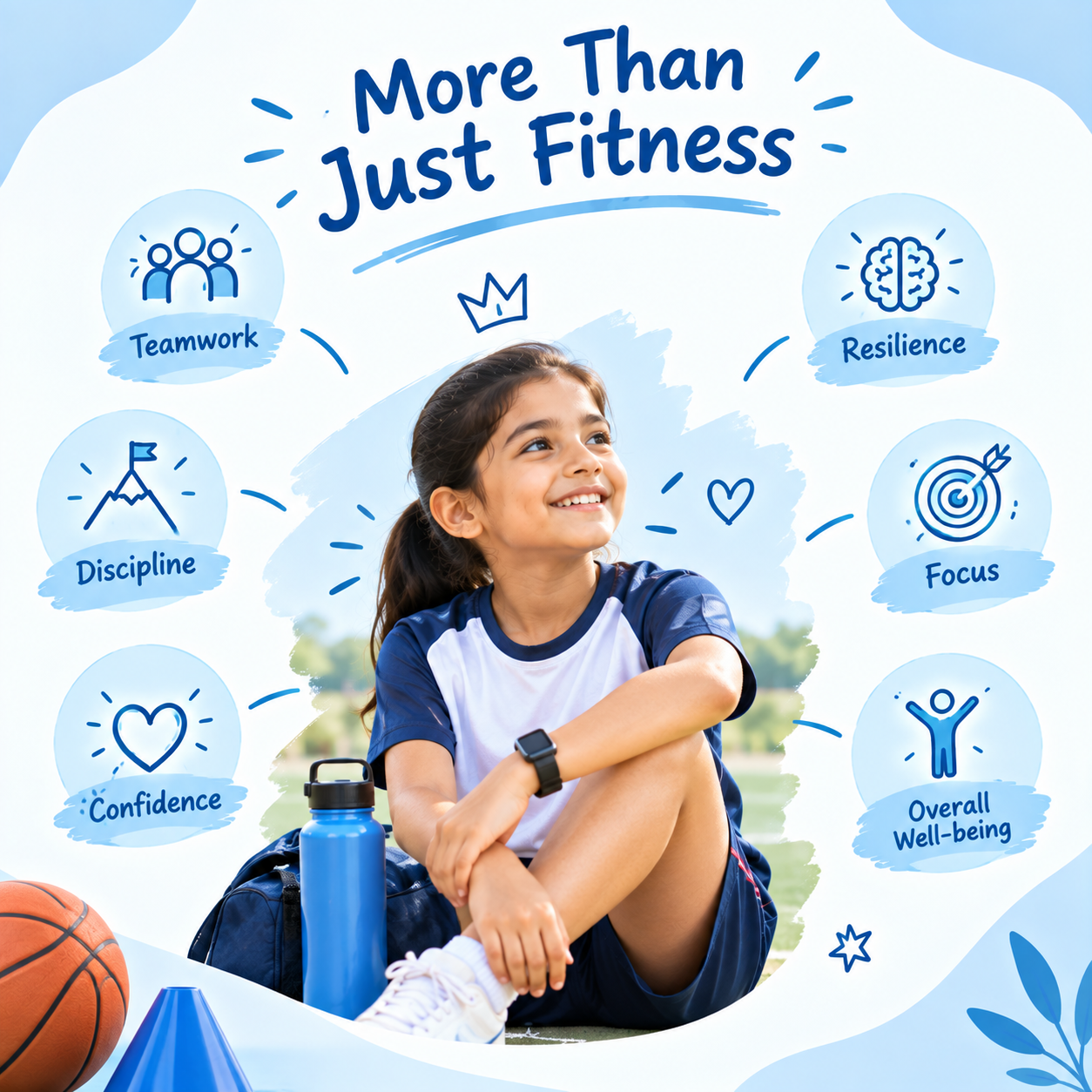
These experiences can help children develop:
- Teamwork: Learning to cooperate with others towards a shared goal.
- Discipline: Following regular practice and training routines.
- Responsibility: Understanding their role within a team or activity.
- Resilience: Learning to continue after a mistake or disappointing result.
- Self-awareness: Recognising personal strengths and areas that need practice.
- Respect: Following rules and appreciating teammates, opponents, and coaches.
The important point is that these lessons do not depend entirely on winning. A child can learn valuable skills even when they do not finish first.
How Sports Can Support Confidence and Emotional Growth
Children face small disappointments throughout their school years. They may lose a match, struggle to learn a particular skill, or feel nervous before participating in an event.
A supportive sports environment gives them a structured way to experience these emotions and learn how to respond.
For example, a child who initially struggles to complete a swimming lap may gradually improve through regular practice. The experience can teach patience and help the child understand that progress does not always happen immediately.
Team sports can provide another kind of learning. Children have to communicate, share responsibility, and sometimes put the team's needs ahead of their own preferences. These experiences can encourage social confidence and help children become more comfortable interacting with others.
However, schools need to maintain a healthy balance. Sports should not become another source of constant comparison. Children should have opportunities to participate according to their interests and abilities, not only compete for medals.
Why Regular Fitness Matters Too
Not every child will want to become a competitive athlete, and that is perfectly fine. A good school fitness programme can make physical activity part of everyday life rather than something reserved for talented players.
Regular movement can include activities such as yoga, aerobics, dance, stretching, running, or general fitness exercises. These activities give children different ways to stay active.
For parents, this distinction is useful. When evaluating a school's sports programme, look beyond competitive teams and ask:
- Is physical activity part of the regular school routine?
- Are there options for children with different interests and abilities?
- Do students participate in both individual and group activities?
- Is fitness treated as a regular habit rather than only an annual event?
- Are children encouraged to enjoy movement rather than focus only on performance?
- A varied programme can make it easier for children to find an activity they genuinely enjoy.
What Should Parents Look for in a School Sports Programme?
The number of courts or fields is useful information, but it should not be the only consideration.
Parents can also look at the quality and variety of participation. A school may offer several sports, but children benefit most when they receive regular opportunities to practise, learn new skills and take part at an appropriate level.
It is also worth asking whether a school offers both team and individual activities. Team sports can develop communication and cooperation, while individual sports can encourage personal goal-setting and self-discipline.
Another useful question is how the school handles competition. Healthy competition can motivate children and teach them how to deal with success and disappointment. But children should also understand that their value is not determined by a scoreboard.
Also Read| The Role of Indian Traditions and Values in Education
How Mussoorie International School Integrates Sports and Fitness
Parents researching a Top Boarding school in India may also consider how a school's sports programme fits into everyday student life. Mussoorie International School (MIS), Mussoorie, states that every student participates in a general fitness programme that includes weekly yoga, aerobics and Zumba. The school also requires each student to choose one team sport and one individual sport.

Its listed options include cricket, throwball, hockey, football and basketball for team activities, alongside badminton, chess, table tennis, lawn tennis, karate, swimming, athletics, golf and skating among individual activities. This combination gives students opportunities to experience both cooperation and individual skill development. The school also provides facilities for activities such as swimming, skating, indoor and outdoor sports, yoga and fitness. Parents comparing options for the Best boarding school in India can therefore look at how consistently a school integrates physical activity with the wider educational experience.
Sports Are Part of a Child's Wider Education
School sports should not be viewed only through the lens of trophies, competitions or athletic ability. Their value can also lie in the everyday habits and experiences children develop while participating.
A child who learns to arrive for practice on time, encourage a teammate, accept feedback or try again after a setback is learning skills that can be useful well beyond school.
For parents, the better question is therefore not simply, “How good is the school's sports programme?” It is also, “What kind of experiences will my child have through it?”
When physical activity is regular, varied and inclusive, sports can become an important part of a child's overall development—helping them grow not only stronger, but also more disciplined, cooperative and prepared to handle challenges.
For more information on this and similar schools, check out this list of the best boarding schools in India.


 as a preferred source on