







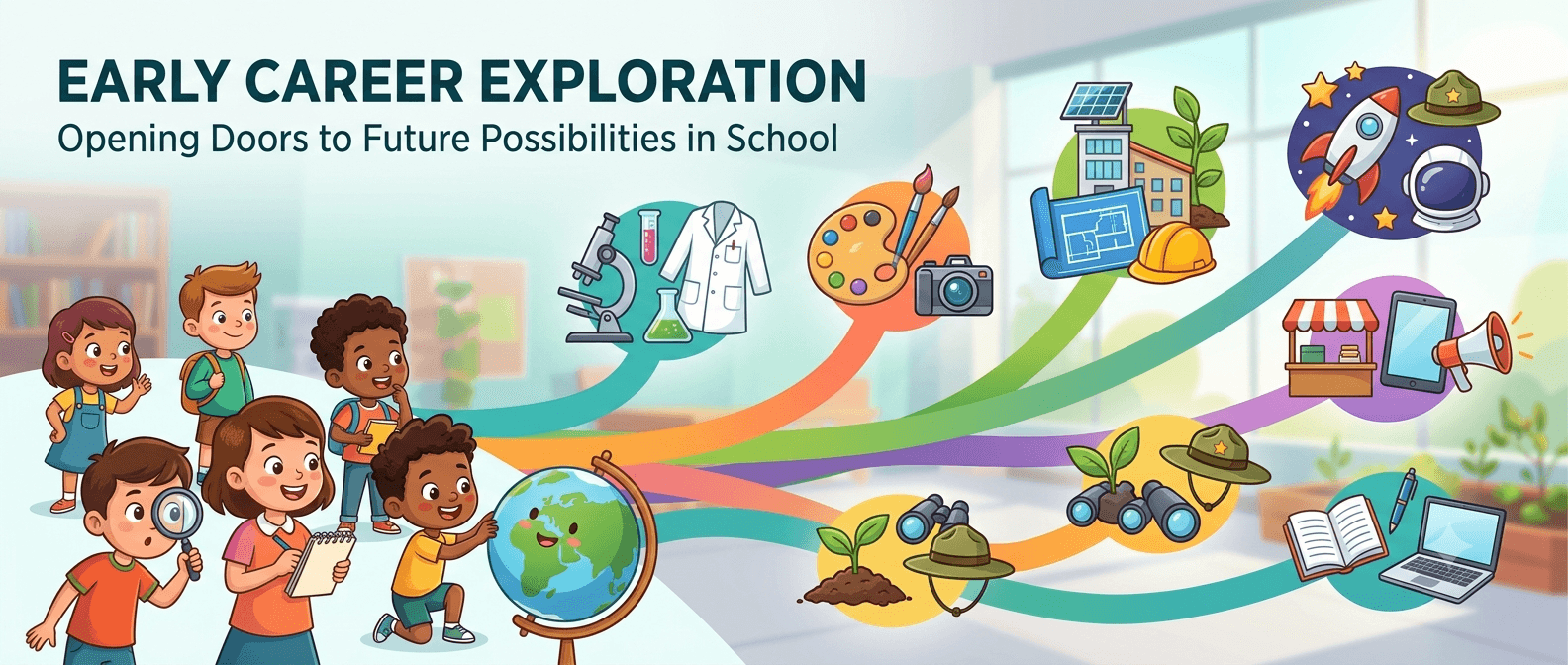

“What do you want to become when you grow up?” is a question children often hear from parents, relatives and teachers. While some children have an immediate answer, others may have no idea. And that is perfectly normal. Career choices do not have to be decided during childhood.
Instead, schools can help children explore different possibilities from an early age. The goal is not to make a child choose a profession at ten or twelve, but to help them understand their interests, discover their strengths and become aware of the many paths available to them.
For parents considering a Top Boarding school in India, career exploration can be one aspect of a child's broader educational experience. A supportive school environment can give children opportunities to learn about themselves while gradually becoming familiar with different areas of work and study.
Also Read| A Home Away from Home: Life at the Residential Boys
Why Should Career Exploration Begin Early?
Career exploration is different from career selection. A young child does not need to decide whether they want to become a doctor, engineer, designer or entrepreneur.
At an early age, exploration can simply mean discovering what a child enjoys doing.
For example, a child who enjoys building things may become interested in science or technology. Another who enjoys storytelling may discover an interest in writing, communication or the performing arts. A child who likes organising group activities may develop an interest in leadership or management.
These interests can change over time, but early exposure helps children become more curious and open-minded.
The Central Board of Secondary Education (CBSE) has also been strengthening career guidance for students, including resources that help students understand different career pathways and make informed decisions.
5 Ways Schools Can Support Career Exploration
1. Introduce Children to Different Fields
Children cannot consider careers they have never heard about. Schools can therefore introduce students to a broad range of subjects and professions.
Classroom discussions, age-appropriate career talks, books, projects and interactions with professionals can help students learn that there are many options beyond the careers they commonly hear about at home.
The purpose is to create awareness rather than encourage children to choose one particular path.
2. Give Students Opportunities to Discover Their Strengths
A child's strengths are not always visible through examination marks.
Some students may be strong communicators. Others may be creative, analytical, good at teamwork or comfortable solving practical problems.
Schools can provide different kinds of learning experiences so that students have opportunities to recognise these abilities. Group projects, presentations, problem-solving exercises, creative activities and competitions can all help children understand what they enjoy and where they feel confident.
This self-awareness can become useful when they begin making more serious academic decisions later.
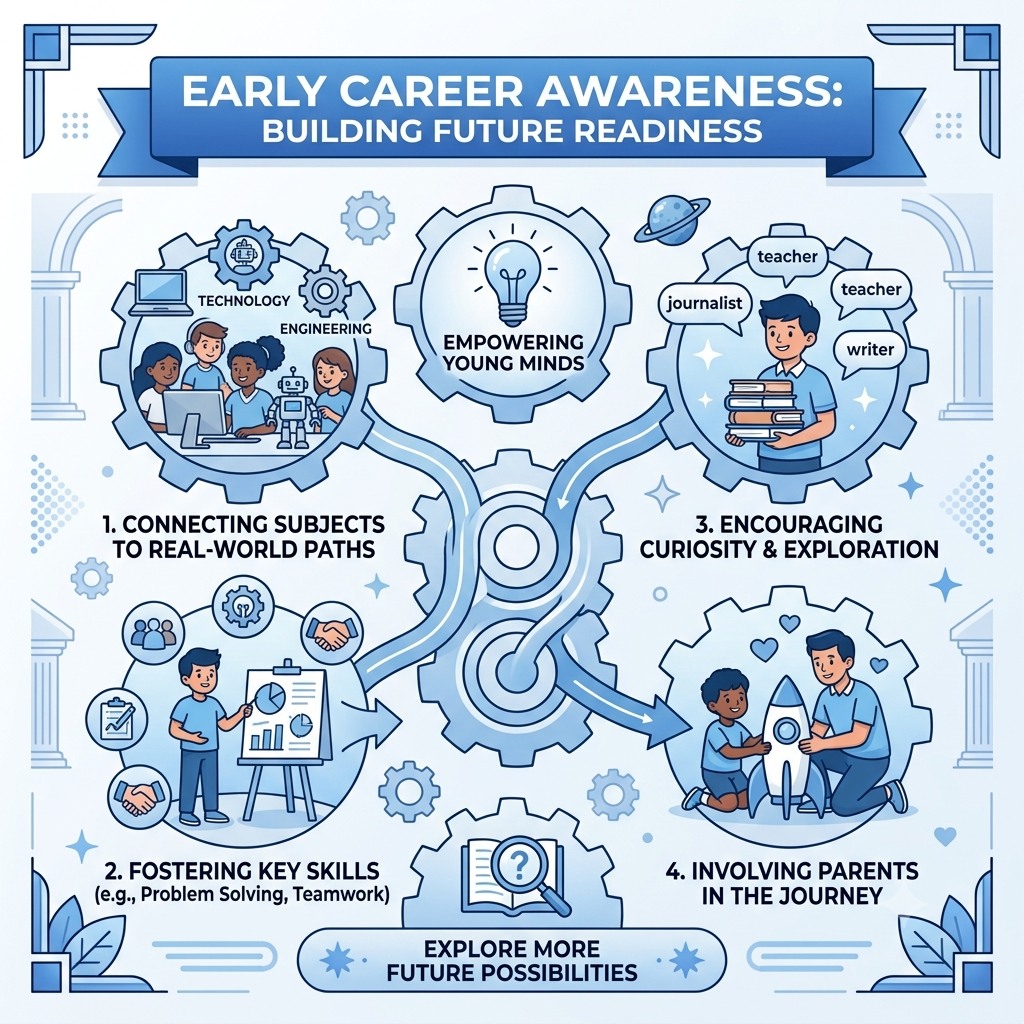
3. Connect Classroom Learning with the Real World
Children understand subjects differently when they can see how knowledge is used outside school.
For instance, mathematics can be connected with finance, architecture or data. Science can open conversations about medicine, research and environmental work. Language skills can be connected with journalism, law, teaching, media and communication.
Such connections help students understand that school subjects are not isolated topics. They can form the foundation for many different future pathways.
For older students, schools can also introduce activities such as career conversations, workplace exposure and other forms of real-world interaction. Research from the OECD highlights the value of students actively exploring their future working lives through conversations and authentic experiences.
4. Encourage Questions Instead of Giving Quick Answers
Career awareness should encourage children to ask questions.
Instead of telling a child, “You should become an engineer because you are good at maths,” adults can ask:
- What part of mathematics do you enjoy?
- What kind of problems do you like solving?
- Would you enjoy using this skill creatively?
- What other subjects interest you?
These questions allow children to think about their interests rather than simply accepting an adult's suggestion.
Schools can create a similar environment by encouraging students to discuss their interests, reflect on their experiences and ask questions about different careers.
5. Develop Skills That Work Across Careers
Children do not need to know their future profession to start developing useful skills.
Communication, teamwork, creativity, critical thinking, problem-solving, digital awareness and adaptability can support students across many different educational and professional pathways.
This is particularly important because the world of work continues to change. A student may eventually enter a field that looks very different from the careers available today.
Therefore, schools can focus not only on what career a child might choose, but also on helping them become confident learners who can adapt as their interests and opportunities develop.
Also Read| Why Do Children Need Experiential Learning?
How Parents Can Support Career Exploration
Schools and parents can work together to make career conversations positive rather than stressful.
Parents can:
- Allow children to explore different interests without immediately judging them.
- Avoid comparing one child's career goals with another's.
- Discuss a variety of professions, not only familiar or traditionally popular ones.
- Encourage children to participate in different activities.
- Ask what they enjoyed learning rather than only asking about marks.
- Accept that interests may change as children grow.
- Focus on skills, curiosity and personal strengths alongside academic performance.
CBSE's career-guidance resources also recognise the importance of involving parents in students' career planning and helping families understand changing career pathways.
Creating Space for Future Possibilities at MVM School - Doddaballapura

For parents considering a Top Boarding school in India, the learning environment matters because children need opportunities to explore interests alongside their academic education. MVM School - Doddaballapura can be considered in this context as a school where parents can look at how the overall educational environment supports children's broader development. Families comparing options, including a Best boarding school in India, can consider factors such as opportunities for exploration, skill development, student participation and exposure to different areas of learning rather than focusing only on academic outcomes.
Conclusion
Career exploration does not need to begin with a question such as, “What will you become?” It can begin with a simpler one: “What would you like to learn more about?”
When schools provide children with varied experiences, encourage curiosity and help them understand their strengths, students can gradually develop a clearer picture of their possibilities. Parents can support this process by giving children room to explore without putting pressure on them to decide too soon.
The aim of early career awareness is not to predict a child's future. It is to help children become informed, curious, and confident enough to discover it for themselves.
For more information on this and similar schools, check out this list of the best boarding schools in India.



 as a preferred source on