









Is your child excited about going to boarding school but also a little worried about staying away from home? That mix of excitement and nervousness is quite natural. For many children, boarding school means entering a new environment, meeting unfamiliar people, and managing daily routines without parents nearby. Guru Nanak Fifth Centenary School Shangri La - Girls (GNFC) is one such residential school option for families considering a new learning environment for their child. When parents explore a Top Boarding school in India, however, academics and facilities are only part of the decision. A child's emotional readiness matters just as much.
The good news is that parents can make this transition easier. With honest conversations, gradual preparation, and consistent emotional support, children can approach boarding school with greater confidence.
Also Read| Boarding and Lodging at Guru Nanak Fifth Centenary School
Why Can Boarding School Feel Difficult at First?
Leaving home for school is a major change, even for children who are generally independent. They may wonder whether they will make friends, understand the new routine, manage their belongings,s or cope when they miss their family.
Much of this nervousness comes from uncertainty. The American Psychological Association notes that changes such as new teachers, classrooms, and unfamiliar surroundings can make transitions stressful for children. It also recommends giving children opportunities to talk about their feelings and helping them understand what to expect.
For a child entering boarding school, the change can feel bigger because home and school are no longer separate parts of the day. Giving children time to understand this change can make the experience less overwhelming.
5 Ways Parents Can Prepare Their Child Emotionally
1. Start Honest Conversations Early
Instead of simply saying, “You will have a great time,” ask your child what they think about boarding school.
Questions such as these can open up a useful conversation:
- What are you most excited about?
- What are you worried about?
- Is there anything about staying away from home that makes you nervous?
- What would help you feel more comfortable?
If your child says they are scared or worried, resist the urge to immediately dismiss those feelings. Child Mind Institute experts recommend validating a child's concerns before moving towards problem-solving.
Simply saying, “I understand why that might feel difficult,” can help a child feel heard.
2. Build Independence Before They Leave
Boarding school involves many small responsibilities that parents may normally handle at home. Children may need to organise their belongings, follow a routine, manage personal items and make everyday decisions.
Parents can gradually give children more responsibility before they leave.
For example, let your child:
- Pack and organise some of their belongings.
- Keep track of school materials.
- Follow a regular bedtime and morning routine.
- Make simple choices about appropriate personal items.
- Take responsibility for small daily tasks.
The goal is not to make children completely self-sufficient overnight. It is to help them feel that they are capable of handling age-appropriate responsibilities.
3. Give Them Practice Being Away From Home
If your child has rarely spent a night away from family, boarding school can feel like a very sudden change.
Where appropriate, parents can introduce shorter periods away from home first. A stay with trusted relatives or a familiar family friend can give children a chance to experience being away while still knowing they have a safe support system.
These experiences can also reveal what the child finds difficult. Perhaps they miss home at bedtime or feel unsure about asking for help. Knowing this beforehand gives parents an opportunity to discuss possible solutions.
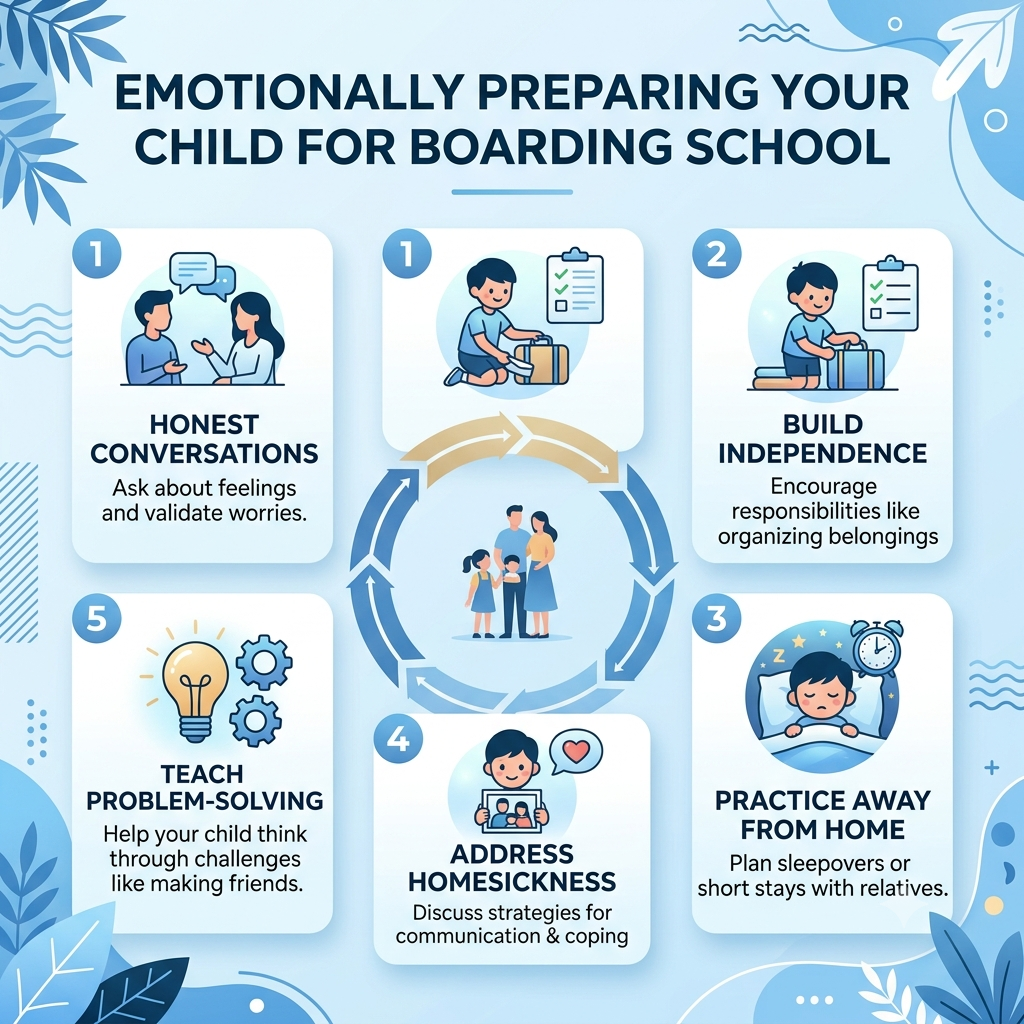
4. Prepare Them for Homesickness
Even a child who is eager to join boarding school may miss home. Homesickness does not necessarily mean that the child has made the wrong choice.
When your child says, “I want to come home,” listen rather than immediately trying to talk them out of the feeling. You might say, “It is okay to miss home. What do you miss most?”
Then help them think about what could make the situation easier.
A familiar photograph, a meaningful personal item, or a predictable routine for communicating with family may provide comfort, depending on the child's age and the school's arrangements.
Parents should also avoid making every phone conversation about whether the child is missing home. Ask about friends, classes, meals, activities, and small positive moments too.
5. Help Your Child Think Through Problems
Parents naturally want to solve every problem for their children. But boarding school can also be an opportunity for children to learn how to handle everyday challenges.
Suppose your child worries, “What if I don't make friends?”
Instead of simply saying, “Don't worry, you will,” ask:
“What could you do if you find it difficult to talk to someone on the first day?”
Together, you could discuss simple possibilities, such as introducing themselves, joining a group activity,y or speaking to a teacher or another trusted adult.
This approach gives children a practical plan while allowing them to take ownership of the solution.
Also Read| Separate Campuses, Unified Vision at schools
How Can Parents Make the Transition Easier?
A child's emotional preparation should continue after they leave home.
Parents can:
- Keep communication supportive and positive.
- Encourage the child to talk about both good and difficult experiences.
- Praise effort and brave behaviour rather than expecting instant adjustment.
- Avoid showing excessive worry during conversations.
- Give the child reasonable time to settle into the new environment.
- Stay in touch with the school if a concern appears to be continuing.
Parents also need to remember that adjustment is not always a straight line. A child may seem perfectly comfortable one week and miss home more strongly the next. Changes in routine, holidays,s or other stressful situations can sometimes bring those feelings back.
When Should Parents Seek Extra Support?
Some nervousness is a normal part of a major transition. However, parents should pay attention when distress becomes persistent or begins to interfere significantly with everyday life.
For example, ongoing school refusal, severe anxiety, repeated physical complaints such as headaches or stomachaches, or difficulty functioning at school may indicate that a child needs additional support. Child Mind Institute recommends seeking professional help when anxiety persists and interferes with school or daily activities.
Parents can begin by discussing their concerns with the appropriate school staff and, when necessary, consulting a qualified mental health professional.
Choosing a Supportive Boarding Environment
For parents researching a Top Boarding school in India, emotional support is an important factor to consider alongside academics, location, and infrastructure. Guru Nanak Fifth Centenary School Shangri La - Girls (GNFC) in Mussoorie is a full-boarding girls' school offering education from Nursery to Class 12.

Its stated educational approach places importance on skill development, values, and holistic care, which are relevant considerations when children are learning and living away from home. Families comparing options for a Best boarding school in India can therefore look beyond academic factors and consider whether a school's overall environment is suited to their child's emotional and developmental needs.
A Confident Start Begins at Home
Preparing a child for boarding school is not about making sure they never feel nervous or homesick. It is about helping them understand that these feelings can be managed.
Talk openly. Build independence gradually. Give your child opportunities to practise being away from home. Most importantly, let them know that asking for help is a strength, not a weakness.
When children feel heard, prepared and trusted, they can approach a new boarding-school experience with greater confidence—and gradually begin to make the new environment feel like their own.
For more information on this and similar schools, check out this list of the best boarding schools in India.




 as a preferred source on