







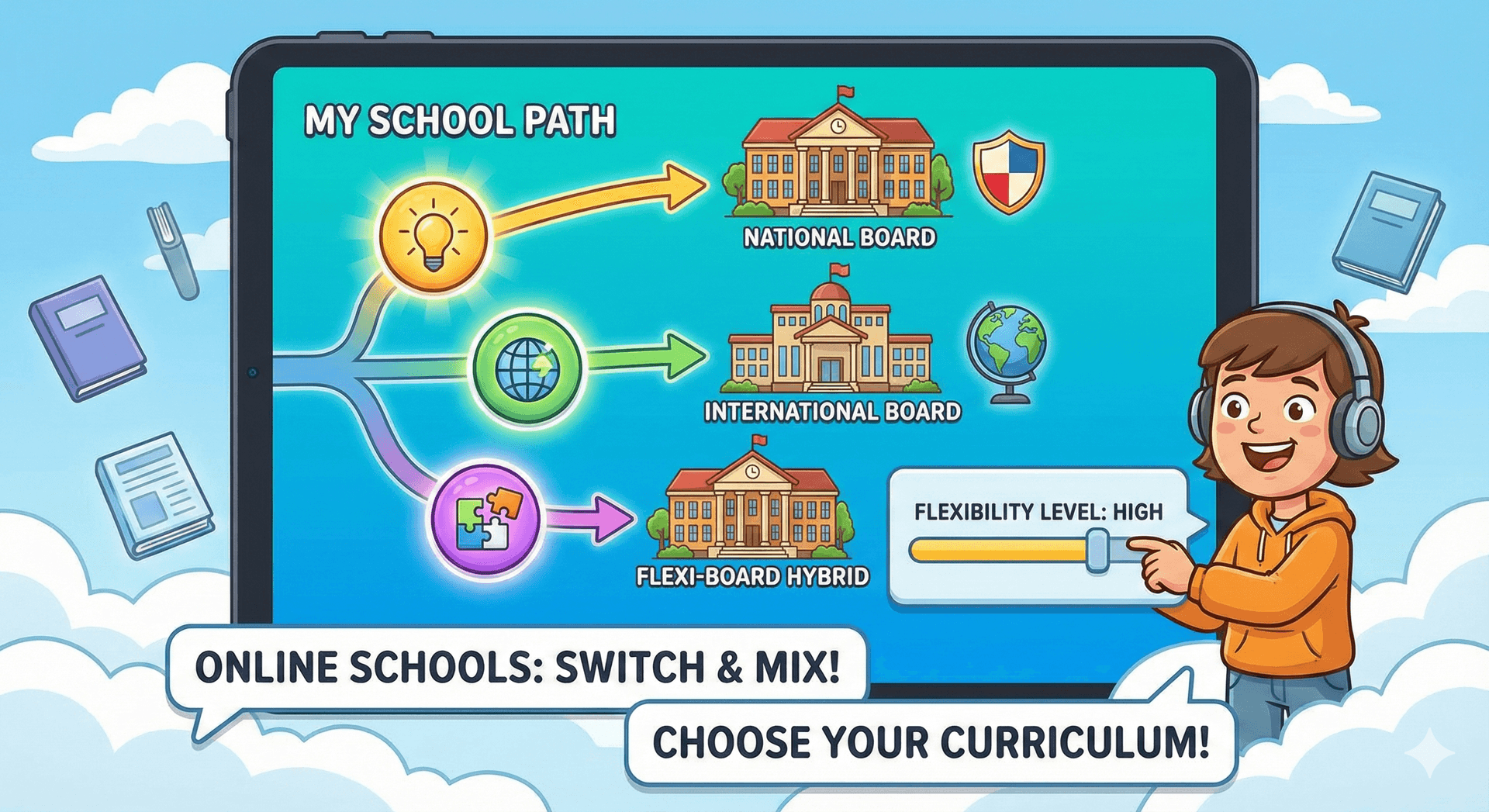

India's strict school board system creates big problems for students who want specific careers. In 2024, more than 1.3 million Indian students went abroad to study. Millions of other students in India need flexible schedules for tough JEE and NEET coaching.
Standard CBSE or ICSE classes do not work well for these students. Students often join stressful dummy schools or burn out while trying to follow attendance rules that do not matter for their goals.
This problem shows the need for online schools right now. Some of these best online schools in India offer choices from many boards. Families can pick an international track like British or American, or a flexible Indian one like NIOS or BOSSE. This helps students follow their individual paths that match their future plans instead of fighting the rigid board system of Indian schools.
Also Read: Rising Strong: Building Resilience in the Classroom and Beyond
The "One-Size-Fits-All" Crisis in Indian Education
For many years, Indian students go to school from 8 AM to 2 PM. Then they come home and attend coaching classes. This system does not work well. It ignores each student's special career goals.
The Dummy School Problem for JEE and NEET Aspirants
Every year, lakhs of students prepare for tough exams like JEE for engineering and NEET for medicine. These exams need 10 to 12 hours of daily self-study. But regular schools make students sit through 6 to 7 hours of classes that do not help much with entrance exams.
Students join dummy schools to fix this. These schools take fees and mark fake attendance so students can stay home and study. This choice brings big risks and often breaks the law. Recent facts show the high mental cost. For example, 64% of medical students feel severe stress and worry because they juggle board exams and entrance preparation. These students need a flexible board exam option. This would let them focus on competitions without breaking rules.
The Global Student Challenges
Some students plan to study abroad. In 2024, over 3.37 lakh Indian students went to the United States, whereas Canada welcomed more than 4.27 lakh.
The local Indian curriculum, due to its rigidity, hurts students in many ways. Top universities in the UK or US find it hard to understand Indian state board marks. They prefer clear global grades like A-Levels or an American High School Diploma. Students who aim for places like Oxford or Harvard do better with a British or American curriculum right here in India. Local subjects waste their time and do not help their applications.
Why Multi-Board Options Are the Only Solution?
An online school with a multi-board system works like a global buffet. Students pick the curriculum that fits their career goals, no matter where they live.
The Strategic Choice: NIOS and Open Schooling
Competitive exam students find the National Institute of Open Schooling (NIOS) a powerful tool. NIOS is a recognised central board in India. It matches the value of CBSE but gives students much more flexibility. NIOS saves time because students do not need 75% attendance. This frees up 6 to 7 hours each day for other studies.
Students increase their scores by picking easier subjects. They keep a high board percentage this way. At the same time, they focus their energy on Physics, Chemistry, and Math for JEE. Many parents worry about NIOS, they think it suits only weak students. This idea is wrong. Smart students now use NIOS as a smart plan to win against competition.
International School Board Choices
Students who dream of joining the Ivy League need to study from International Boards.
The British Curriculum (Pearson Edexcel): It helps students focus and understand fewer subjects. UK universities see this board as the Gold Standard.
US High School Diploma: It uses continuous assessments instead of just one big final exam. It builds a well-rounded student profile.
Canadian Diploma (OSSD): This board is very student-friendly and highly accepted by top universities around the world.
Until recently, only costly international schools in big cities offered these boards. Now online schools make these premium boards available to students in small towns at much lower costs.
Also Read: From Skills to Success: Role of Value Added Programs
The World Ecademy Online School: A Pioneer in Multi-Board Education
Many platforms give tuition, but The World Ecademy (TWE), one of the best IGCSE online schools in India works as a full online school with official approval. This school takes the place of a regular physical school. TWE knows that a future doctor in Kota needs different things than a future artist in Mumbai. To fix this, TWE gives a special Multi-Board Curriculum. Students use it to build their own learning path.
1. Global Tracks for International Aspirants
TWE brings the world's best classrooms right into students' living rooms. They do not just teach English or Math. They provide exact, approved study paths from other countries. The British Track lets students follow the Pearson Edexcel curriculum for IGCSE and A-Levels. This path suits students who aim for universities in the UK or Europe.
The American Track gives a full US High School Diploma with official approval. This path works well for students who like learning through assignments instead of tough final exams. The Canadian Track comes through TWE's partners. It offers the Ontario Secondary School Diploma (OSSD). People respect this diploma around the world. It lets students apply to universities like local Canadian students.
2. Strategic Indian Tracks for Competitive Exams
TWE offers a game-changer choice for students who prepare for JEE and NEET. Students do not have to follow a strict schedule. Instead, they join NIOS or BOSSE boards.
TWE gives strong help for these boards, unlike dummy schools where students stay alone. This Integrated Preparation makes a big difference. TWE also plans classes so they never overlap with coaching for competitive exams. Students pass 12th grade with good marks and they do this without feeling too tired.
3. Small Batches and Holistic Growth
TWE stays unique in how it teaches. Students get multiple board options, but TWE keeps a 10:1 student-teacher ratio. This beats the average 40:1 ratio in physical schools. Every student gets personal attention, no matter if they pick the British Board or NIOS.
TWE also makes sure flexible learning does not make students feel lonely. They run a required Extra-Curricular Programme (ECP). Students from different boards and countries join virtual clubs. A student studying through the US board talks with a JEE student, studying through NIOS or BOSSE boards. This mix of ideas develops a global way of thinking that local schools cannot give.
Conclusion
Rigid school board structure and conventional teaching no longer works for students today. For every 1 student from abroad who comes to India, 28 Indian students go abroad to study, and local students face record-high stress. The education system must change so students pick boards that help reach their dreams instead of blocking them.
The World Ecademy (Online) school solves this problem well. It lets students choose between well-known international boards like British, US, or Canadian ones and flexible Indian boards like NIOS. The school matches lessons to a child's career goals, such as getting into IIT or Oxford. In this way, education gives students power instead of wearing them out.
To learn more about this and other schools nearby, see this list of the top online schools.







 as a preferred source on