







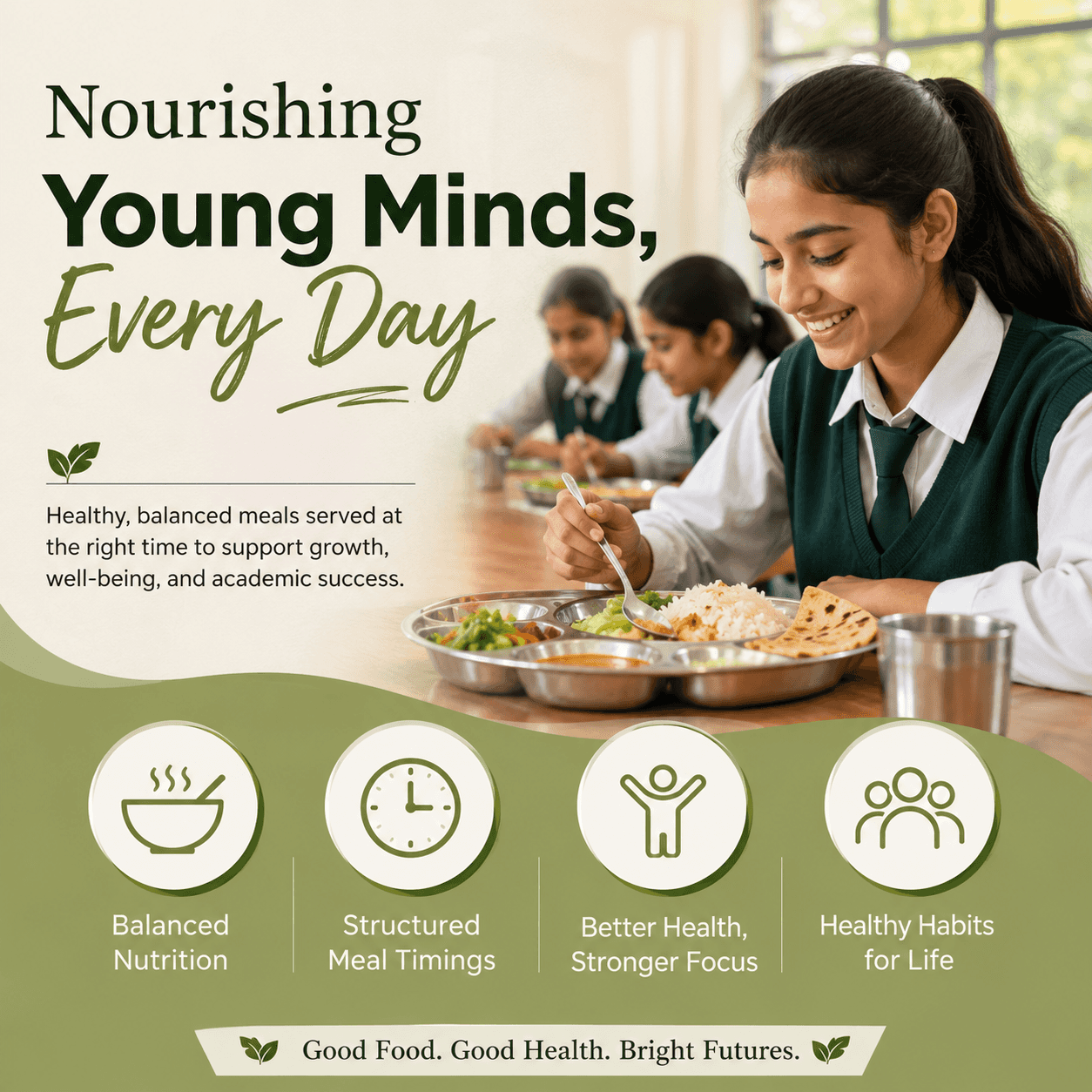

When parents choose a residential school for their child, they entrust the institution with far more than academics. They trust the school to care for their child's overall well-being, health, and daily routine.
Among the many aspects of residential life, one often-overlooked factor plays a surprisingly important role in a student's growth: a structured and balanced food timetable.
At Ashok Hall Girls' Residential School, one of the top boarding schools in India, meals are not just viewed as breaks between classes. They are an essential part of a student's daily routine, carefully planned to support learning, physical activity, and overall wellness. And today, through this article, we will understand how these things can matter more than anything in boarding schools, where your child is staying 24/7.
Also Read| Ashok Hall Girls’ Residential School, Almora: Where Discipline Meets Distinction
Why Meal Timings Matter in a Residential School
Teenagers lead busy lives. Between classroom learning, sports, extracurricular activities, study hours, and hostel life, their bodies require consistent energy throughout the day.
A well-organised meal schedule helps students:
- Maintain energy levels during classes
- Improve concentration and focus
- Support physical growth and development
- Build healthy eating habits
- Reduce dependence on unhealthy snacking
For students living away from home, structured meal timings also create a sense of routine and stability.
Fueling Learning Throughout the Day
Just as a timetable allocates time for academics and sports, nutrition must also be thoughtfully integrated into a student's schedule. A balanced day typically begins with a nutritious breakfast that prepares students for morning classes. Midday meals help replenish energy levels, while evening snacks support students after sports and activities. A wholesome dinner ensures they end the day with the nourishment needed for rest and recovery. This systematic approach helps students remain active, attentive, and engaged throughout the day.
Building Healthy Habits for Life
One of the greatest advantages of residential schooling is that students develop habits that stay with them long after graduation. Regular meal timings encourage discipline, mindful eating, and a better understanding of the relationship between nutrition and health. Over time, students learn the importance of balanced diets, hydration, and healthy lifestyle choices. These lessons often prove just as valuable as academic knowledge.
Creating a Sense of Community
Dining halls in residential schools are more than places to eat. They are spaces where friendships are strengthened, conversations are shared, and students develop a sense of belonging.
Shared meals encourage social interaction across age groups and help create a warm, supportive community atmosphere. For many boarding school students, some of their most cherished memories are formed around the dining table.
Supporting Holistic Development
At hostels, education extends beyond classrooms and textbooks. The school's residential environment is designed to support the holistic development of every student, and nutrition forms an important part of that philosophy.
By combining academic learning, physical activity, structured routines, and balanced nutrition, the school creates an environment where students can thrive both personally and academically.
Nourishing Potential Every Day
Parents often focus on classrooms, teachers, and academic results when evaluating schools. Yet behind every successful student is a foundation built on healthy routines and proper care.
A thoughtfully planned food timetable reflects a school's commitment to student well-being. It ensures that girls have the energy, focus, and nourishment needed to make the most of every opportunity that school life offers.
When students are well-nourished, they are better prepared to learn, grow, lead, and succeed.
Also Read| Shaping Girls Through the Mentor-Mentee System at Ashok Hall Girls’ Residential School
How is Ashok Hall Girls’ Residential School Supporting Every child with Balanced Nutrition?
At one of India's most famous boarding schools, Ashok Hall Girls' Residential School, student well-being is considered an essential part of the learning journey. The school's thoughtfully planned food timetable ensures that students receive nutritious meals at the right intervals throughout the day, supporting their academic performance, physical development, and overall health.

Ashok Hall Girls’ Residential School, students are served with healthy and balanced meals all year round. They have a dedicated timetable for food service every day, including breakfast, lunch, dinner, and snacks. This serves two purposes: first, children can get a balanced diet. Second, it helps instill healthy eating habits and discipline by encouraging students to follow a consistent routine. By combining nutritious meals with a well-planned schedule, the school creates an environment where students can stay focused, active, and ready to excel in academics, sports, and other activities.
|
Food Details for Vegetarian(Available) |
||||
|
BREAKFAST |
LUNCH |
SNACKS |
DINNER |
|
|
MONDAY |
Sprouts Bread poha Ketchup Aata Halwa Bournvita milk Tea |
Missi roti Lemon rice Dry aloo Dal makhani Mix raita Papad |
French fries Fruit Tea Squash |
Chappati Tomato rice Mix veg Moong dal Shahi paneer Gulab jamun Milk |
|
TUESDAY |
Sprouts Masala Idli /plain idli Sambhar Ketchup Coconut chutney Cornflakes Bournvita milk Tea |
Salad Chappati Veg biryani Dum aloo Arhar dal Cucumber raita Pickle Papad |
Aloo sandwich Fruit Tea Tang/Fruit juice |
Chapatti Plain rice Bhindi Dal fry Jalebi rabdi |
|
WEDNESDAY |
Sprouts Cutlet Omlet Butter and jam bread oats Bournvita milk Tea |
Salad Chappati Jeera rice Veg.Beans Kadi pakoda Chana masala Curd Papad |
Cheese bread Fruit Tea Amul chaach |
Chappati Plain rice Drynutella Paneer butter masala Arhar dal Rice Kheer |
|
THURSDAY |
Sprouts Veg. sandwich Ketchup Chocos Bournvita milk Tea |
Salad Chappati Jeera rice Aloo capsicum Rajma Boondi raita Vinigated onion Papad |
Pizza Fruit Tea Tang/Fruit juice |
Chappati Plain rice Cabbage Egg bhujji Paneer bhujji Dal fry Boondi laddo Milk |
|
FRIDAY |
Sprouts Vada Sambhar Coconut chutney Sewai kheer Bournvita milk Tea |
Salad Chappati Lemon rice Egg cury Veg.Kofta Mango/tomato chutney Mix veg. Curd |
Kachorisattu Fruit Tea Lemonade |
Chappati Plain rice Bhindi crispy Dal mix Kadhai paneer Shahi toast |
|
SATURDAY |
Sprouts Burger Ketchup Porridge Bornvita milk Tea |
Chappati Plain rice Onion parwal fry Dal panchratan Green chutney Pahadi raita Papad |
Cholatikki Fruit Tea Cold coffee |
Puri Jeera rice Dry chana Yellow dal Brownie |
|
SUNDAY |
Aloo parantha Pickle Curd with sugar Tea |
Salad Chappati Rice Jeera Aloo Sambhar Curd Papad |
Momos Chutney Fruit Roohafza |
Custard Hot and sour soup *Maggi/Dinner roll with cutlet Jelly French fries |
By maintaining a balanced routine that combines learning, sports, recreation, and wholesome nutrition, the school creates an environment where girls can stay energized, focused, and ready to make the most of every opportunity. This commitment to healthy living reflects the school's broader philosophy of nurturing confident, disciplined, and well-rounded individuals.
So, if your child is in boarding school, check if they are also following such things. And if you are exploring a boarding school for your kid, make sure you check how the food is being served at their hostel. Is it clean or serving a balanced diet?
Get the information about the best boarding schools in India here













 as a preferred source on