







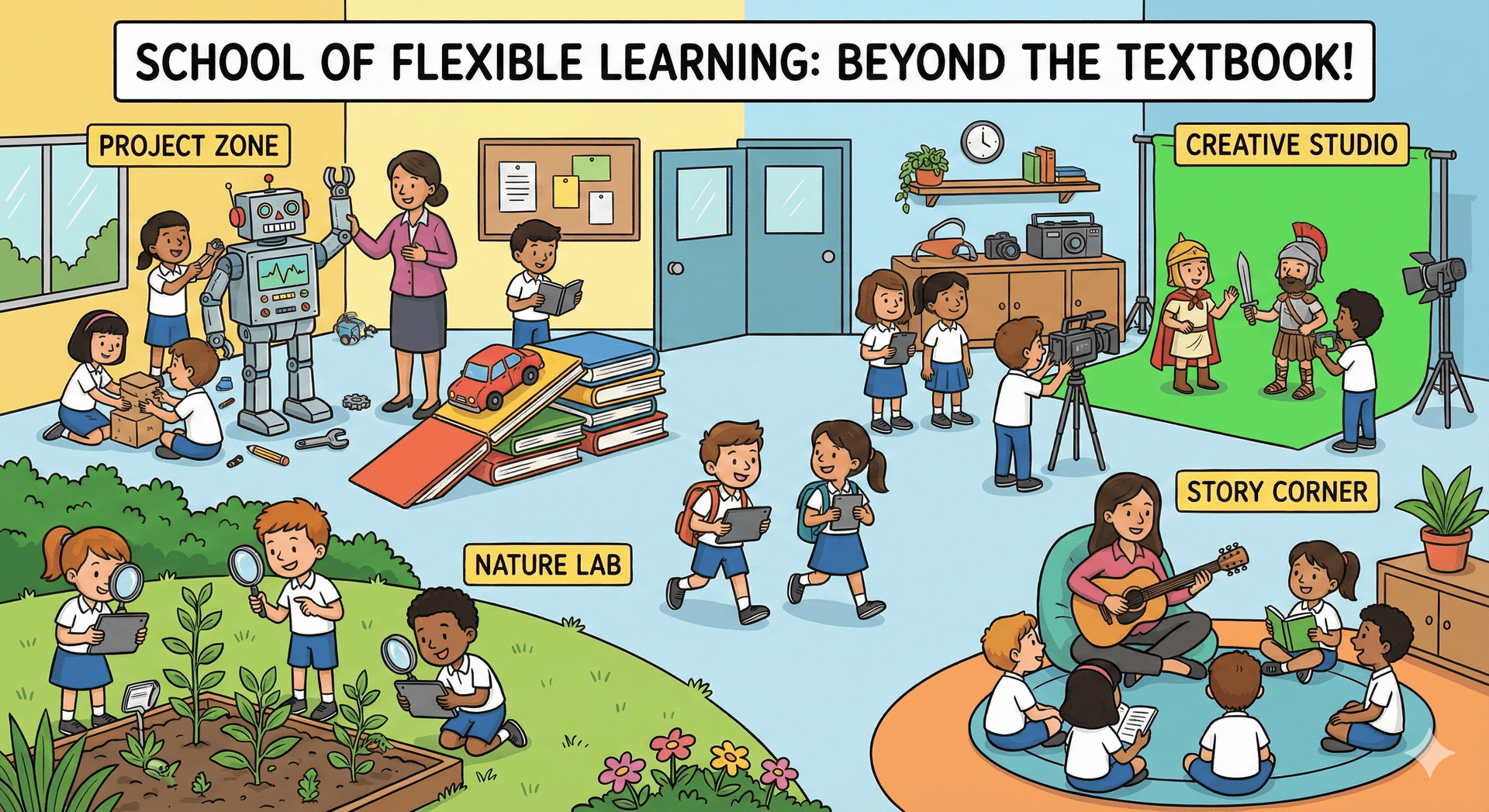

The race to finish the syllabus often takes priority over actual learning. This deadline causes pressure in teachers, forcing them to rush through lessons, leaving confused students behind.
To fix this, we need a shift toward a teaching method that puts the child first, where teachers pause and ensure understanding before moving on.
Teachers of today must understand that true growth isn't just about academic concepts; India’s schools need to start tracking behavioral and emotional development of children alongside grades to build real confidence.
This approach, often called 'mastery learning,' is backed by data and is getting applied in some of the best schools in Pune. Studies covering over 22,000 students from kindergarten to college show that 90% of mastery learning trials remarkably increased achievement.
Also Read: From Concept to Creation: The Big Idea Factory
Why Fluid Curriculum Beats Fixed Deadlines?
Rushing the syllabus creates big problems. Kids cram facts but forget them right after exams. This leaves them with weak knowledge. Fast lessons stress and worry kids, especially slower learners. These kids fall behind without anyone noticing. Teachers must learn to pause to help classes master one topic before moving on. This follows mastery learning, where time bends to fit each child.
In 279 studies, 90% students’ positive feedback showed that mastery learning improves scores and attitudes. Average kids match the top 15% in regular classes. Primary students gain up to 8 months' progress, especially in math and science. Teachers spot kids who need extra time and stop failure. One study found that pausing lectures every 12-18 minutes holds attention high. Focus drops after 15 minutes otherwise.
What is “Kid Before Content”?
The "Kid Before Content" philosophy turns the old school model upside down. Teachers make the curriculum flexible, not fixed. They have the freedom, and the duty, to pause when needed.
If students struggle with fractions, teachers do not rush to decimals just because the schedule says so. Teachers delay decimals instead. They spend an extra week using pizza slices, blocks, or drawings to make kids understand the concept of fractions better. The deadline to finish the syllabus never beats a student's need to learn.
The Power of the Pause
Educational psychologist Benjamin Bloom studied this idea deeply. He discovered that students master topics better with Mastery Learning technique. They move on only after they get a chapter/unit right. Bloom found that average students in this system beat 98% of kids in traditional classes. The pause does not waste time. It invests in kids. Schools save time later because they skip reteaching old lessons year after year.
Also Read: Cultivating a Passion for Learning
Why Schools Need Anecdotal Records?
In a traditional school, teachers judge a child by numbers: 85/100 in Math, 40/50 in Science. But numbers are flat and one‑dimensional. They do not show that the child helped a nervous classmate make friends. They do not show that the child stayed very patient while solving a difficult puzzle. They also do not show that the child felt scared or anxious while speaking in front of the class.
This is where “anecdotal records” help. Instead of giving only a report card full of marks, teachers also write detailed notes about each child. In these notes, they describe the child’s behavior, emotions, and social skills.
This matters a lot because success in life depends more on Emotional Intelligence (EQ) than only on IQ. Research shows that emotional stability and good social skills strongly predict future success. A child may get 100% in English but still bully other children on the playground. A marks‑sheet hides this problem. An anecdotal record shows it clearly, so teachers and parents can help the child grow into a kinder human being, not just a smarter one.
Data Proves Kid-First Teaching Method Wins
Flexible pacing in the school’s syllabus helps every student. Mastery classes reduce failures because kids learn faster and get 10% higher grades. Fixed schedules ignore different learning styles. Flexible ones increase motivation, and students rate their learning 27% higher afterward.
Rushing a lesson or a syllabus harms learning. Students remember 70% of the start of a lecture but only 20% of the end without breaks. Put the kids before the content. Teachers stop when students understand 60-70%, reteach if needed, and then move on. Teams that pause and discuss gain the most. In the long run, this creates lifelong habits like perseverance.
The Keystone Ankuram School’s Kid Before Content Methodology
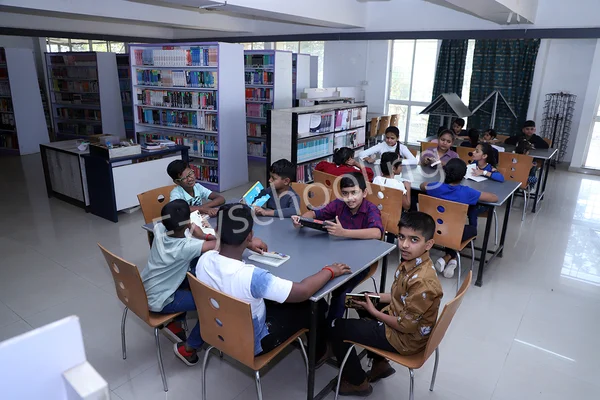
The Keystone Ankuram School (TKAS) is one of the best CBSE schools in Pune that follows the "Kid Before Content" method as its main rule. Teachers use this rule especially for young kids in Nursery to Grade 5.
TKAS trains teachers to check the child's readiness first, not the textbook pages. If a student struggles with cursive writing, teachers do not force the child. They wait. They build motor skills first. They know every flower blooms at its own time. Forcing the petals open only ruins the flower.
Bagless Days and Real Skills
TKAS puts the idea of flexible learning into action with "Bagless Days of Fun." Students leave heavy textbooks at home on these days. This lifts the physical and mental load of syllabus pressure.
Students do not sit in rows. They learn vocational and life skills that most schools skip. TKAS adds Military Training and Farming to the regular schedule.
Military Training: Students march and more. They build discipline, fitness, and teamwork. They do this without exam stress.
Farming and Animal Care: Students care for plants and animals on campus. They get their hands dirty.
This matches "Kid Before Content" perfectly. Life lessons like empathy, hard work, and responsibility come from doing, not from a blackboard.
Focusing on the “Whole” Child
TKAS uses anecdotal records with care. Teachers watch and note kids like observers, not just testers. They record small wins, such as a shy child raising a hand or a hyperactive child focusing deeply on farming.
TKAS makes sure no child gets labeled a "failure" for weakness in one subject. A child weak in Math might lead best in Military Training. Records catch these strengths. They build confidence instead of crushing it with a bad grade.
Benefits for Young Children
This method brings big long-term gains for young kids, and has the following benefits:
Reduced Anxiety: Kids know no one punishes them for slow learning. Their stress hormone, cortisol, drops. Calm brains learn faster than stressed ones.
Love for Learning: Kids link school to curiosity from farming and bagless days, not fear from exams or deadlines. This makes lifelong learners.
Stronger Foundations: Teachers stop to check who gained expertise in a specific chapter/unit. Students enter higher grades with solid basics. They truly know the subject, not just pass a test.
Conclusion
Rushing to finish the syllabus creates a learning debt. This debt hurts students for years. Data shows that rushing a chapter or unit cuts students’ retention by nearly half. Mastery-based learning approaches improve performance to the top 2% level. Schools like The Keystone Ankuram School prove this. They focus on a child's mental pace instead of a textbook's timeline. This way, they create better students. These students are happier, more confident, and well-rounded human beings. Parents, it's time to change. Please stop asking, "Did you finish the chapter?" Start asking, "Did you understand the concept?”.
To learn more about this and other schools nearby, see this list of the top schools in Pune.







 as a preferred source on