









When discussing “education,” the image is often classrooms packed with textbooks, exams, and grades. But true learning isn’t about chasing marks, it's about shaping resilient, well-rounded individuals. In a world of rapid technology shifts, rising mental health challenges, and unpredictable workplaces, children need more than academic knowledge; they need empathy, creativity, strength, and critical thinking, a holistic foundation to thrive in life.
That’s the philosophy behind The Four Pillars of Development at one of the best schools in Noida, Delhi Public School, GBN. The school blends intellectual growth with social competence, emotional intelligence, and physical well-being, ensuring that learners are prepared not only to succeed in exams but also to confidently navigate modern life's complexities.
In this article, we’ll explore why whole child development matters, what each of the four pillars entails, and how this approach to education at DPS GBN is redefining learning for the future.
Also Read | Fostering Ethical and Moral ValuesWhy Whole Child Development Matters
A World Economic Forum report predicts that 65% of children entering primary school today will end up in jobs that do not yet exist. To thrive in such uncertainty, they must be adaptable, collaborative, and emotionally balanced, not just academically proficient.
So, we need to understand that education must move beyond literacy and numeracy to nurture the "four pillars of learning": learning to know, to do, to be, and to live together. This aligns seamlessly with modern developmental science, which stresses that growth is multi-dimensional.
Why the Four Pillars Matter
The demands of the 21st century make it clear that education can’t be one-dimensional; the skills needed are not just memorized formulas but creativity, resilience, and teamwork.
Equally, the World Health Organization reports that 1 in 7 adolescents worldwide struggles with a mental health disorder, making emotional support a critical part of education. And with the CDC noting that only 24% of children aged 6–17 achieve the recommended daily physical activity, physical development must be given the same priority as academics.
Numbers like these remind us that holistic development is not optional but essential.
1. Social Development: Building Bridges
Humans are inherently social beings. Developing communication, empathy, and collaboration skills is essential for young learners. Social competence builds friendships and prepares children for workplaces where teamwork and networking are critical.
Key aspects of social growth include:
-
Collaboration through group projects and teamwork.
-
Conflict resolution and the ability to negotiate differences.
-
Cultural sensitivity, as classrooms today are more diverse than ever.
2. Emotional Development: The Power of EQ
Emotional intelligence (EQ) is increasingly recognized as a predictor of success. Students with higher EQ perform better academically and report lower levels of anxiety and depression.
Emotional development encompasses:
-
Self-awareness: Recognizing and naming emotions.
-
Self-regulation: Managing impulses, stress, and frustration.
-
Empathy and compassion: Understanding others’ feelings.
3. Physical Development: A Healthy Body Fuels a Healthy Mind
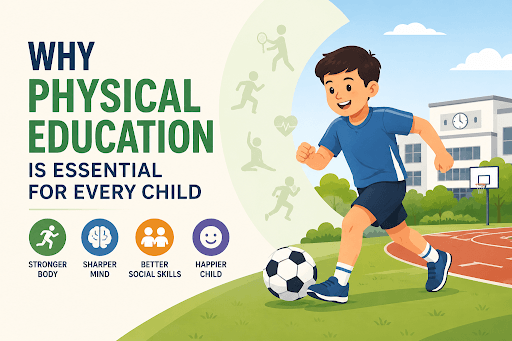
Cognitive and emotional growth depend heavily on physical well-being. Exercise has been linked to improved memory, focus, and mood. Research published in Pediatrics found that students who engaged in regular physical activity performed better in math and reading. Yet, despite these benefits, studies indicate that only 24% of children aged 6–17 get the recommended 60 minutes of physical activity daily (CDC, 2021). Bridging this gap is essential for well-rounded growth.
Physical development includes:
-
Motor skills (fine and gross).
-
Health literacy: Awareness about nutrition, sleep, and hygiene.
-
Sports and fitness: Building stamina, discipline, and teamwork.
4. Cognitive Development: Beyond Rote Learning
Cognitive development remains central to education but has evolved far beyond memorization. The focus is now on critical thinking, creativity, and problem-solving. Creativity, communication, collaboration, and critical thinking (the 4Cs) are among the top skills demanded by employers worldwide. By nurturing intellectual curiosity alongside adaptability, cognitive development ensures students can navigate the unknown challenges of the future.
Effective cognitive development strategies include:
-
Inquiry-based learning to spark curiosity.
-
Integration of technology and innovation labs.
-
Real-world problem-solving tasks rather than rote drills.
Weaving the Four Pillars Together
While each domain is crucial, the real strength lies in integration. For instance:
-
A group science project develops social skills (teamwork), emotional resilience (handling failure), physical skills (building a model), and cognitive skills (scientific inquiry).
-
Sports and performing arts blend physical stamina, emotional expression, social collaboration, and strategic thinking.
-
Mindfulness and well-being programs simultaneously target emotional regulation, focus (cognitive), and physical relaxation.
Education Beyond Academics
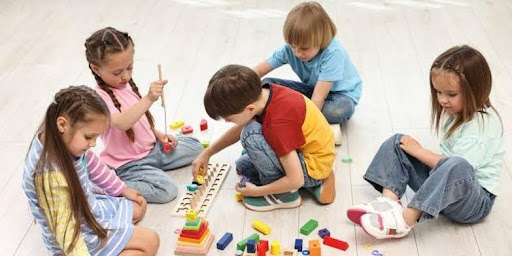
The future will not reward children who can only memorize and reproduce facts. It will reward those who can think critically, adapt quickly, work collaboratively, and remain emotionally balanced. By focusing on social, emotional, physical, and cognitive development, education can move beyond exams and shape individuals ready for life.
In the end, it isn’t about raising perfect test-takers. It’s about nurturing resilient, empathetic, and capable young people who can thrive in uncertainty and lead with confidence. That is the true power of education when it rests on the four pillars of development.
Check Out | Empowering Students through Holistic Development
Delhi Public School (DPS), Sector 132, Noida: Preparing children for tomorrow
Delhi Public School (DPS), GBN, Sector 132, Noida, is a co-educational institution offering classes from Pre-Nursery to Grade XII. Established in 2012, the school is widely recognized as one of the top CBSE schools in Noida, known for its academic excellence, holistic growth, and future-ready learning environment.
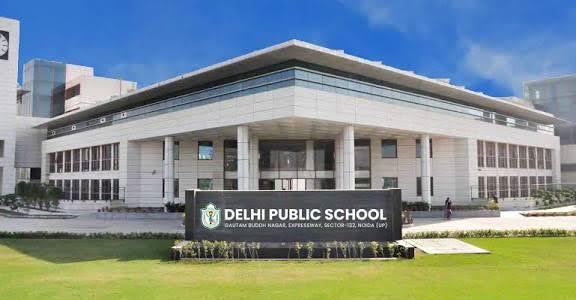
At DPS GBN, education goes beyond textbooks and examinations. The school integrates the philosophy of the Four Pillars of Development social, emotional, physical, and cognitive growth into its curriculum and culture, ensuring that every learner is prepared not just for exams but for life. With a 10-acre campus equipped with smart classrooms, innovation labs, maker spaces, and sports facilities, DPS GBN provides students with opportunities to explore, collaborate, and grow in every dimension.
Equally, the school emphasizes values and well-being, ensuring that children develop resilience, empathy, and confidence alongside intellectual ability. From group projects and reflective learning to sports, arts, and innovation-driven pedagogy, DPS GBN creates an ecosystem where holistic development is a lived reality. Students here grow into well-rounded individuals, empathetic leaders, responsible citizens, and creative thinkers rooted in values yet ready for the challenges of the future.
For more information on this and other such schools in the area, check out this list of the best schools in Noida.






 as a preferred source on