







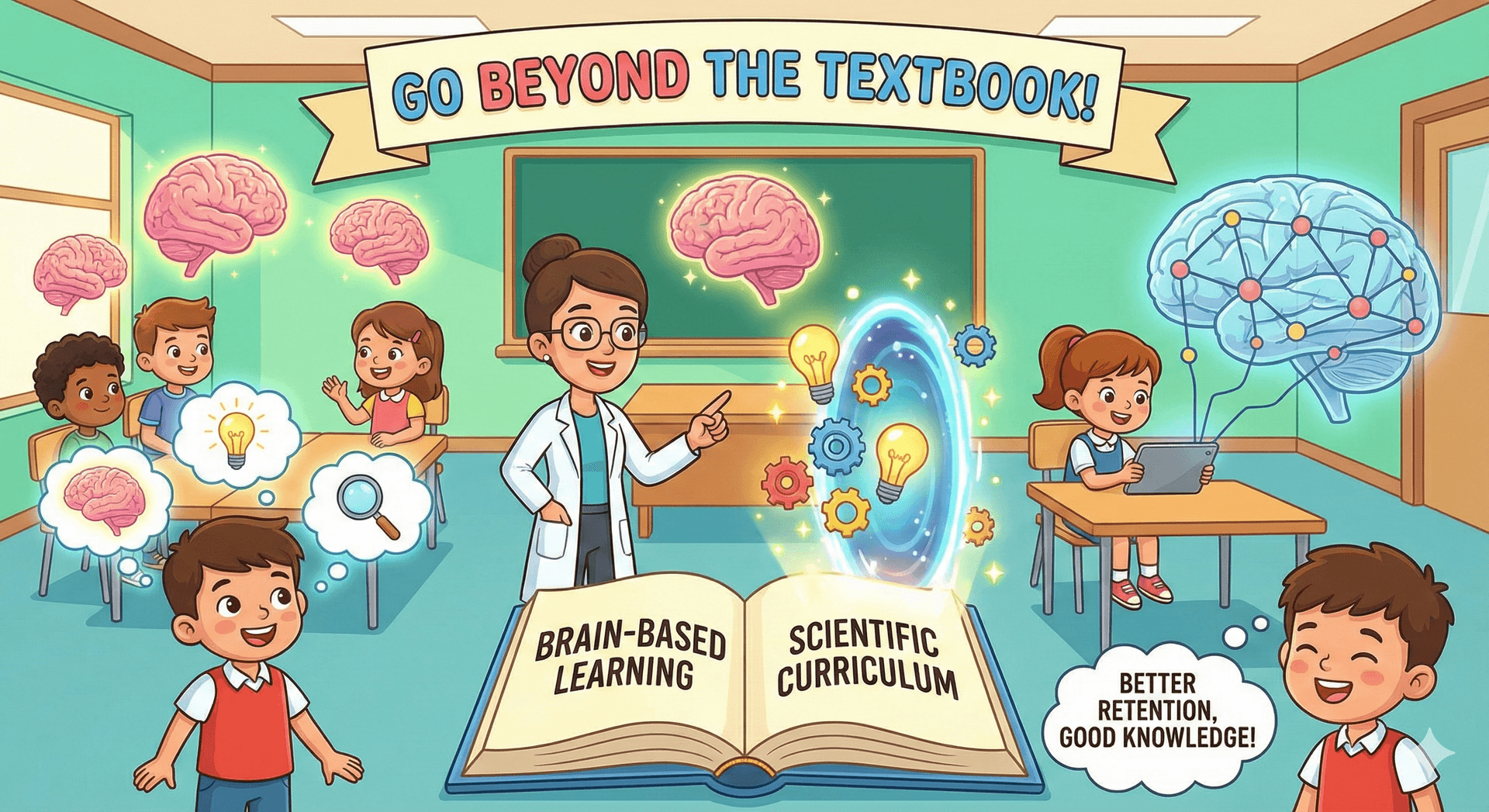

Till today, many Indian schools use old textbook curricula. Students memorise facts from books and repeat them in exams. This way does not teach them to think deeply or solve real problems. That's why India scores low in global tests. A good curriculum uses science-backed methods like hands-on projects and practice to develop skills and improve learning. Data shows that old methods of teaching leave 70% of students unable to use their knowledge in real life. Some of the best schools in Greater Noida are switching to these proven systems for better results.
Also Read: Values That Last a Lifetime: The Virtues Behind True Education
Problems with Textbook Learning
Teachers often follow the same old pattern. They read from a book, explain the idea, make students copy notes, and expect them to memorise everything for exams. This way treats learning like a quiet, hands-off job, which creates big problems later on in the future.
Is Memorization Worth It: Rote vs. Understanding
The worst part of sticking to textbooks is that it pushes students to memorise facts without really getting them. Science about the brain shows a huge gap between short-term recall, remembering just for tomorrow's test, and long-term retention, knowing something forever.
Students who only read and reread textbooks use one of the weakest ways to study. Research in brain science proves that just reading quietly creates a "Forgetting Curve." Students forget up to 70% of what they read within 24 hours unless they actively use that knowledge. Traditional classes rush to cover all the book chapters, so they skip the hands-on practice needed to fight this forgetting.
Schools Must Know How the Brain Works
Every child's brain grows at its own speed and handles information in its own way. A standard textbook treats all 10-year-olds the same. It thinks that reading a paragraph about photosynthesis works best for every student to learn biology.
A curriculum built on science knows that brains need different kinds of help to learn. Some ideas stick better with pictures, others with hands-on play using real objects, and almost all ideas stay longer when kids connect them to real-life feelings or problems. Traditional methods push all learning through just reading words on a page. This blocks different brain paths and leaves many students behind.
Also Read: Grow Talent with Starmakers platform
The Science of Learning: Moving Beyond Reading and Repeating
Scientists build a smart curriculum on proof of how brains form neural connections. The curriculum skips what to teach and focuses on how kids learn.
Active Remembering and Spaced Repetition
Science shows that pulling information out of your brain works better than pushing it in. We call this active recall/remembering. A smart curriculum does not just hand students answers. Instead, it makes them create answers themselves.
Also, smart methods avoid cramming a topic once and forgetting it. They use spaced repetition instead. This means students review a topic again and again, but with growing gaps of time between reviews. A curriculum like this makes the brain strengthen memory paths, creating knowledge that lasts. Traditional textbook teaching methods hardly review old chapters in a planned way, so they lead to weak long-term memory.
Connecting the Dots Through Contextual Learning
The human brain dislikes facts that stand alone, instead, it loves patterns and stories. We learn best when we link new information to what we already know or care about.
Traditional curricula often split subjects into separate boxes. Math stays away from science, and science stays away from history. A scientific approach uses contextual learning. For example, it might teach a math idea through historical facts. Or it could have kids do a science experiment and then write an English report about it.
By linking subjects, the curriculum copies the real world. Real problems never stick to just one subject. This helps the brain store information in the right place. Later, it becomes easier to pull that information back out.
The Real-World Impact of Outdated Methods
Old teaching methods don't just bore students. They hurt their future too. Employment reports show a big problem in Indian education. We make many graduates with degrees, but they can't do the jobs.
The India Skills Report 2023 says only about 50.3% of graduates can get hired. Nearly half of students finish school without the critical thinking, problem-solving, and communication skills that today's jobs need the most.
Jobs don't ask you to repeat textbook facts. They ask you to use knowledge in new ways. Traditional classes make students memorise old answers instead of finding new ones. So students leave school not ready for real work.
What Parents and Teachers Can Do?
Parents and teachers must take action to use better teaching. Parents look past the school building. Ask about their teaching methods. Do they only use NCERT books, or do they have a real plan for hands-on learning? Do they grade projects properly, or just pretend?
Teachers leave behind old "talk and chalk" lessons. Even without a scientific, hands-on curriculum, add science-backed ideas like quick recall quizzes and review over time. We all need to push for learning that matches how brains really work.
The Millennium School Science-Based Learning System
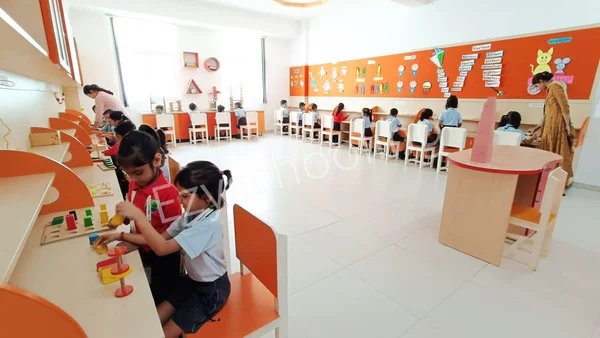
Some of the best CBSE schools in Greater Noida see this problem and stopped relying only on standard textbooks. Instead, they use scientifically planned teaching methods. A great example is The Millennium School (TMS). They follow their own Millennium Learning System (MLS).
MLS stands out because it is more than just a list of lessons. Experts researched it based on how a child's brain grows at different ages. Books still play a part, but they become one helpful tool among many, not the only one.
Matching Teaching to a Child's Age
The main idea behind MLS is to match teaching to what the brain can handle at each age. It splits into levels that fit how kids think and learn:
MLS I (Primary Years): Young kids learn best by using their senses. So MLS I use projects. Children don't just read about plants, they grow and measure them, and write reports. They learn by doing, which helps them remember basics much better than just reading.
MLS II (Middle Years): Kids start thinking more about big ideas. MLS II uses an apprentice style. Students explore jobs and treat subjects like skills they practice. This gives their learning a real purpose.
Perfecting Thinking and Exams: MLS III & IV
Older students face tougher challenges. They must handle lots of information and use it quickly, even under stress.
MLS III (Secondary): This level teaches mind mapping. Minds connect ideas in wavy ways, not straight lines. Students draw maps to link concepts visually. This helps them truly understand subjects, not just memorise facts.
MLS IV (Senior Secondary): The last level focuses on exam skills and how the brain works during tests. It trains kids to stay calm, think fast, and apply what they know. They learn content plus test strategies.
MLS uses these science-based methods at the right ages. This way, students develop key thinking skills step by step, instead of just reading chapters one after another.
Conclusion
India's education system must prepare students for an unpredictable future. It needs to drop old rote learning methods and switch to curricula that’s modern and scientifically designed carefully. Data from reports like the India Skills Report shows that nearly half of graduates lack the skills to get jobs. This proves the traditional model, which focuses only on textbooks, fails to teach real-world skills.
Frameworks like The Millennium Learning System show how powerful it is to match teaching with how the brain works. They help students build lasting critical thinking skills instead of just short-term facts. Parents and educators must demand and use curricula that focus on how students think, not just what they read.
To learn more about this and other schools nearby, see this list of the top schools in Greater Noida.






 as a preferred source on