







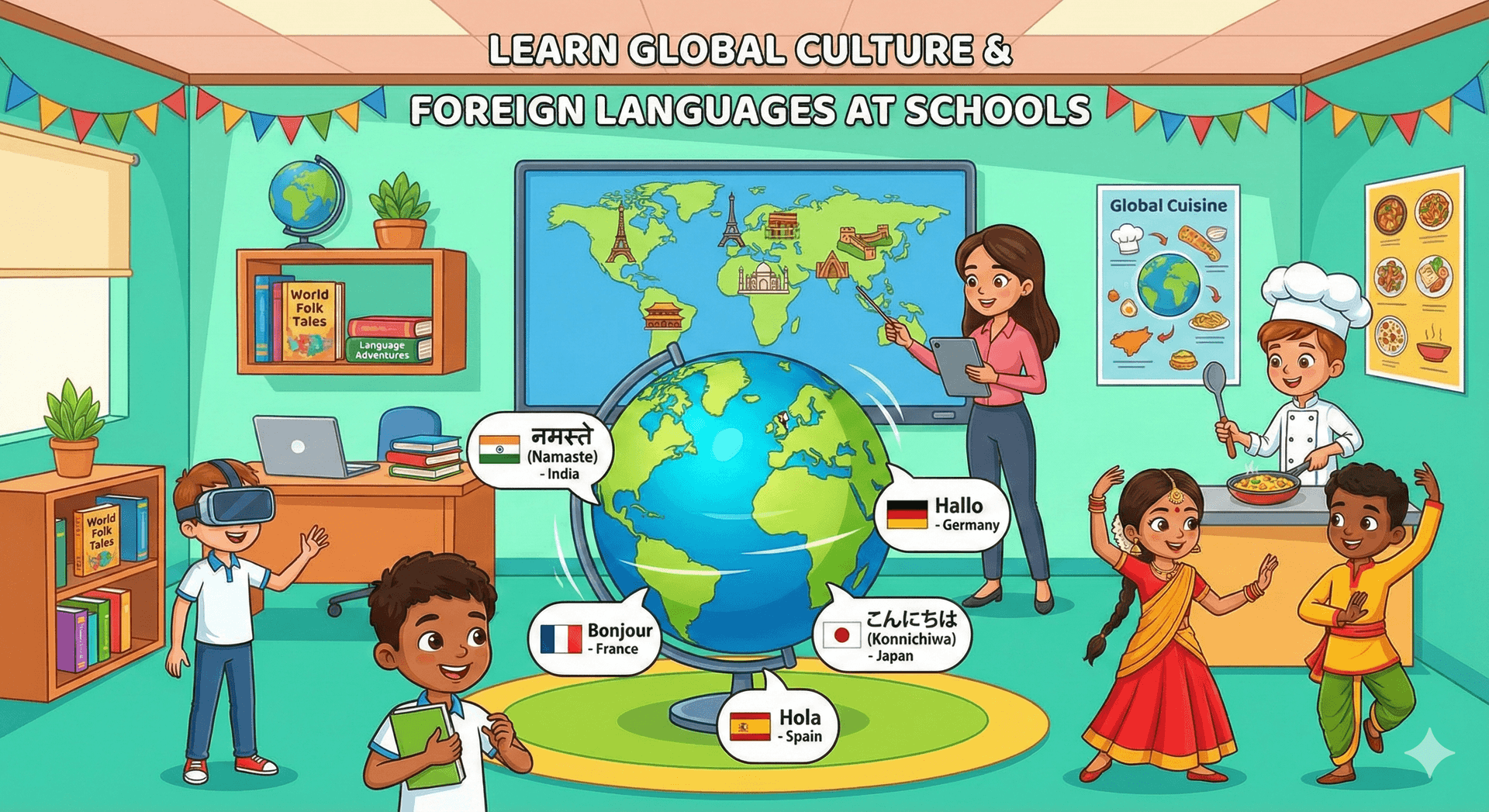

Schools across the country launch global programs for career success and better cultural awareness. They know that English alone does not help you win in today's world. Research shows that kids learn a foreign language, and it boosts their brain power. It also sharpens their problem-solving skills. The global language learning market grows by over 20% each year.
These skills help students get high-paying jobs in the future. Students who understand foreign cultures today will lead international teams tomorrow. These programs in some of the best schools in Greater Noida teach more than grammar, they develop global citizens who can work in top economies like Germany and Japan. This is now the new standard for a complete education.
Also Read: Grow Talent with Starmakers platform
Why Foreign Language Study Matters in Indian Schools?
Learning a new language like German, French, or Spanish does more than help you order food in a foreign country. It improves your brain power and knowledge. Research shows that people who learn a second or third language improve their executive function. This means they focus better, ignore distractions, and switch between tasks quickly.
Recent studies show that bilingual children, who speak two or more languages, solve problems better than children who speak only one language. Why? Their brains constantly work out by picking the right words from different languages.
It’s About Jobs, Not Just Hobbies
The language learning market grows very fast, over 20% every year. Big companies like BMW, Siemens, and Google want employees who speak more than one language. If you learn German, you open doors to jobs in Europe’s largest economy. German is the most spoken native language in the European Union. You prepare for a high-paying career ten years early when you learn it in school.
Popular Foreign Languages in Classrooms
German tops the list of foreign languages in Indian schools. Schools like Kendriya Vidyalaya teach it to over 78,000 students as of 2014. This number jumped a lot after schools rolled it out nationwide. Today, more than 700 schools offer German to around 107,000 students. That is up from just 9,500 in 1995. Kids love it because of its easy grammar and links to engineering jobs.
French comes next, especially in cities. International schools such as Ecole Globale in North India mix French with culture classes. They draw steady enrollments this way. The Spanish language is also picking up speed in terms of the rising demand among Indian students. Institutes like Cosmolingua see rising demand in Delhi and Mumbai.
Data backs this trend. Across India, 61% of 14.7 lakh schools offer three-language options. They provide this to 74% of 24.8 crore students. From 2000 to 2010, German learners grew from 12,800 to 18,550 in 144 schools alone. These languages fill classrooms. They unlock spots to study abroad. Germany hosts over 9,600 Indian students each year with free tuition.
Also Read: Values That Last a Lifetime: The Virtues Behind True Education
How Schools Teach Multi-Culture?
Have you ever wondered why some jokes make you laugh in Hindi but fall flat in English? That's culture. Multicultural programs in schools teach you "cultural intelligence." This helps you understand how people from different parts of the world see things.
Schools teach foreign cultures to build empathy in students. You learn that your way of doing things is not the only way. For example, in some cultures, people look someone in the eye to show respect. In others, they avoid eye contact because it seems rude. You learn these tips to avoid awkward mistakes and make friends around the world.
What Multi-Culture Teaching Methods are used by Schools?
Some of the best ICSE schools in Greater Noida ditch boring blackboards and try fresh methods to teach new languages and cultures:
Virtual exchange programs: Students in India connect with classes in Europe or Japan over Zoom calls.
Language labs: Kids wear headphones and use apps to practice accents. They try to sound just like native speakers.
Model United Nations (MUN): Students role-play as delegates from different countries. They solve big world problems like climate change.
Benefits Backed by Data
Bilingual kids are excelling by switching tasks faster and remembering better. Studies on Indian urban groups show this. Trilingual kids top charts in comprehension too and the job statistics prove it. German speakers get internships and jobs in 200+ German firms in India and abroad. In 2024, 759,000 Indians studied abroad needing foreign language knowledge for better communication and success.
Greater Noida World School (Sigma I) Global and Multicultural Focus
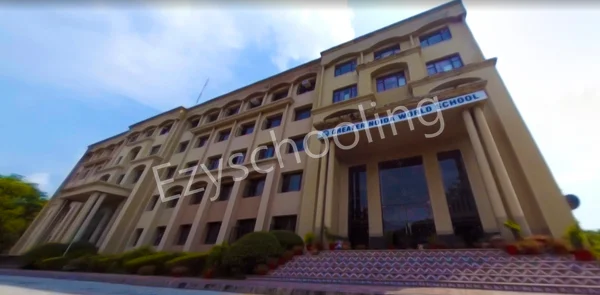
Many schools say they go global, but Greater Noida World School (GNWS) in Sigma I, Greater Noida, really does it. GNWS builds a Global-Minded Education Approach that mixes Indian values with international skills perfectly.
The "Roots and Wings" Curriculum (Classes 4-8)
GNWS focuses on the Golden Age of learning, Classes 4 to 8. Scientists say kids' brains learn new languages best at this age.
GNWS uses an "East meets West" method. From Class 4, students learn Sanskrit to stay connected to Indian roots. They also learn German to gain global wings.
Why Sanskrit? It boosts pronunciation, memory, and knowledge of Indian heritage.
Why German? It is the language of engineering and innovation. GNWS makes sure students feel comfortable with this major European language by Class 10.
How GNWS Goes Beyond Textbooks?
At GNWS, students do not just memorise verbs to learn languages. They use Smart Boards and Digital Storytelling to make German language learning an easy process. Students see and hear about Germany in fun, interactive lessons.
GNWS also runs International Exchange Programs and Virtual Classrooms. Their students might team up on a project with kids from another country. This teaches teamwork and respect for other cultures right away. It develops confidence that books cannot give.
The Result: A Smart, Balanced Student
GNWS students grow with a multicultural mindset. Sanskrit and values like "Guru Vandan" help them respect their own culture. German and global programs prepare them to travel, study, or work anywhere in the world. This balance is rare, strong, and much needed in today’s specific skill-oriented job environment.
Conclusion
Global programs are growing fast in Indian schools. For example, 107,000 students joined German programs in more than 700 schools by 2014. This number jumped from just 9,500 in 1995. These programs make students smarter. Multilingual kids solve problems better and remember things well. Cultural exchanges create strong real-world connections. They prepare young people for jobs around the world.
Greater Noida World School in Sigma I does this well. It teaches Sanskrit and German as third languages from classes 4 to 8. This program makes trilingual students as they get ready for higher knowledge after Class 12 in Germany’s free and famous public universities, and also creates strong links to Indian heritage.
To learn more about this and other schools nearby, see this list of the top schools in Greater Noida.







 as a preferred source on