








Digital libraries have emerged as powerful tools that transform how students access information and develop critical skills. Traditional libraries, while valuable, often face limitations in space, accessibility, and currency of information. Digital libraries address these challenges by providing instant access to a vast array of resources, fostering independent learning, and helping students develop crucial digital literacy skills for the future.
Educational institutions worldwide are recognizing that integrating digital libraries into their academic frameworks creates more engaged, curious, and self-directed learners. B.D.M. International School, one of the best schools in Kolkata, exemplifies this forward-thinking approach by making its digital library a cornerstone of its educational methodology, ensuring students develop strong observational and analytical skills in our increasingly digital world.
In this article, we explore how digital libraries are revolutionizing education by providing unprecedented access to information and creating dynamic learning environments that prepare students for an increasingly digital future. We will also look at how BDM International School has been at the forefront of this digital transformation.
Also Read | Revolutionizing Education in Kolkata: B.D.M. International's Journey
The Evolution from Traditional to Digital Libraries
The journey from physical to digital libraries represents one of education's most significant paradigm shifts. Traditional libraries, with their carefully curated collections of books, journals, and reference materials, have long been the intellectual centres of educational institutions. However, they come with inherent limitations:
- physical space constraints
- limited copies of popular resources
- restricted operating hours
- challenge of maintaining current information
Digital libraries overcome these constraints by providing:
- unlimited virtual shelf space
- 24/7 accessibility
- regularly updated content
Educational institutions that have implemented comprehensive digital library systems report up to 40% higher student engagement with reading materials compared to those relying solely on traditional libraries. This evolution doesn't mean abandoning traditional libraries but rather complementing them with digital resources to create a more comprehensive learning environment that caters to diverse learning styles and needs.
Key Advantages of Digital Libraries for Students
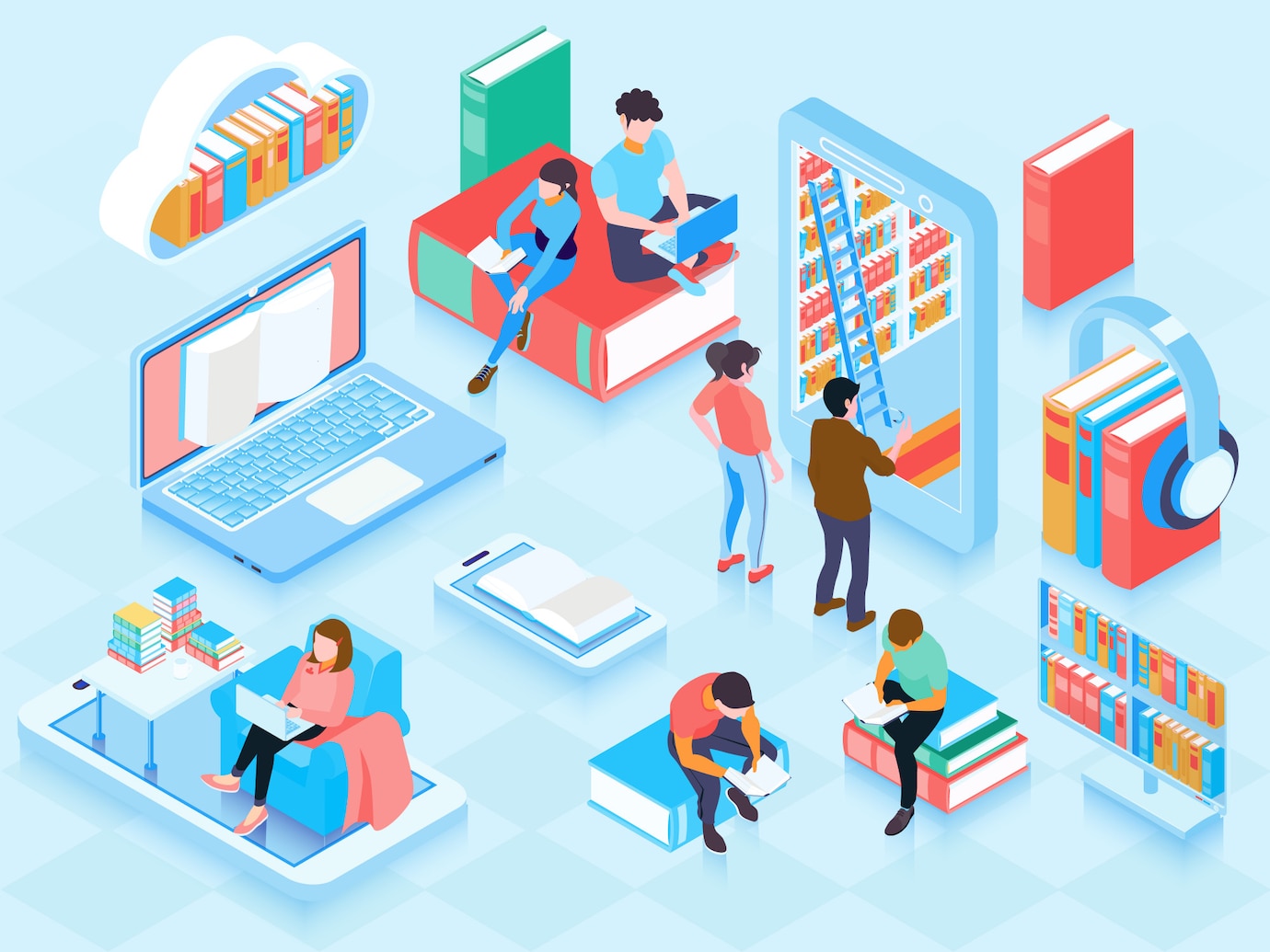
- Unlimited Access and Availability: Digital libraries break down the barriers of time and space, allowing students to access materials whenever and wherever they need them. This round-the-clock availability is particularly valuable for students with different learning schedules or those who need extra time with materials to master concepts.
- Enhanced Research Capabilities: The sophisticated search features in digital libraries help students find precisely what they need without wading through irrelevant materials. Advanced filtering options, semantic search capabilities, and cross-referencing tools make research more efficient and comprehensive.
- Multimedia Learning Support: Unlike traditional libraries that primarily house text-based resources, digital libraries offer diverse content formats including interactive e-books, video lectures, audio resources, simulations, virtual reality as well as interactive quizzes and assessments. This multimodal approach supports different learning styles and makes complex concepts more accessible through varied presentation methods.
Development of Digital Literacy through Digital Libraries
Regular interaction with digital libraries helps students develop essential digital literacy skills that prepare them for higher education and future careers. These include:
- Advanced information search strategies
- Evaluation of digital source credibility
- Digital content organisation
- Understanding of digital rights and permissions
- Effective note-taking and information synthesis from digital sources
Let us further discuss the benefits of improved digital literacy through digital libraries:
1. Digital Libraries Foster Critical Thinking
Digital libraries serve as more than just repositories of information; they are powerful tools for developing higher-order thinking skills. When students navigate digital libraries, they must make decisions about search terms, evaluate source credibility, synthesize information from multiple sources, and organize their findings coherently.
Students who regularly use digital libraries demonstrate stronger information evaluation skills and a more nuanced understanding of complex topics compared to peers with limited digital library experience. By presenting students with diverse perspectives on topics, digital libraries also challenge them to consider multiple viewpoints and develop more balanced understandings—an essential skill in our increasingly complex world.
2. Building Research Skills Through Digital Libraries
One of the most valuable aspects of digital libraries is their role in developing strong research skills that transfer across academic disciplines and into professional contexts. Digital libraries provide students with sophisticated research tools that mirror those used in higher education and professional settings.
Students learn to formulate effective search queries, use boolean operators to refine results, evaluate source credibility, and synthesize information from diverse sources. These skills form the foundation of academic success and lifelong learning capabilities.
3. Digital Libraries Support Diverse Learning Needs
Digital libraries excel at accommodating diverse learning needs through their flexibility and customization options. For students with visual impairments, digital libraries offer text-to-speech capabilities, font size adjustments, and high-contrast display options. For students with reading difficulties, interactive e-books may include built-in dictionaries, pronunciation guides, and simplified text options.
Advanced students can explore materials beyond grade level, while those needing additional support can access supplementary resources. This adaptability makes digital libraries powerful tools for inclusive education, ensuring all students can access learning materials in ways that meet their unique needs.
4. Preparing Students for the Future
As we prepare students for a future dominated by digital information and remote collaboration, digital libraries play a crucial role in developing the competencies they'll need. Comfort with digital research environments, understanding of digital information organization, and familiarity with knowledge management tools are increasingly essential skills in higher education and professional settings.
By integrating digital libraries into regular educational practice, schools help students develop natural fluency with digital information ecosystems. This fluency positions them for success in future academic and professional environments where digital information management is a fundamental skill.
Check Out | Transforming Education Through Reading
B.D.M. International School: Pioneering Digital Library Excellence
B.D.M. International School (BDMI), established in 1966 in Garia, Kolkata, is a CBSE-affiliated institution offering education from Pre-Nursery to Class 12. With a focus on holistic development through academic excellence, ethics, sports, and co-curricular activities, BDMI maintains a healthy student-teacher ratio of 30:1 in its 3.8 sq. mt. campus.

The Digital Library at BDMI is a testament to the school's commitment to innovative education. Countless books in digital format are accessible to students, supporting the school's focused approach inside the classroom and commitment to providing independent learning opportunities.
One of the best schools in South 24 Parganas, Kolkata, BDMI's digital library initiative aligns perfectly with its educational philosophy centred on the 4Cs:
- Critical thinking
- Creativity and Innovation
- Collaboration
- Communication
By providing unlimited access to quality digital resources, the school creates an environment where students can explore ideas beyond textbooks, developing research skills that will serve them throughout their academic and professional lives.
The digital library functions as an extension of BDMI's progressive teaching methodology that integrates technology into educational practices. Students are encouraged to utilize these resources for projects, assignments, and independent learning, fostering a love for knowledge exploration that extends beyond classroom walls.
For more information on this and similar schools in the area, check out this list of the best schools in Kolkata.
 as a preferred source on