






Your child practises a poem confidently at home. They remember every line and even add expressions while speaking. But when they stand in front of their classmates, their voice becomes shaky, and suddenly, they forget what to say.
For many parents, watching their child struggle with stage fright can be worrying. You may wonder why someone who speaks so freely at home becomes nervous in front of others.
Learning to express thoughts confidently is an important part of growing up. For parents exploring Sapphire International School(SIS), Crossings Republik, Ghaziabad, or other educational options, understanding how children manage speaking anxiety can also be helpful.
The good news is that children can practise speaking in comfortable, supportive ways without being pressured to perform perfectly.
Why Do Children Experience Stage Fright?
Stage fright is the nervousness someone may feel before or during a performance, presentation, or public-speaking activity.
Children may experience it for different reasons.
Fear of Making Mistakes
A child may worry about forgetting lines, mispronouncing words or answering a question incorrectly.
Sometimes, the fear of making a mistake becomes more distracting than the actual speaking activity.
Worrying About Others' Opinions
Standing in front of classmates can make children more aware of how others might react.
Thoughts such as "What if everyone laughs?" or "What if I get it wrong?" may make speaking feel difficult.
Unfamiliar Situations
Speaking into a microphone, standing on a stage or addressing a large audience can feel very different from talking with family members.
Some children may notice physical signs of nervousness, such as sweaty hands, a faster heartbeat or a trembling voice.
These experiences do not automatically mean that a child lacks confidence or has an anxiety disorder.
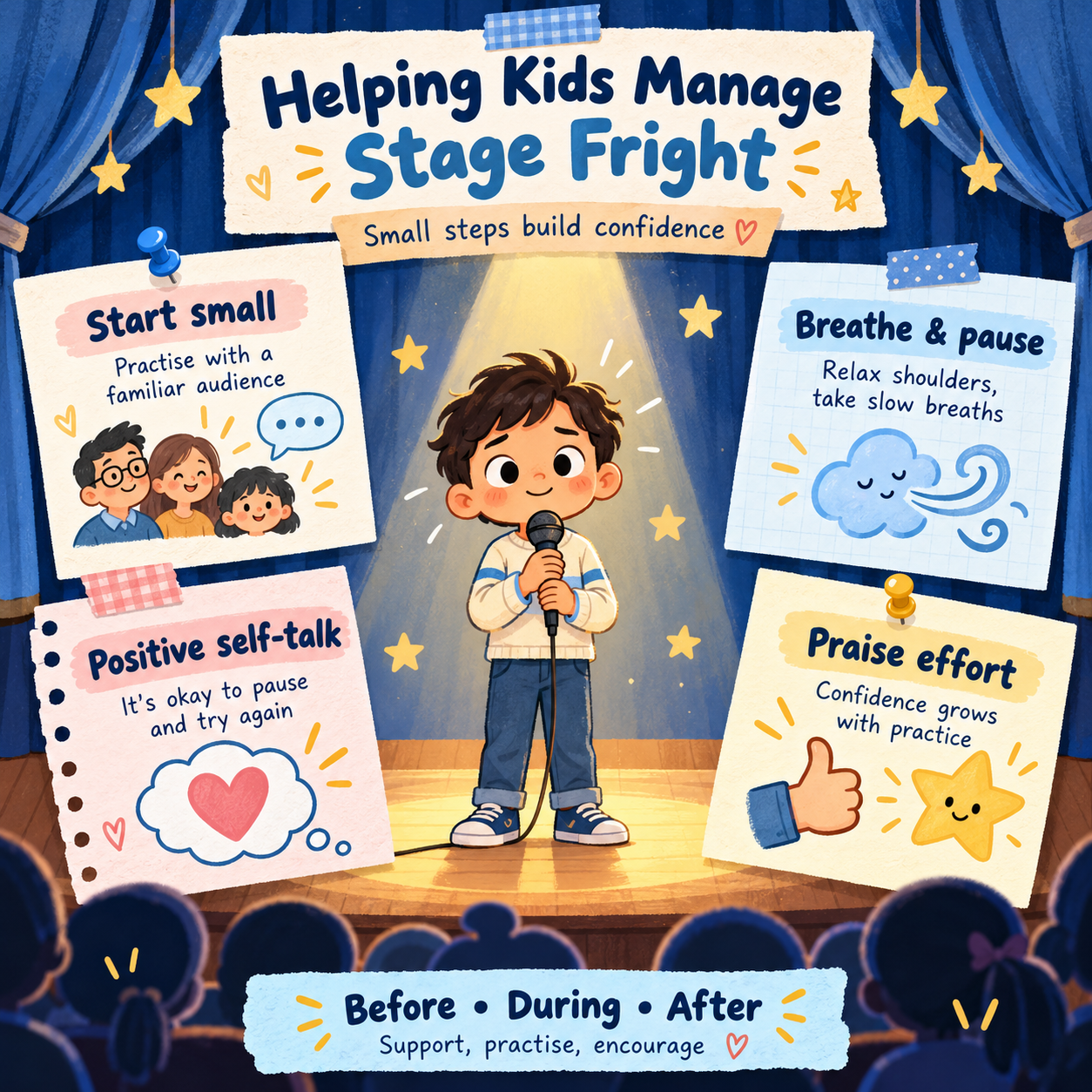
Five Simple Ways to Help Children Manage Stage Fright
Parents can make speaking practice feel less intimidating by starting with small, manageable activities.
1. Start With a Familiar Audience
Instead of immediately asking your child to speak before a large group, begin with someone they trust.
Encourage them to tell a short story, describe their favourite game or explain something interesting they learned at school.
Once they feel comfortable, they might practise in front of two or three family members.
Allow your child to decide when they feel ready for the next step.
2. Make Practice Enjoyable, Not Perfect
Children do not need to deliver every sentence perfectly during practice.
If they forget a word, encourage them to pause, look at their notes and continue.
You could even turn practice into a family activity where everyone tells a short story or speaks about a favourite memory.
Avoid interrupting repeatedly to correct every mistake.
The goal is to help children become comfortable expressing themselves, not to create another examination.
3. Teach a Simple Calming Routine
Before speaking, encourage your child to relax their shoulders and take a few slow, comfortable breaths.
They can pause briefly before beginning their first sentence.
You might practise this together before a school presentation.
For example, remind them that they can stop for a moment, breathe naturally and continue when ready.
Avoid presenting breathing exercises as a guaranteed solution. Different children may find different calming strategies helpful.
4. Encourage Positive Self-Talk
Children sometimes imagine the worst possible outcome before speaking.
Help them replace frightening thoughts with more balanced statements.
Instead of "Everyone will laugh if I forget," they could try:
- "It is okay to pause and think."
- "I do not have to speak perfectly."
- "I can try again if I make a mistake."
Keep these reminders simple and realistic.
The aim is not to ignore nervous feelings but to make them easier to manage.
5. Appreciate Effort Rather Than Results
After a presentation, avoid making applause, prizes or perfect delivery the only measures of success.
You might say, "I noticed you continued even when you felt nervous."
Ask your child how the experience felt and what they would like to practise next time.
Recognising small steps can make future speaking activities feel less like a competition.
What Should Parents Do Before and After a School Performance?
The way adults respond around a performance can shape how children experience it.
Before the Performance
Help your child understand what to expect. Discuss where they will stand, who might be watching and how they can begin.
Practise the opening lines together, but avoid excessive last-minute rehearsals.
Encourage adequate sleep and allow time for ordinary activities instead of making the entire day about the performance.
After the Performance
Let your child share their experience before offering suggestions.
If they forget a line or become silent, avoid comparing them with classmates or siblings.
Instead, ask, "What part felt difficult?" or "Would you like to try something different next time?"
Remember that a child who feels disappointed may need reassurance before discussing improvements.
When Does Stage Fright Need Additional Support?
Occasional nervousness before speaking is common. However, some children may experience distress that makes everyday school activities difficult.
Parents may want to pay closer attention when a child repeatedly avoids classroom participation, becomes extremely upset before speaking activities or struggles to communicate in particular settings.
Start by discussing the situation with your child and their teachers.
If anxiety continues to interfere with school attendance, friendships or daily activities, consider speaking with a qualified child mental health professional.
Children should receive appropriate support rather than being forced into uncomfortable performances.
Encouraging Communication at Sapphire International School, Ghaziabad
Parents searching for a Top School in Ghaziabad or comparing options for the Best School in Ghaziabad may consider how schools support student communication and participation. For families exploring Sapphire International School(SIS), Crossings Republik, Ghaziabad, useful questions include how children are encouraged to express themselves, what opportunities exist for speaking activities and how teachers support students who feel nervous in front of others. These questions can help parents understand whether the learning environment suits their child's communication needs.

Conclusion: Confidence Begins With Small Steps
Stage fright does not define a child's abilities. Every child has their own pace when learning to speak before others.
Start with something simple this week, such as encouraging your child to tell a short story to a family member.
With patience, understanding and regular opportunities to practise, children can gradually become more comfortable sharing their thoughts and ideas.
To know more about other schools in Ghaziabad, click on the link below




 as a preferred source on