








Parents often look for the Top Schools in Ghaziabad by checking academics, activities, infrastructure and results. These things matter, but there is another question worth asking: What does a child do when nobody tells them what to do next? Can they think of an idea, solve a small problem, ask a useful question or simply explore something on their own?
Think about an ordinary Sunday. A child has finished breakfast, has no homework left and is told, “You can do whatever you like.” One child immediately asks for a phone. Another starts drawing, builds something with blocks or decides to make a small paper boat. A third child may complain, “I am bored.” None of these responses makes a child good or bad. They simply show how comfortable they are with unstructured time.
This ability to take initiative is becoming increasingly important. The World Economic Forum’s Future of Jobs Report 2025 identifies analytical thinking as a leading core skill, while creative thinking, curiosity, resilience and flexibility are also expected to become increasingly important through 2030.
Also Read| No Planet B! Why Schools Should Teach Sustainability Now?
Why Is “I Don’t Know What to Do” Not Always a Bad Thing?
Children are used to adults giving them instructions: finish your homework, pack your bag, clean your room and get ready for school. A structured routine is useful, but children also need small opportunities where they have to make the next decision themselves.
Psychologists Edward Deci and Richard Ryan's Self-Determination Theory highlights the importance of autonomy, competence and relatedness in motivation. In simple words, children need chances to feel that they can make choices, become capable and connect with others.
For example, instead of telling a child exactly how to decorate a project, a parent could say:
- “You have these materials. What could you make?”
- “How could we reduce the amount of water we waste at home?”
- “Can you find three different ways to organise these books?”
The goal is not to leave children without support. It is to gradually move from “Do this” to “What do you think we could do?”
Everyday Problems Can Become Mini Lessons
Learning does not always need a worksheet. Daily life is full of small problems that can encourage children to think.
|
Everyday situation |
Instead of giving the answer |
Ask the child |
|
A toy stops working |
Immediately replace it |
“What do you think went wrong?” |
|
The family is planning a picnic |
Make the entire plan |
“What should we carry and why?” |
|
A recipe needs half the ingredients |
Calculate it yourself |
“How can we work out the new quantities?” |
|
A sibling wants the same toy |
Decide who gets it |
“What solution would be fair to both of you?” |
|
A plant looks unhealthy |
Tell the child what to do |
“What changes can we observe?” |
These moments develop what educators often call transferable skills. A child who learns to compare two solutions while planning a picnic is practising the same basic habit of thinking that may later help them solve a science, mathematics or real-world problem.
There is also a strong connection between play and learning. UNICEF's 2024 global report on early childhood education notes that playful learning can support cognitive, social, emotional, physical and creative development. It highlights five useful features of learning through play: it can be joyful, meaningful, active, iterative and social.
So, when a child builds a tower that falls down and tries again, something important is happening. They are not simply “playing.” They are forming a hypothesis, testing it and changing their approach.
The Real Skill May Be Knowing How to Start
One of the biggest differences between simply knowing something and being able to use knowledge is knowing where to begin.
Imagine a student is asked, “Find out why the neighbourhood has so much plastic waste.” There is no single textbook answer. The child must decide what information is needed, whom to ask, what to observe and how to present the findings.
That is why projects, surveys, presentations, experiments and open-ended activities can be valuable when they are designed well. They give children practice in moving through a process rather than only reaching an answer.
Parents can encourage the same habit at home with a simple four-step approach:
- Notice: What is the problem or question?
- Think: What could be causing it?
- Try: What can we do or test?
- Reflect: What worked, and what could we change?
This approach also teaches children that mistakes are information. If a paper bridge collapses, the lesson is not simply “the bridge failed.” The child can ask whether the material, shape, weight or design needs to change.
The idea connects with the scientific method: observe, question, test and revise. It also reflects a broader philosophical idea associated with John Dewey's work on experiential learning—knowledge becomes more meaningful when learners connect it with experience and reflection.
What Should Parents Look for in a School?
A future-ready school does not have to turn every lesson into a complicated activity. Instead, parents can look for evidence that children are given regular opportunities to think, participate and create.
|
Look for |
Why it matters |
|
Project-based activities |
Children apply knowledge to situations rather than only memorising it. |
|
Research and presentations |
Students learn to gather information and explain their thinking. |
|
Sports and group activities |
Children practise cooperation, discipline and communication. |
|
Creative opportunities |
Students get space to experiment and express ideas. |
|
Age-appropriate independence |
Children gradually learn to take responsibility for their choices. |
|
Questions, not only answers |
Curiosity becomes part of the learning process. |
The World Economic Forum's 2025 research, based on responses from more than 1,000 employers representing over 14 million workers, says that nearly 40% of key job skills are expected to change by 2030. Alongside technological abilities, employers continue to value human skills such as creative thinking, resilience, flexibility, analytical thinking and collaboration.
This does not mean children need to be trained for a particular job at an early age. It means they need opportunities to become comfortable with learning, adapting and solving unfamiliar problems.
How St. Teresa School Connects With This Approach
For parents exploring the Best Schools in Ghaziabad and St Teresa School, the school's stated academic approach offers several connections with this idea. Its primary wing follows a “learning by doing” approach and uses thematic learning, interactive sessions, projects, surveys and other activities. Its middle and senior wings place emphasis on presentations, surveys and research work, alongside the curriculum. The school's academic information also describes participation in curricular and co-curricular activities and attention to individuality.
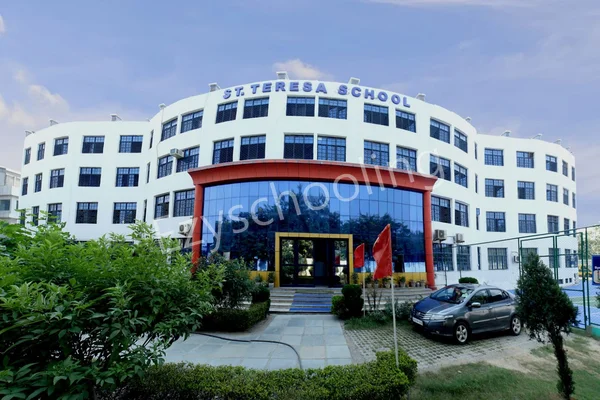
Its campus information lists facilities such as science, mathematics, computer and ATL labs, along with sports facilities and activity spaces, giving students different settings in which to learn and participate.
The future may bring jobs, technologies and problems that today's children cannot yet imagine. What parents can help build today is the habit of asking, “What can I try?” instead of always waiting for instructions.
A child who can explore an idea, make a mistake, ask a question, work with others and try again is developing something more lasting than a single academic skill. They are learning how to learn—and that may remain useful long after a particular textbook is forgotten.
For more information regarding schools that follow good environmental practices


 as a preferred source on