









If your 10-year-old talks about planting the trees and saving the water, then congratulate yourself! Because the schools you have chosen for them are teaching them correctly. Sustainability education doesn’t start when your child is reading a poem on “save trees and save lives.” It starts when students take part in a plantation drive, and when the whole class goes out, one of them switches off all the lights and fans.
These small habits make a child a responsible citizen of the future, and the world they are growing up in needs those people who take sustainability very seriously! That’s why teaching all this early on to a child is very important, and many schools all over the world are already taking initiatives to make it a regular part of their curriculum.
The St. Teresa School, Ghaziabad, is on a mission to turn students into planet-saving warriors. So that they can grow up respecting the environment and resources rather than just enjoying the privilege of a green campus and a pollution-free environment. This article will help you understand why sustainability education is important in India and how the best schools in Delhi-NCR are taking steps towards saving the environment.
Also Read: Where Green Meets STEM: The Transformative Education at St. Teresa School
Why Teaching Sustainability is Important in Schools?
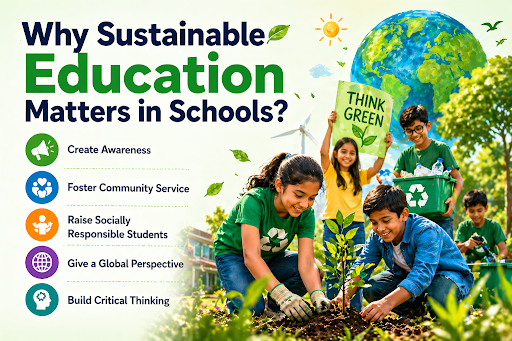
Imagine a world where highly educated people are fighting over clean water. Difficult right? The world’s resources are depleting at the speed of light, the climate is changing, and it is difficult to imagine the amount of resources your child will be left with in the future.
This makes Sustainable education very important in schools. Here’s how it shapes a child:
- Raise Awareness: A child who learns eco-friendly practices early on in their life is most likely to carry them into adulthood.
- Creates Responsible Citizens: A plastic-free policy in school might make a child concious on how to use plastic responsibly and cut their usage to a minimum.
- Develops Critical Thinking: “How to save water.” This one question alone can push students beyond their thinking capabilities. You might be surprised by what kids come up with. Sustainability pushes them to think about the limitless possibilities.
- Continues the Cycle: Schools are not just teaching sustainability to a child, but the practices are reaching the entire parent community, too. When they see their child following it, they follow it too!
The Ministry of Education in India itself said that, “Sustainability should not just be an add-on but it should be seamlessly woven into everything a school does.” That’s why just understanding it is not enough; all schools should actively make sustainability a great part of their curriculum.
Ways Schools Can Integrate Sustainability into Education
Support Eco-Friendly Practices
- The very first step towards sustainability begins with adding it to the small daily habits. Schools can introduce initiatives like “No Plastic Fridays,” encouraging students to avoid single-use plastic once a week.
- Recycling programs can be set up across classrooms and waste management practices should be encouraged to build awareness naturally, without forcing it.
Initiative Drives:
- Hands-on drives like cleanliness campaigns and plantation drives allow students to be a part of experiential learning. When a child plants a sapling or cleans a school ground, they develop a sense of responsibility and accountability towards the environment.
- Schools in India should also try to implement a system like Japanese schools, where the students are responsible for keeping their campus clean; these small activities create a big impact on a child’s mind.
Implement Sustainable Practices on campus
- Before leading the students towards sustainability, the schools should implement it first! This means investing in infrastructure like solar panels, rainwater harvesting systems and proper waste management techniques.
- When a student sees that their school is also practicing sustainability, then they stop seeing it as a strange concept and start following it in their own way.
Support & Encourage Eco Club at School
- Eco clubs are not about “Make a poster on save water.” It is more than that! This should be a space of genuine innovation, where students actively participate and find solutions for environmental problems to explore technology-driven solutions.
- By supporting these clubs, the school is also supporting the set of individuals who will lead the sustainable revolution in the future.
Also Read: St. Teresa School Indirapuram: Nurturing Young Innovators Through Hands-On Learning
How St. Teresa School Is Leading the Way in Sustainability
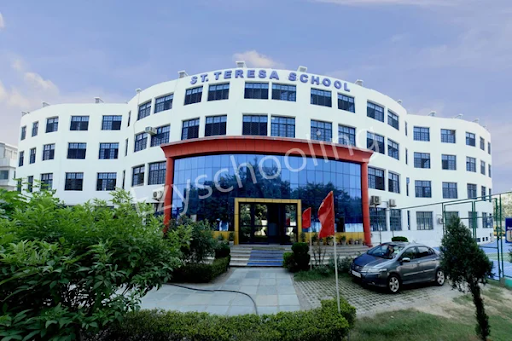
The Sustainability goal is bigger at St. Teresa Schools. It goes beyond the usual instructions to turning off the fans or closing the tap after use. Here, environmental protection is taken seriously by teachers and students as well.
As one of the top schools in Delhi-NCR, St. Teresa School takes various sustainability measures to spread awareness and to generate responsibility among students. Here are the Green Initiatives taken by the school:
Green Campus & Efficient Campus
The School has dedicated green zones and sustainable landscaping that promote biodiversity. The school is running on solar-powered systems and energy-efficient lighting.
Rainwater harvesting systems and water-saving fixtures are installed across the campus.
Responsible Initiatives
Programs like recycling, composting units and awareness campaigns lead to responsible waste management. The schools also support cleanliness and plantation drives so that students can step outside and take accountability for their actions.
Eco Awareness
The school conducts regular awareness workshops and supports the student-led eco clubs and activities. Also, it ensures that each student takes part in sustainability projects. The school also collaborates with local authorities to support green initiatives.
These small steps can lead to a bigger change in society. India has around 1.47 million schools and now imagine the impact if all these schools introduced eco-friendly practices and integrated sustainab practicesle education. There would be millions of students who are not just aware of their environment but are also equipped with the knowledge on how to solve its challenges.
For more information regarding schools that follow good environmental practices





 as a preferred source on