







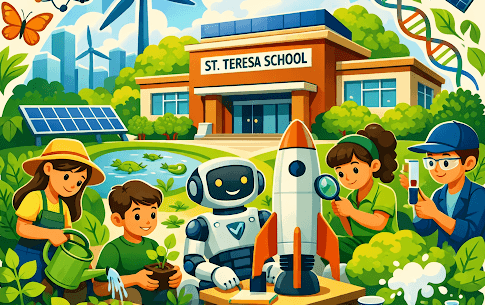

The intersection of environmental consciousness and technological innovation has become the cornerstone of 21st-century education. As India strides toward becoming a global leader in sustainability and technology, schools are reimagining their role—not just as centres of academic learning but as incubators of change-makers who understand the delicate balance between progress and planetary health. This shift is evident in institutions that seamlessly weave green practices into STEM curricula, creating students who are both technically proficient and environmentally responsible.
In this article, we explore how the fusion of sustainability with science, technology, engineering, and mathematics is reshaping educational paradigms, the role of government initiatives in promoting hands-on innovation, and how forward-thinking schools are preparing students to tackle tomorrow's challenges with creativity and conscience.
Also Read | From Tinkering to Transformation: How STS Ghaziabad is Refining School Education
The Global Imperative: Why Schools Must Embrace Green STEM Education
Modern education stands at a crossroads where traditional teaching methods no longer suffice. The world needs professionals who can innovate responsibly, keeping environmental impact at the forefront of technological advancement. Let's examine why this integration has become non-negotiable for contemporary schools.
Education for Sustainable Development: A Global Priority
UNESCO's Education for Sustainable Development framework emphasizes that learning institutions must equip students with knowledge, skills, and values to create a sustainable future. This isn't merely about adding environmental studies to the curriculum—it's about transforming how we approach education itself. Schools worldwide are recognizing that sustainability isn't a separate subject but a lens through which all learning should be viewed.
India's Green Economy and the Skills Gap
India has committed to achieving 500 GW of renewable energy capacity by 2030, a goal that demands a workforce skilled in green technologies. The current education system, however, shows a significant gap between industry requirements and graduate capabilities. Schools bridging this divide through practical STEM education and environmental awareness are creating the problem-solvers India desperately needs for its transition to a sustainable economy.
The SDG Connection in Classroom Learning
The United Nations' Sustainable Development Goals, particularly SDG 4 (Quality Education) and SDG 13 (Climate Action), aren't abstract international agreements—they're blueprints for educational reform. When students engage with real-world sustainability challenges through STEM projects, they're not just learning science; they're becoming active participants in global solution-building. This experiential approach creates a deeper understanding and lasting commitment to environmental stewardship.
Atal Tinkering Labs: Revolutionising Hands-On Learning in Indian Schools
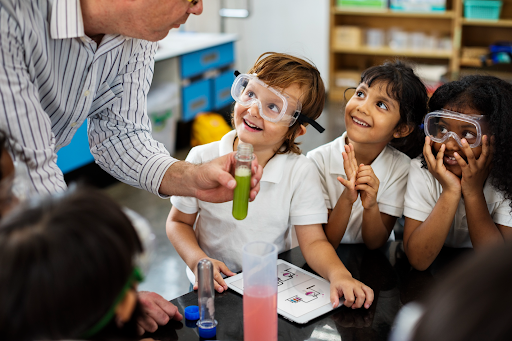
The Government of India's Atal Innovation Mission has fundamentally changed how students interact with technology and innovation. By establishing Atal Tinkering Labs across the country, NITI Aayog has democratized access to cutting-edge tools and fostered a culture where students move from passive consumers of technology to active creators.
From Theory to Tinkering: The ATL Philosophy
Traditional science education often stops at textbook explanations and occasional demonstrations. ATLs flip this model entirely. Students get their hands on robotics kits, 3D printers, IoT sensors, and microcontroller boards before they've mastered all the underlying theory. This approach mirrors how real-world innovation happens—through experimentation, failure, iteration, and eventual breakthrough. The labs serve as safe spaces where curiosity drives learning and mistakes become valuable lessons rather than marks deducted.
Building Entrepreneurial Mindsets Early
ATLs go beyond technical skills to nurture entrepreneurial thinking. Students don't just build robots—they identify problems in their communities and design technological solutions. They pitch ideas, collaborate in teams, and understand product development cycles. This early exposure to design thinking and business concepts creates a generation comfortable with innovation and unafraid of turning ideas into tangible outcomes.
National Impact and Competition Culture
Key achievements across India's ATL ecosystem include:
- Over 10,000 ATLs established in schools nationwide
- Lakhs of students are participating in the annual ATL Marathon
- State and national level competitions foster healthy innovation and rivalry
- Industry partnerships providing mentorship and real-world problem statements
- Recognition programs celebrating student innovators and teaching mentors
These competitions aren't just about winning certificates. They create networks of young innovators, expose students to ideas from different parts of the country, and establish benchmarks that drive continuous improvement in project quality and innovation depth.
Sustainability Practices in Modern Educational Institutions
Green buildings and eco-friendly campuses have moved from novelty to necessity. Schools are discovering that sustainability initiatives serve dual purposes—reducing environmental footprint while providing students with living laboratories where conservation principles come alive through daily practice.
Infrastructure Transformation: Beyond Solar Panels
Modern sustainable schools employ integrated green systems. Rainwater harvesting doesn't just conserve water; it becomes a practical demonstration of hydrology and resource management. Solar installations teach students about renewable energy while cutting electricity costs. These aren't cosmetic additions but a fundamental reimagining of how school infrastructure can educate even when classes aren't in session.
Zero-Waste Campuses as Learning Ecosystems
Implementing zero-waste policies transforms mundane activities into educational opportunities. Segregation of waste teaches students about decomposition rates, recycling processes, and circular economy principles. Composting units turn kitchen waste into rich soil for school gardens, closing the loop and demonstrating nature's efficiency. Students witness firsthand how consumption choices have consequences and how thoughtful systems can minimise environmental impact.
Student Agency in Environmental Stewardship
Successful sustainability programs give students ownership rather than imposing rules. Eco-clubs design campaigns, conduct audits, and propose improvements. Student-led initiatives—from organising tree plantation drives to reducing single-use plastics—instill leadership skills while building environmental consciousness. This participatory approach ensures that green practices aren't viewed as restrictions but as empowering actions toward a healthier planet.
Building Community Through Education: The Social Responsibility Dimension

Education confined to campus boundaries produces knowledgeable individuals but not necessarily compassionate citizens. Schools extending their influence into surrounding communities create students who understand privilege, empathy, and the power of collective action for social good.
Education Equity Through Outreach Programs
Providing free tuition and learning support to underprivileged children addresses immediate educational inequality while teaching advantaged students about social responsibility. These programs break down socioeconomic barriers, create diverse learning environments, and remind students that quality education remains a privilege many lack. The exchange benefits everyone—disadvantaged children gain access to resources, while privileged students gain perspective and humility.
Health Awareness and Community Wellness
School-organised health camps, blood donation drives, and wellness workshops extend institutional resources to the broader community. Students participating in these initiatives learn that knowledge carries responsibility—that their advantages should serve larger purposes. These experiences often prove transformative, sparking career interests in medicine, public health, and social work while building empathy muscles that textbooks cannot develop.
Character Building Beyond Classrooms
Community service isn't about adding lines to college applications—it's about forming identities rooted in service and contribution. When students clean neighbourhoods, plant trees, or teach younger children, they practice values that shape character. These experiences cultivate the understanding that success isn't merely personal achievement but the ability to uplift others and leave communities better than we found them.
Check Out | From Light to Leadership: How RSN Redefines Holistic Education
St. Teresa School, Indirapuram: Where Innovation Meets Sustainability
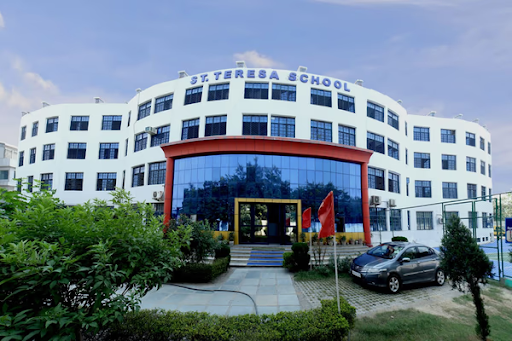
St. Teresa School in Indirapuram, Ghaziabad, stands as a CBSE-affiliated co-educational institution managed by the Boman Charitable Trust. The school has earned exceptional recognition, ranking first in Ghaziabad according to the Dainik Jagran Survey 2025 and second by the Times of India Survey 2025.
The school's Atal Tinkering Lab, inaugurated in November 2022, has rapidly become a national benchmark. Recognized as ATL School of the Month, the facility has produced remarkable achievements including four consecutive wins at INSPIRE Awards MANAK and qualification for World Robotics Olympiad Delhi regionals. Students have secured top positions in competitions like Hack-X 2.0 and various Ideathons.
The Centre for Youth Entrepreneurship, launched in April 2024, extends innovation into practical business applications. Students have joined TheKidCompany marketplace, earning Top 500 team recognition nationwide. Principal Ms. Renu Srivastava has received the prestigious Principals' Award in Entrepreneurship for two consecutive years.
St. Teresa School received the Global Sustainability Award 2024 in the SDG Hero category, recognizing students' environmental leadership. The campus integrates solar power systems, rainwater harvesting, zero-waste initiatives, and extensive green zones. Students participate actively in tree plantation drives, community clean-up campaigns, and eco-awareness workshops.
These aren't isolated activities but integrated into daily operations. The school views sustainability not as a program but as an institutional commitment.
Beyond academics and innovation, the school emphasizes character formation through value education, life skills development, and strict anti-bullying policies. State-of-the-art infrastructure includes specialized labs for physics, chemistry, biology, mathematics, music, and comprehensive sports facilities including synthetic basketball courts and indoor shooting ranges.
The school's mission—developing profound connections with nature, self, and community—manifests through every initiative. From smart classrooms to community outreach, from robotics competitions to environmental stewardship, St. Teresa School exemplifies how institutions can nurture technically proficient, environmentally conscious, and socially responsible global citizens prepared for tomorrow's complex challenges.
Discover how your child can thrive in an environment that nurtures both innovation and sustainability. Explore St. Teresa School, Indirapuram to learn more about admissions and experience transformative education firsthand.
For more information on this and other similar schools in the area, check out this list of the best schools in Ghaziabad
 as a preferred source on