






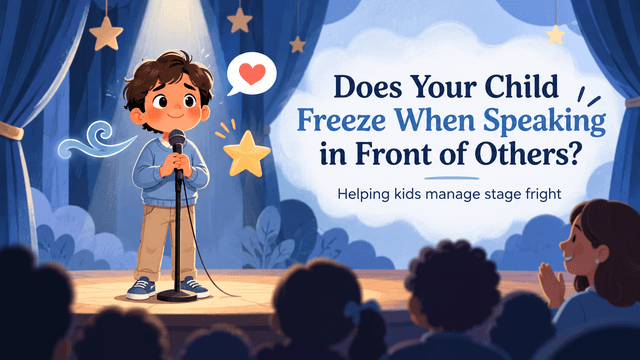
Your child recites a poem perfectly while standing on the sofa. They even add actions and make everyone laugh. But at the school assembly, they stare at the microphone, forget the first line and return to their seat in tears.
Parents comparing Top schools in Gurugram, including Delhi Public School Gurugram(DPS), Sector 67A, Gurgaon, may wonder whether their child lacks preparation or confidence. Often, neither is the problem. Speaking to familiar people and performing while others watch can feel completely different to a child.
Why Does Speaking Before an Audience Feel So Different?
At home, children know the people listening. They can stop, laugh, make mistakes and start again without feeling watched closely. During a performance, they may worry that classmates will notice every mistake.
That worry can affect the body. A child may experience sweaty palms, a racing heartbeat, shaky legs or trouble remembering familiar words. In a 2009 study, 83 adolescents aged 12–15 showed increased nervousness and physiological stress responses during a prepared speech task. The findings help explain why public speaking can feel intense, although they do not describe every child.
Imagine knowing a poem well but suddenly thinking, “What if everyone laughs?” Concentrating on that fear may make remembering the opening line harder.
What Can Make School Performances Especially Stressful?
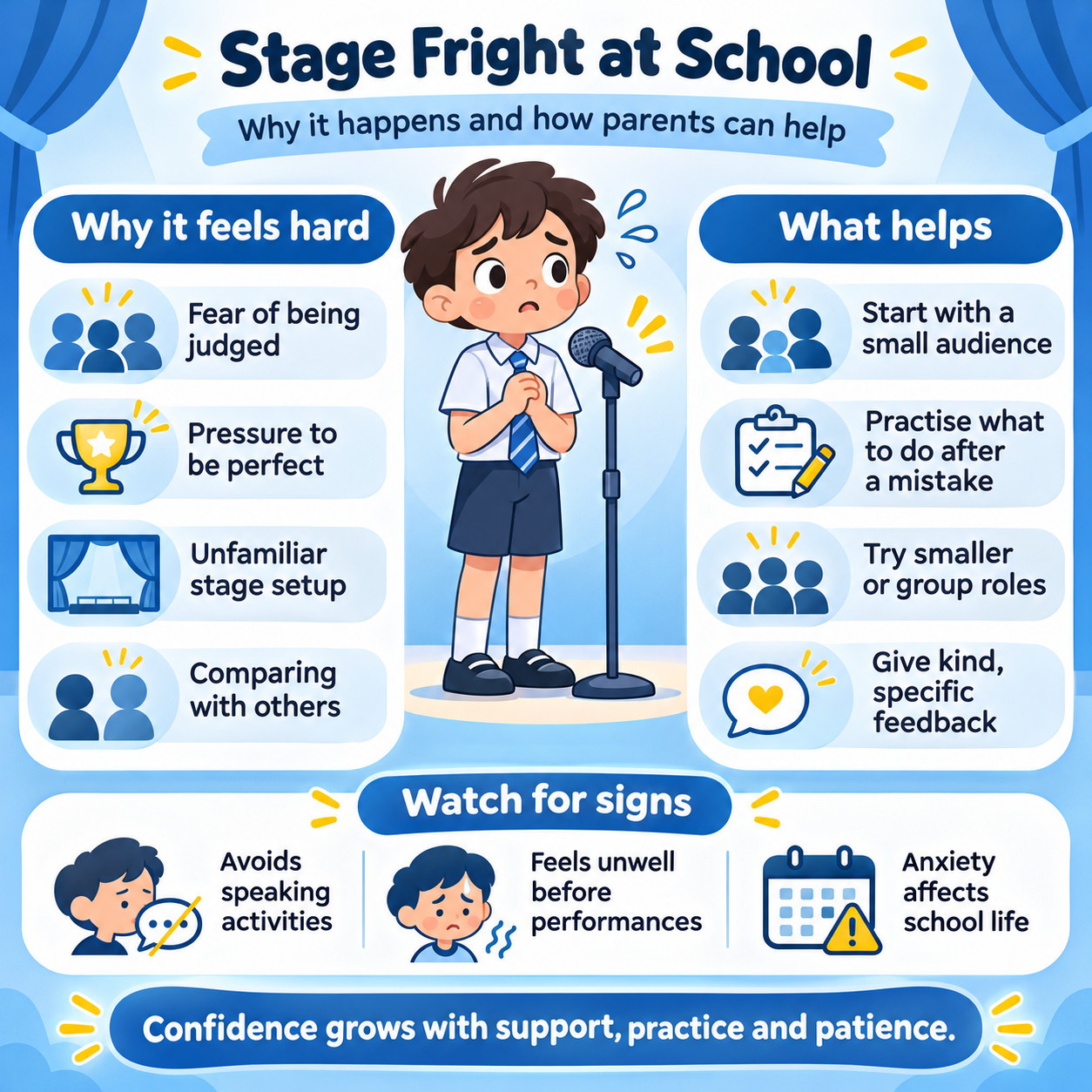
Fear of being judged. A child may handle questions in class but feel exposed when standing alone on stage. Even a small audience can feel enormous when all eyes are directed towards them.
Pressure to get everything right. If a child believes one missed line ruins the whole performance, rehearsal becomes a test rather than an enjoyable activity. Repeatedly reminding them not to make mistakes can add pressure.
Unfamiliar surroundings. A microphone, bright lights, costumes or a crowded auditorium can make the event feel different from practice. Some children are also unsettled by changes to their usual routine.
Comparing themselves with others. Watching a classmate speak freely may lead a child to think, “Everyone else is better than me.” But comfort with performing varies, and it can change with experience.
A quiet child is not necessarily anxious. Some children simply prefer smaller groups or non-performing roles. The concern is how distressed they feel, not whether they enjoy being the centre of attention.
How Can Parents Help Without Adding More Pressure?
1. Begin with a comfortable audience. Ask whether your child wants to recite a few lines to you, then perhaps to a trusted cousin or friend. If that feels manageable, try a small group. Let them help decide the next step instead of suddenly inviting an entire room of relatives.
2. Practise what to do after a mistake. During rehearsal, deliberately pause and say, “I lost my place. I'll take a moment and continue.” Then let your child try. Knowing how to recover can be more useful than repeating every line until it is flawless.
3. Offer different ways to participate. A group song, two-person dialogue or short introduction may feel more manageable than a solo speech. Discuss these options with the teacher. The goal is gradual participation, not forcing a child into the most difficult role immediately.
4. Keep feedback specific and kind. After a performance, avoid opening with “Why did you forget?” Instead ask, “Which part felt easiest?” or “What would help next time?” Recognise their effort to participate, even if they needed support.
Guidance from the UK's National Health Service (NHS) recommends listening to children's worries and avoiding pressure to enter frightening situations without understanding their concerns. Gradual practice can help, but children should not feel punished for being nervous.
When Should Parents Seek Additional Support?
A little stage fright before an annual function is common. Repeated distress deserves closer attention, especially if a child avoids school, regularly feels unwell before speaking activities or struggles to communicate in everyday classroom situations.
Speak with the teacher about when the difficulty occurs and what support is available. If anxiety persists or interferes with daily life, consult a qualified child mental-health professional. Being unable to speak in particular situations can sometimes involve conditions such as selective mutism, but one difficult performance does not establish a diagnosis.
Performing-Arts Opportunities at Delhi Public School Gurugram
For families considering the Best schools in Gurugram, it is worth asking how schools support hesitant performers, not just how often they organise stage events. Delhi Public School Gurugram(DPS), Sector 67A, Gurgaon lists theatre, music and performing arts among its offerings. An older school circular also describes Rangmanch, a dance and theatre club. These published descriptions establish opportunities the school has advertised, but do not verify participation levels or improvements in students' confidence. Parents can ask about group roles, rehearsal support and flexibility for nervous children.

Conclusion
A child who freezes on stage has not necessarily forgotten how to speak confidently. An audience introduces a different kind of pressure.
Patient listening, manageable practice and gentle feedback can help children become more comfortable over time. The aim is not to eliminate every nervous feeling, but to help children participate without believing that one mistake defines them.
For more information on similar schools, check out this list of the best schools in Gurugram.


 as a preferred source on