







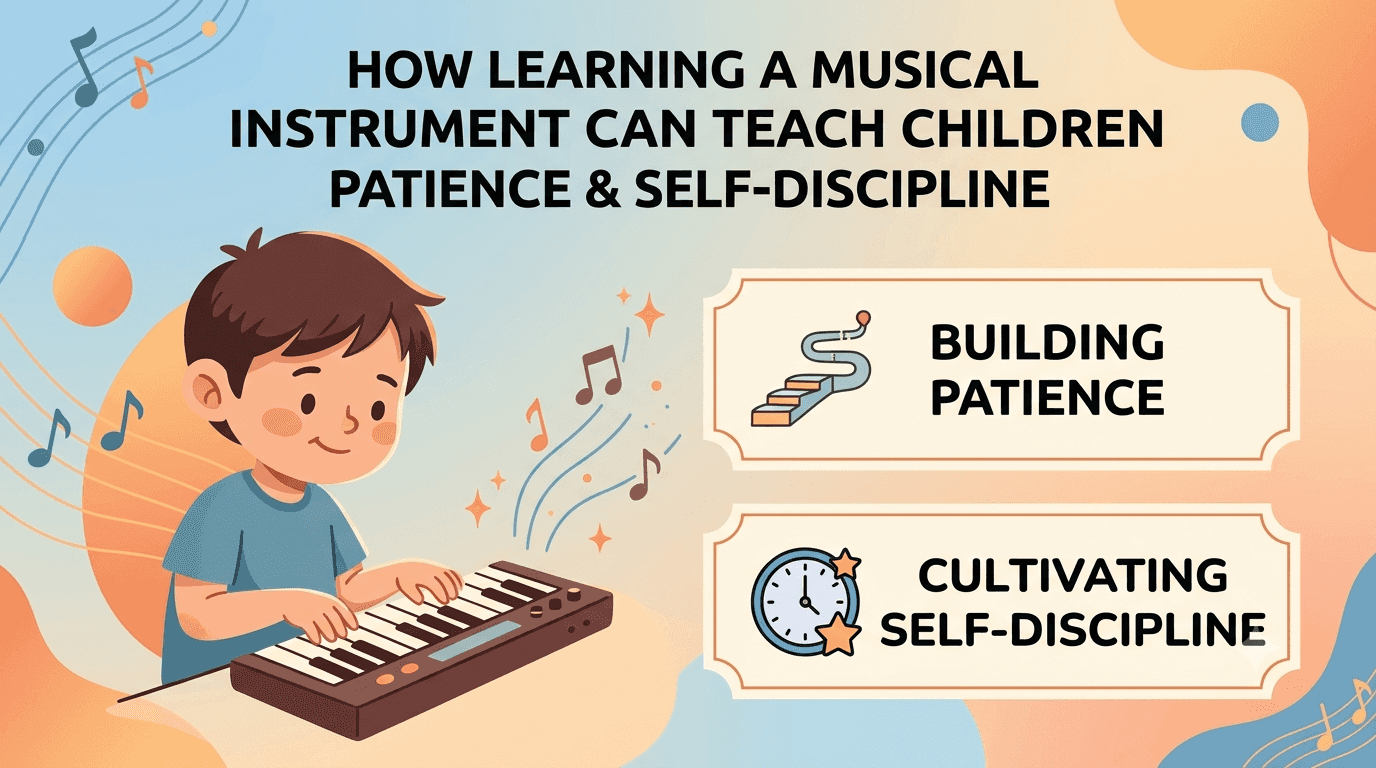

A child learning the keyboard may spend several minutes trying to play a short tune correctly. One note sounds wrong, the rhythm slips, and frustration begins to build. The child may want to stop, but with a little encouragement, they try again. Slowly, the tune starts to come together.
Moments like these show that learning music involves much more than producing a pleasant sound. It gives children opportunities to practise patience, manage frustration, and understand the value of consistent effort. At Kesar The International School, music education is part of the school's wider learning environment, offering a relevant starting point for exploring how musical practice can support children's personal development.
Also Read| From Ganga to Robotics Labs: The Five Pillars Transforming Learning
1. Why Learning an Instrument Teaches Patience
Children often want to see results quickly. Whether they are learning to ride a bicycle, solve a difficult problem or play a musical instrument, progress can feel slow when a new skill requires repeated effort.
Learning an instrument helps children experience this process directly. A beginner must learn how to position their fingers, recognise notes, follow a rhythm and coordinate different movements. These skills rarely develop perfectly in the first lesson.
For example, a child learning the keyboard might struggle to play a sequence of notes without pausing. Instead of mastering the entire song at once, the child can practise a few notes, repeat them, and gradually move to the next part.
This teaches an important lesson: improvement often happens through small steps rather than one big achievement.
Parents can reinforce this lesson by noticing progress that might otherwise go unrecognised. A child who plays a difficult section more smoothly than yesterday deserves encouragement, even if the complete song is not yet perfect.
Over time, such experiences can help children become more comfortable with gradual progress in other areas of life, including schoolwork, sports and creative activities.
2. How Regular Music Practice Builds Self-Discipline
Self-discipline means learning to manage one's actions and follow through on responsibilities, even when the task is not immediately enjoyable. Musical practice provides children with a practical opportunity to develop this habit.
Learning an instrument involves several small responsibilities. Children may need to remember their lesson schedule, prepare their instrument, follow their teacher's instruction,s and practise between lessons.
A regular routine can make these responsibilities easier to manage.
For instance, a child might practise the keyboard for 10–15 minutes after completing homework. During that time, the child could revise a familiar tune, work on a difficult passage, and finish by playing a favourite piece.
The aim is not to make every practice session long or demanding. It is to help children understand that regular effort matters.
Research on self-regulated learning in music education highlights the value of skills such as setting goals, monitoring progress and reflecting on practice. Children can gradually learn to identify what needs improvement instead of relying entirely on adults to direct every step.
Parents can encourage this independence with simple questions:
- Which part of the song would you like to improve today?
- What felt easier than it did last time?
- What would you like to practise during your next session?
These questions help children take an active role in their learning. Rather than practising only because an adult tells them to, they begin to understand how their own choices contribute to progress.
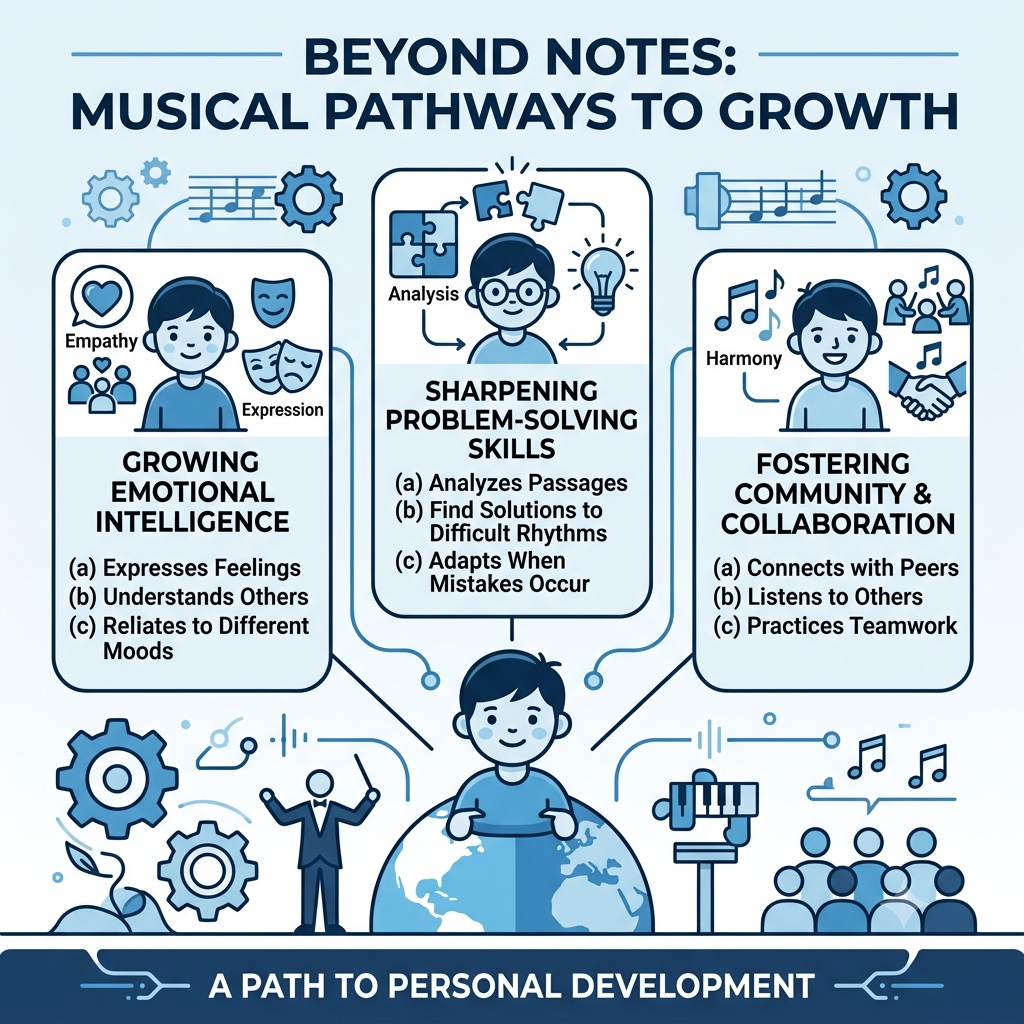
3. Learning to Handle Mistakes Without Giving Up
Making mistakes is a normal part of learning music. A child may press the wrong key, lose the rhythm, or struggle to remember a tune. How the child responds to these moments can be just as important as learning the notes themselves.
Instead of immediately correcting every mistake, parents can encourage children to identify what went wrong and try a different approach. For example, if a child repeatedly struggles with one part of a song, they can slow down, practise that section separately and then try it at the usual speed.
This approach helps children see mistakes as information rather than failure.
Research published in Cognition in 2024 reviewed 22 longitudinal studies involving 1,734 participants and found that music training was associated with improvements in inhibitory control, a skill involved in managing impulses and regulating responses.
Although this does not mean every child will develop patience through music lessons alone, it offers evidence that musical training can support certain aspects of self-regulation.
Parents can also help by avoiding comments such as, “You should have learnt this by now.” Instead, try asking, “Which part would you like to work on again?”
This small change can reduce the pressure to perform perfectly and help children focus on what they can improve.
4. How Parents Can Make Music Practice a Positive Experience
Children are more likely to stay engaged when music feels enjoyable and manageable. Parents do not need to be musicians themselves to support this process. A few simple habits can make practice more rewarding.
- Start with short sessions. A manageable practice period is often more helpful than a long session that leaves a child tired or frustrated.
- Set small, clear goals. Completing one section of a song can feel more achievable than trying to master an entire piece.
- Recognise effort and progress. Notice when your child concentrates, tries a new strategy, or returns to a difficult passage.
- Avoid comparisons. Every child learns at a different pace. Comparing siblings or classmates can turn music into a source of anxiety.
- Allow room for enjoyment. Let children occasionally play a favourite tune or explore music they like, rather than focusing only on assigned exercises.
It is also important to listen when a child says they are tired or losing interest. A short break, a conversation with the music teacher or a change in practice goals may help. Self-discipline should not mean ignoring every feeling or forcing a child to continue at any cost.
The aim is to help children build a healthy relationship with effort, responsibility and learning.
Also Read| From Vidyaarambh to World Records: Blending Ancient Wisdom with Modern Excellence
A School Environment That Makes Room for Music
When choosing a school, parents may want to understand how creative activities fit into a child's everyday education. Kesar The International School, which describes itself as a school combining cultural values with progressive education, includes music and dance under its KALA initiative.
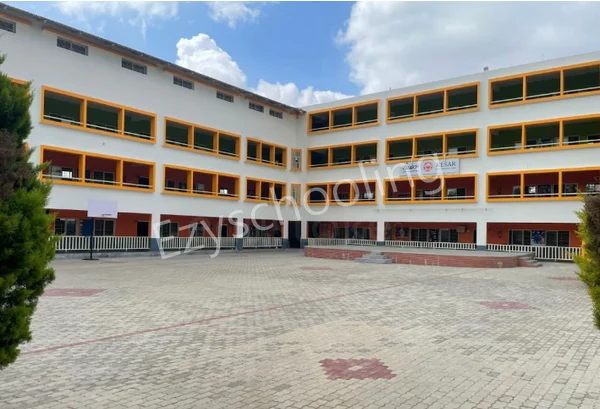
According to the school's official music and arts information, keyboard lessons are mandatory up to Grade 5, while guitar lessons are provided for students in Grade 5 and above, with an individual instrument for each child. For parents exploring a Top school in Bangalore or comparing options for the Best school in Bangalore, understanding how a school incorporates music into its learning environment can be one useful consideration alongside teaching quality, student support and the child's individual needs.
Conclusion
Learning a musical instrument gives children opportunities to practise patience, develop routines and respond to mistakes with a more positive attitude. These lessons emerge gradually, through repeated practice and the support of adults who understand that progress takes time.
Parents do not need to expect perfect performances or daily enthusiasm. Instead, they can help children set realistic goals, recognise small improvements and enjoy the process of learning.
A child who learns to work through a difficult musical passage may begin to understand an equally valuable lesson for life: you do not have to get everything right the first time to keep making progress.
For more information on this and similar schools, check out this list of the best schools in Bangalore.


 as a preferred source on