







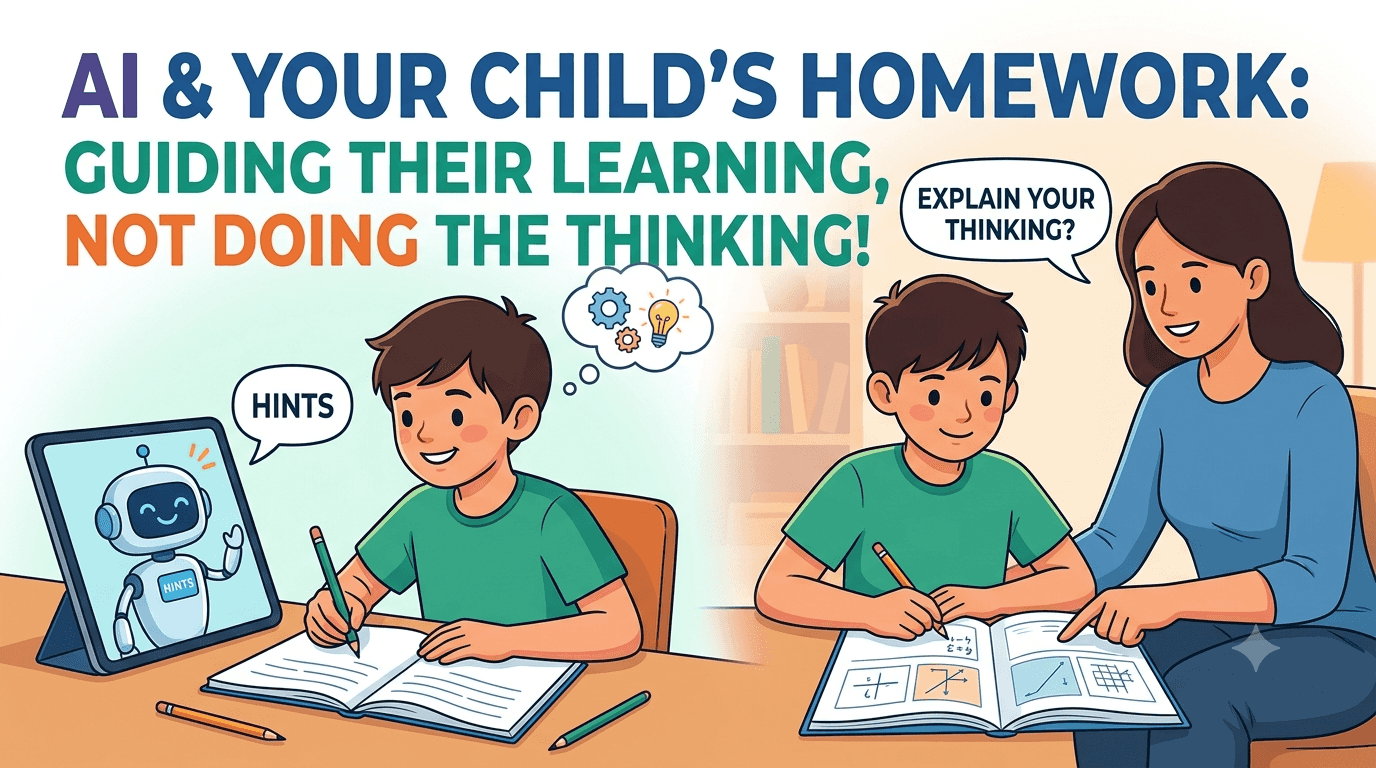

A child finishes a difficult homework assignment in ten minutes using an AI tool. The answers look correct, but when asked to explain them, the child struggles to say how they arrived at the result. This is becoming a concern for many families as artificial intelligence becomes easier to access.
AI can help children understand difficult concepts, practise questions, and explore new ideas. However, there is a difference between using technology to learn and using it to avoid learning. For parents exploring a Best School in Bangalore, understanding this difference can help them guide their children's learning more effectively at home.
Also Read| Why Inquiry-Based Play is the Foundation of Future Success
When Does AI Help Children Learn, and When Does It Do the Work for Them?
The value of AI depends largely on how a child uses it. When used thoughtfully, it can make learning more accessible. A child who finds fractions difficult, for example, can ask an AI tool to explain them using everyday examples, such as sharing a pizza. The child can then try solving similar questions independently.
Problems arise when children ask AI to complete an entire worksheet, write an essay, or provide answers they submit without understanding. Although the task may be finished, the child may miss the thinking and practice needed to learn the subject.
AI should act more like a guide than a replacement for a teacher or student. It can explain, suggest, and provide practice, but children still need opportunities to think, make mistakes, and reach their own conclusions.
Five Practical Rules Parents Can Follow at Home
Parents do not need to understand every technical detail of artificial intelligence to guide their children. A few simple habits can make its use more responsible.
1. Encourage children to try before asking AI
Ask your child to read the question, think about it, and attempt an answer first. If they get stuck, help them identify the exact part they do not understand. This encourages effort without making them feel that asking for help is wrong.
2. Ask for hints instead of complete answers
Children can use AI to request a clue, a simpler explanation, or a similar practice question. For example, instead of asking it to solve a maths problem, they could ask it to explain the first step and let them complete the rest.
This keeps the child involved in the learning process.
3. Make explaining the answer part of homework
Once the child has used AI, ask them to explain the answer in their own words. They might describe a science concept, explain why a historical event happened, or solve a similar maths problem without assistance.
If they cannot explain the answer, they may need to revisit the concept rather than simply memorise the generated response.
.png)
4. Teach children to check information
AI tools can produce incorrect facts, confusing explanations, and convincing answers that are not reliable. Encourage children to compare important information with their textbooks, class notes, or trusted sources recommended by their teachers.
The aim is not to make children doubt everything. It is to help them understand that information should be checked before it is accepted.
5. Set clear rules about privacy and honesty
Children should not share personal information, passwords, home addresses, or private school documents with AI tools. Parents should also check the platform's age requirements and discuss the school's rules for AI-assisted assignments.
Explain that submitting AI-generated work as entirely their own can prevent genuine learning and may break academic rules. Children should understand when AI assistance needs to be acknowledged.
How Can You Tell Whether Your Child Is Still Doing the Thinking?
You do not need to watch every interaction your child has with an AI tool. Instead, pay attention to what your child can do after using it.
Consider these questions:
- Can your child explain the answer without reading it from the screen?
- Can they identify which information they checked or changed?
- Can they solve a similar question independently?
- Can they explain why they accepted or rejected an AI suggestion?
For example, if your child uses AI to understand a chapter on the water cycle, ask them to explain how evaporation and condensation work. They could also draw the process or describe an everyday example.
If they can explain the concept in their own words, AI may have supported their understanding. If they can only repeat the generated answer, they may need more practice.
Avoid turning these conversations into tests. A calm discussion helps children share what they understand and where they need support.
Match AI Use to Your Child's Age
Younger children generally need more adult guidance when using AI. Parents can help them ask appropriate questions, understand explanations, and check information together. For older children, supervision can gradually shift towards teaching responsible use, independent checking, and academic honesty.
The right level of freedom depends on a child's maturity, the tool being used, and the task involved. Follow the platform's age requirements and the school's expectations.
AI should also not become the first solution to every difficulty. If a child repeatedly struggles with a subject, a conversation with their teacher may be more useful than generating another explanation. Children need human feedback, encouragement, and teaching that responds to their particular learning needs.
Also Read| Equipping Students with Skills for a Fast-Changing World
How Naavu School Fits Into the Conversation
When families consider a Best School in Bangalore or a Top School in Bangalore, they can look beyond academic performance and consider how a school approaches understanding, independent thinking, and responsible learning.

Naavu School, in Whitefield, Bangalore, is one school parents may explore as part of that decision. Regardless of the school a family chooses, children benefit when their learning involves more than producing correct answers. AI can be a useful support, but it should not replace a child's own effort, judgement, or understanding.
Let AI Support Learning, Not Replace It
Artificial intelligence does not have to be an enemy of education. Used thoughtfully, it can help children approach difficult subjects with greater clarity and confidence. Parents can guide this process by encouraging children to attempt problems, ask for hints, check answers, and explain what they have learned. The real measure of successful homework is not how quickly it gets completed, but how much the child understands afterwards.
For more information on this and similar schools, check out this list of the best schools in Bangalore.


 as a preferred source on