







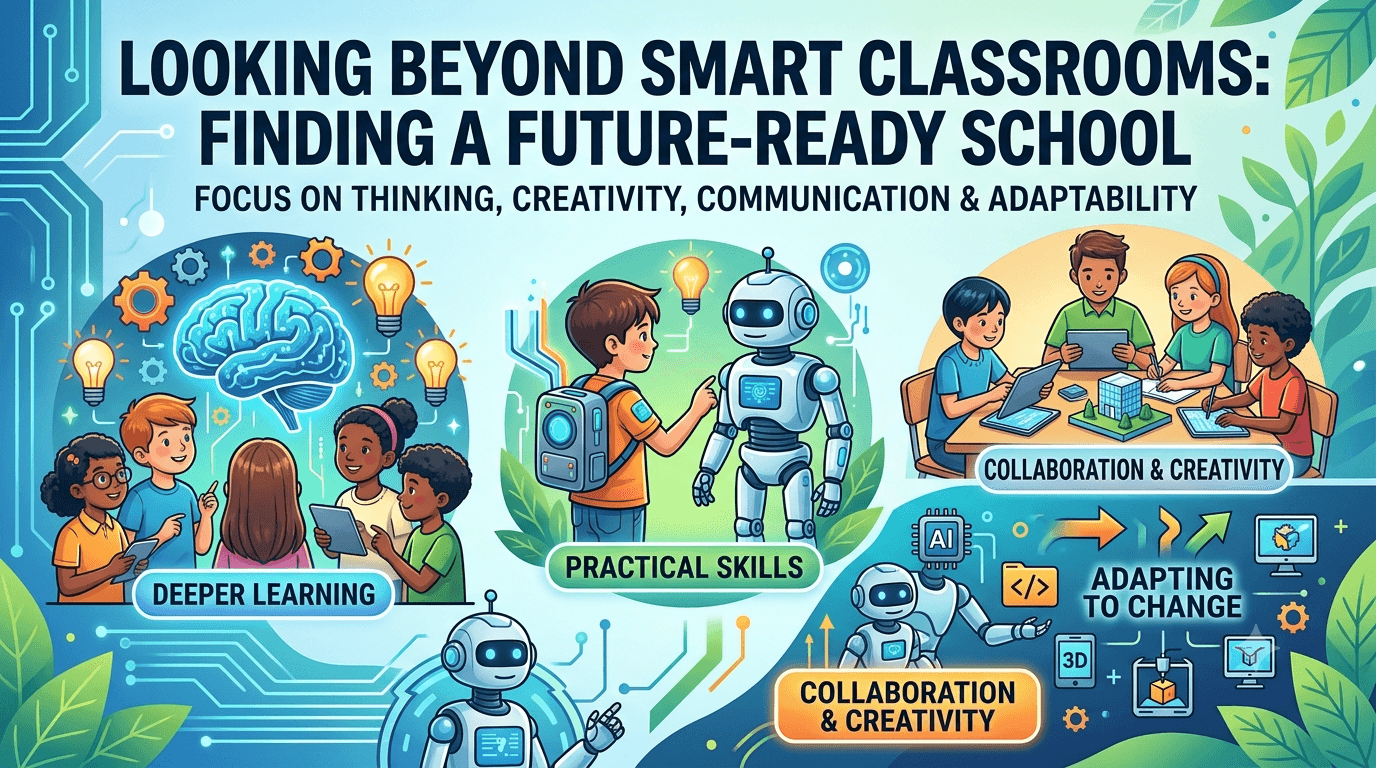

Walk into a modern school today, and you may see smart boards, computer labs, robotics equipment, and other technology designed to make learning more engaging. These features can certainly add value, but do they automatically make a school future-ready?
Not necessarily.
For parents looking for a Top School in Bangalore, the more important question is not how much technology a school has, but how that technology is being used to develop a child's thinking, creativity, communication, and ability to adapt. A future-ready school should prepare children not just to use new tools, but to learn continuously and respond confidently when situations change.
Here are some things parents should look for beyond smart classrooms.
Also Read| Empowering Digital Learners: How Computer Labs Shape 21st-Century Education
1. Look at What Children Do, Not Just What the School Has
A robotics lab or smart classroom may look impressive during a campus tour. But parents should ask what students actually do with these resources.
Are children encouraged to build, experiment, and solve problems? Do they work on projects? Are they asked to find different solutions to a challenge?
There is an important difference between having technology and learning through technology.
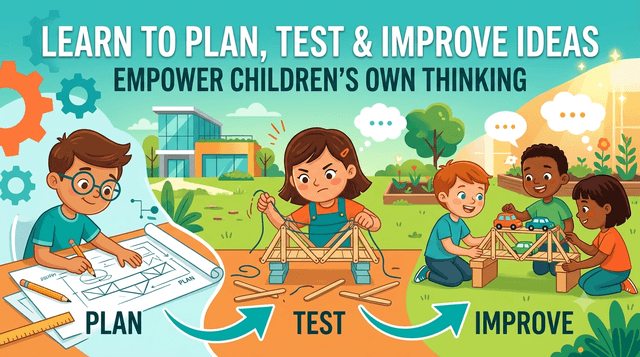
For example, using a digital presentation to explain a lesson is useful. But designing a model, testing an idea, identifying what went wrong, and improving it can develop deeper learning.
During a school visit, parents can simply ask:
“Can you give me an example of something students create or solve using technology?”
The answer can tell you much more than a list of equipment.
2. Check Whether Children Are Learning to Think, Not Just Remember
Academic knowledge will always matter. However, children also need to know how to use that knowledge when they face an unfamiliar problem.
A future-ready school should therefore provide opportunities to develop:
- Critical thinking
- Problem-solving
- Creativity
- Questioning
- Decision-making
- Analytical thinking
Parents can observe whether classroom activities encourage children to explain why an answer works rather than simply provide the correct answer.
Even mistakes can provide useful clues. When a child gets something wrong, is the focus only on correcting the answer, or does the teacher encourage the child to understand what happened and try again?
Learning to rethink an approach is a valuable skill that extends far beyond school examinations.
3. Look for Communication and Collaboration in Everyday Learning
The ability to communicate an idea clearly can be just as important as having a good idea.
Children need opportunities to speak, listen, discuss, present and work with others. Group projects, classroom discussions, presentations and collaborative activities can help them practise these skills in meaningful situations.
Parents visiting a school can ask:
“How often do students work together or present their ideas?”
The answer matters because collaboration should not exist only during an annual event. It should gradually become part of how children learn.
A child who learns to listen to another viewpoint, explain an opinion respectfully, and contribute to a group is developing skills that can remain useful throughout life.

4. Ask Whether Life Skills Have a Real Place in School
Future readiness is not only about coding, artificial intelligence, or advanced technology.
Children also need to learn how to manage responsibilities, communicate effectively, make decisions, understand basic financial concepts, work independently and interact respectfully with others.
Parents should therefore look at whether life skills are treated as an occasional workshop or are meaningfully included in the learning experience.
A school that gives children regular opportunities to practise responsibility and independence can help them become more confident in handling situations outside the classroom too.
5. Find Out How the School Supports Different Learners
No two children learn in exactly the same way. Some may understand a concept quickly, while others may need more time, practice, or a different explanation.
A future-ready school should have ways to identify these differences rather than relying only on examination marks.
Parents can ask:
- How does the school identify learning gaps?
- What happens when a child is struggling with a subject?
- How is individual progress monitored?
- How are parents informed about areas that need attention?
This is an important part of future readiness because adaptability also means recognising what a learner needs and helping them progress from there.
6. Think About the Child's Future, Not Just the Next Exam
Choosing a future-ready school does not mean choosing technology over academics.
Strong foundations in language, mathematics, science, and other subjects remain essential. The real goal is to combine academic knowledge with the ability to apply it.
Parents should also consider whether a school gradually helps children understand their interests, strengths, and possible future pathways. Exposure to different areas can help children make more informed decisions as they grow older.
The best approach is therefore not:
Academics versus future skills.
It is: Strong academics + practical application + transferable skills.
Also Read| Top Social Responsibility Club
What Future-Ready Learning Can Look Like at Goldenbee Global School
Goldenbee Global School provides an example of a broader approach to future readiness. Its current curriculum framework places Future Readiness alongside academics, Life Skills, Character & Wellbeing, Sports & Fitness, and Creative & Performing Arts.

The Begur Road campus also highlights a STREAM Innovation Lab, while the school's wider future-ready programme includes areas such as AI, robotics, coding, STEM, IoT, 3D printing and design thinking. This broader combination is relevant for parents comparing a Top School in Bangalore or looking for the Best School in Bangalore, because it reflects the idea that preparing children for the future involves more than simply putting technology into classrooms.
A Simple Checklist for Parents Visiting a School
Before making a decision, ask yourself:
- Do children get opportunities to create, experiment, and solve problems?
- Are students encouraged to ask questions?
- Do they regularly communicate and collaborate?
- Are life skills part of everyday learning?
- How does the school support children who learn differently?
- Does assessment look beyond simple memorisation?
- Does the school expose children to different interests and future pathways?
- Is technology being used meaningfully rather than simply displayed?
These questions can help parents look beyond attractive infrastructure and understand what everyday learning may actually feel like for their child.
Conclusion
A future-ready school does not have to be the one with the most impressive gadgets or the longest list of technology facilities.
Instead, look for a school where children are encouraged to think, question, create, communicate, collaborate, and adapt.
Smart classrooms can support that process, but they are only one part of it. What matters most is whether the learning environment helps children become confident learners who can use what they know in new situations.
For parents, that is perhaps the more meaningful definition of being future-ready.
For more information on this and similar schools, check out this list of the best schools in Bangalore.
 as a preferred source on