








Have you ever noticed how in most online classes, only a handful of students speak while the rest quietly turn off their cameras? It’s not because they aren’t interested; large virtual classrooms simply make it harder to participate, connect, or ask questions.
Parents today understand that online learning needs more than videos and worksheets. It needs interaction, attention, and community, something that traditional online classes struggle to provide.
This article explores how small learning pods enhance focus and collaboration, why an eight-student model strengthens peer support, and how StayQrious Neoschool, one of the best online schools in India, uses its unique 8-member pod system to make virtual learning personalised, engaging, and deeply human.
Also Read | 3 Hours a Day: Less Time, More Growth with Flexible Learning at StayQrious Neoschool
Why Small Pod Learning Works Better in Online Education
Traditional online classrooms often mimic large physical classes, many students, one teacher, minimal conversation. This often leads to passive learning where students simply listen rather than engage. Learning pods flip this approach by reducing the group size dramatically, allowing teaching to feel personal, interactive, and human, even through a screen.
When only eight students share a virtual space, the experience becomes intimate, responsive, and far more effective. Here’s why small pods work so well:
More focused attention: In a pod of just eight learners, the teacher isn’t multitasking between dozens of faces. They can genuinely observe each child’s behaviour, participation style, learning pace, and emotional state.
- Students receive individual attention during discussions.
- Teachers can quickly identify who needs help, who is excelling, and who might be disengaged.
- Personalized strategies, extra explanations, enrichment activities, or targeted questions, become easier to deliver.
Smaller groups mean no one fades into the background, ensuring every learner stays supported and seen.
Higher engagement: Large online classes often lead to silent screens and reluctant participation. But small pods naturally push students to be active contributors.
- Every child gets multiple chances to speak, share ideas, and answer questions.
- Discussions feel safe and conversational, not intimidating like big Zoom rooms.
- Students become more confident because they know the group and the teacher well.
This constant involvement keeps energy high and prevents the disengagement common in bigger online classrooms.
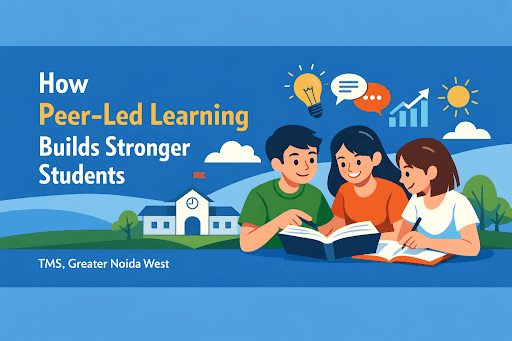
Stronger peer learning: Small pods build a sense of belonging. Students learn together, support each other, and form genuine academic friendships.
- They collaborate on ideas without the chaos of large-group discussions.
- Peer explanations become more meaningful because students trust each other.
- Celebrating progress together builds motivation and accountability.
Over time, the pod feels like a mini-community, something crucial for online learners who often miss the social side of school.
Less screen fatigue: When classes are small, teachers can vary the pace, switch activities smoothly, and maintain a natural flow.
- Students don’t feel overwhelmed by constant noise or clutter on the screen.
- Small-group discussions make classes feel lighter and more conversational.
- Breaks, interactions, and transitions happen naturally, reducing burnout.
As a result, online school stops feeling like a long video call and starts feeling like a dynamic learning environment.
Personalised Feedback Becomes Easier and Faster
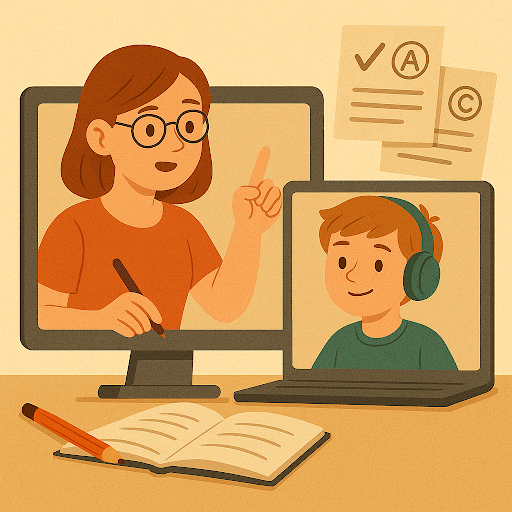
One of the biggest challenges in online education is making sure every child receives timely, meaningful, and individualised support. In large virtual classrooms, personalised attention gets diluted. But with an 8-member pod, feedback becomes quick, specific, and deeply effective because the teacher can track each learner closely.
With smaller pods:
- Teachers can give tailored feedback almost immediately:
With only eight students, teachers can observe how each learner approaches tasks and respond on the spot. Feedback becomes more conversational, teachers guide corrections, clarify doubts, and reinforce concepts right when the student needs it. - Assignments are reviewed quicker because the group size is manageable:
Teachers can go beyond checking answers and actually analyse the student’s thinking process. Faster review cycles keep learning active, help students improve sooner, and prevent feedback from being delayed or overlooked. - Learning gaps are identified early, preventing students from falling behind:
Small groups allow teachers to spot small misunderstandings or repeated errors quickly. Early detection means early support, students get help before confusion turns into frustration or long-term gaps. - Students receive individual attention without feeling judged or singled out:
Pods create a comfortable, familiar environment where students feel safe asking questions or seeking help. Individual attention feels encouraging, not intimidating, helping students grow at their own pace.
How Pods Increase Confidence & Reduce Isolation
Online learning often leaves students feeling disconnected, hesitant to turn on cameras, unsure whether to speak, and afraid of being judged in front of a large digital class. Smaller pods change this dynamic completely by creating a close-knit learning space where students feel seen, supported, and encouraged.
Small pods fix this by creating community:
- Students feel safe to speak because they know their group members:
With the same small set of peers every day, students build familiarity and trust. This safety encourages them to ask questions, share ideas, and participate more freely without the fear of being embarrassed or ignored. - Regular interaction builds comfort, helping shy or quiet students open up:
When students engage in discussions repeatedly within a small group, even the quietest learners begin to participate. Frequent interaction creates an environment where everyone feels comfortable contributing. - Every voice matters, which boosts self-esteem and communication skills:
In an eight-member pod, no one gets overshadowed. Every learner gets equal space to speak, present, debate, or lead activities. This boosts confidence and helps develop strong communication skills. - A strong support system naturally forms, reducing academic and emotional isolation:
Small pods create friendships and peer support that mimic real classroom connections. Students feel less alone, share concerns openly, and motivate each other to stay consistent and confident in their learning journey. - Pods turn online school from a solo experience into a shared journey:
Instead of feeling like they’re studying on their own, students learn alongside peers who grow with them, making virtual education more collaborative, social, and emotionally fulfilling.
Structured, Interactive and Collaborative Learning
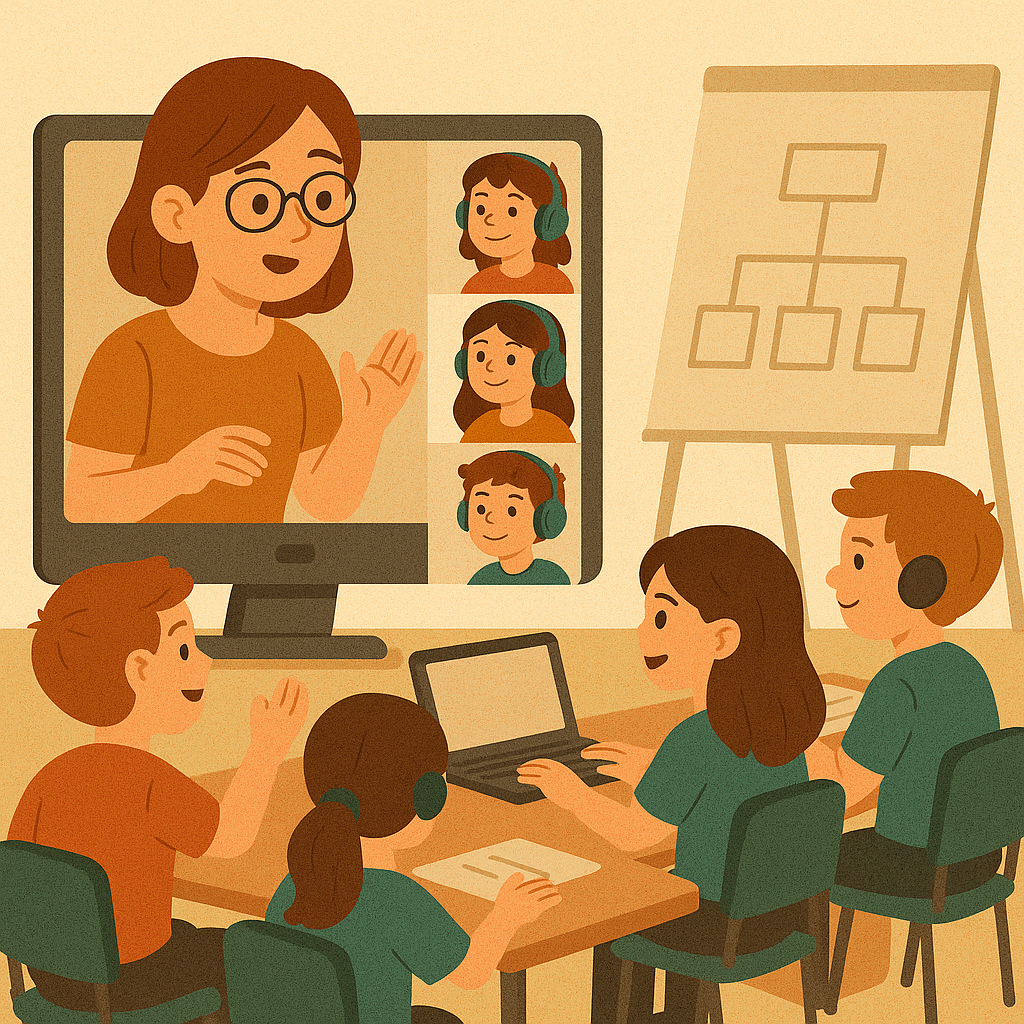
The eight-student pod model doesn’t just improve interaction, it transforms the entire structure of online learning. With a small, consistent group, lessons become more organised, hands-on, and balanced, ensuring that every child learns with the group, not just in the group.
The eight-student model makes lessons more structured and collaborative:
- Activities, projects, and problem-solving become easier to manage:
Small pods give teachers space to conduct practical tasks smoothly. Whether it’s group problem-solving, experiments, or creative projects, fewer students mean clearer instructions, better coordination, and more meaningful participation from each child. - Students get equal speaking time and opportunities to lead:
In a large class, only a few voices dominate. But in an 8-member pod, every student takes turns presenting, sharing ideas, and leading segments of the lesson. This balance builds leadership skills and ensures that no learner sits silently throughout the session. - Teachers can conduct debates, games, STEM activities, and group tasks without chaos:
Smaller groups allow teachers to introduce interactive formats that are difficult to manage with large numbers. Debates feel more focused, team games become more fun, and STEM tasks, coding, building, experimenting, run smoothly without confusion. - Learning remains organised and high-quality even in a virtual environment:
With fewer students, the teacher can maintain structure, tracking progress, guiding discussions, and keeping every activity on schedule. Lessons stay clear, organised, and consistent, ensuring strong learning outcomes without the usual online chaos. - This structure keeps classes lively and deeply interactive:
Instead of long lectures, sessions become fast-paced, dynamic, and activity-driven. Students stay engaged because they are constantly participating, responding, and collaborating with peers.
Check Out | From Mindset to Mastery: The Role of Optimism in Education
StayQrious Neoschool: Building Stronger Learners Through 8-Member Pods
StayQrious Neoschool, one of the most innovative online schools in India, has reimagined virtual education through its powerful 8-member learning pod model. Instead of large, impersonal online classrooms, the school builds mini-communities where students learn, collaborate, and grow together.
What Makes StayQrious Pods So Effective?
- Dedicated facilitators who mentor students closely and understand their learning journey deeply.
- Daily interactive sessions where every child participates, no silent spectators.
- Hands-on STEM, coding, communication and life-skills modules conducted in small groups for maximum impact.
- Stronger peer bonding that boosts emotional well-being and motivates students to show up every day.
- Consistent monitoring and feedback so parents stay aware of progress and children stay confident.
At StayQrious, pods are not just a teaching method, they are a transformative learning environment. Students feel seen, heard, supported, and encouraged to become active thinkers rather than passive listeners.
By embracing small-group instruction, StayQrious Neoschool proves that online education can be personalised, social, and deeply effective, shaping students who are confident, collaborative, and ready for the future.
For more information on this and other online schools, check out this list of the best online schools in India.








 as a preferred source on