







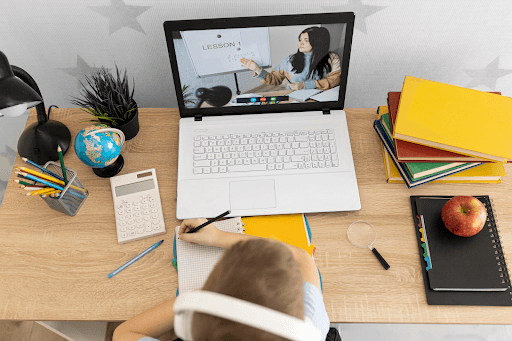

The education landscape has undergone a seismic shift in recent years. What was once considered an emergency measure during the pandemic has now evolved into a viable, often preferred alternative to traditional brick-and-mortar schooling. Families across India are increasingly seeking flexible, high-quality education that doesn't demand hefty fees or geographical compromises.
The World Ecademy (TWE), one of the best online schools in India, stands at the forefront of this transformation, offering students access to multiple internationally recognised curricula, from Indian boards like NIOS and BOSSE to the UK's prestigious A-Levels and Canada's OSSD, all delivered through live, interactive online classes at 75% lower cost than conventional schools.
In this article, we'll explore how multi-curriculum online education is breaking barriers, making quality learning accessible, and why flexibility in educational pathways matters more than ever before.
Also Read | The Inclusive Power of Online Learning
The Multi-Curriculum Advantage: Why One Size Doesn't Fit All
Modern education demands flexibility. The era of forcing every student through an identical academic pipeline is fading, replaced by personalised pathways that recognise individual strengths, career aspirations, and learning styles.
The Problem With Rigid Educational Systems
Traditional schools typically offer a single curriculum—CBSE, ICSE, or state boards in India. This approach works for many students but creates limitations for those eyeing international universities, specialised career paths, or alternative learning styles. Students often find themselves trapped in systems that don't align with their goals, leading to frustration and academic disengagement.
Growing Demand for International Qualifications
Indian families increasingly recognise the value of global qualifications. IGCSE and A-Levels from the UK, recognised by universities worldwide, offer subject specialisation and depth. The Canadian OSSD provides credit-based flexibility. These qualifications open doors that domestic boards sometimes can't, particularly for students targeting universities in the US, UK, Canada, or Europe.
Aligning Education With Career Goals
A student preparing for JEE needs a different academic approach than one targeting medical school or planning to study liberal arts abroad. Multi-curriculum options allow families to choose pathways that directly support their child's ambitions. An engineering aspirant might benefit from the NIOS syllabus combined with intensive JEE coaching, while a future international student might thrive with IGCSE's subject-focused approach.
Breaking the Cost Barrier: Affordable Excellence Without Compromise

Education costs in India have spiralled upward dramatically. Premium international schools charge lakhs annually, putting quality education out of reach for middle-class families. Even mid-tier schools demand significant investments in fees, uniforms, transportation, and countless hidden charges.
The True Cost of Traditional Schooling
Consider the expenses: annual fees ranging from ₹80,000 to ₹5,00,000 depending on the school tier, transportation costs adding another ₹30,000-₹60,000 yearly, uniforms, books, extracurricular fees, and infrastructure charges. For families with multiple children, these costs become genuinely prohibitive. Many qualified students miss out on quality education simply because their families can't afford premium schooling.
How Online Education Reduces Expenses
Virtual schools eliminate major cost drivers. No expensive campus infrastructure, no transportation, no elaborate facilities maintenance. These savings get passed to families. A 75% reduction isn't marketing hyperbole—it reflects the genuine economic advantage of digital delivery. Families save money while accessing the same curriculum quality, qualified teachers, and recognised certifications that traditional schools offer.
Democratizing Access to Quality Education
This affordability matters most for tier-2 and tier-3 city families, where premium schools are scarce or nonexistent. It benefits NRI families wanting their children to maintain Indian curriculum connections. It helps families facing financial constraints, but refuses to compromise on educational quality. Online schooling removes the correlation between zip code and educational opportunity.
Fast-Track Learning: Accelerating Academic Goals
Not all students need—or want—the traditional two-year timeline for completing their board examinations. Some learners possess the motivation, discipline, and academic readiness to move faster, and educational systems should accommodate this rather than hold them back.
Understanding Fast-Track Education
Fast-track programs allow students to complete IGCSE, Class 10 (Secondary), or Class 12 (Senior Secondary) in one calendar year instead of two. This isn't about cutting corners or reducing rigour. The curriculum remains identical, the examination standards unchanged. The difference lies in pacing—concentrating study intensity into a shorter timeframe.
Benefits for Motivated Learners
Online learning offers several time-related advantages to students, such as:
- Earlier university enrollment opportunities
- An additional gap year for skill development
- Younger graduation age for competitive career fields
- More flexibility in academic planning
Students preparing for competitive entrance exams particularly benefit. Completing Class 12 in one year frees up time for focused JEE or NEET preparation without the distraction of ongoing board exam pressures. Athletes, performers, or students with other serious commitments can condense their schooling to accommodate training schedules.
Self-Direction and Maturity
Fast-track success requires genuine self-motivation. Students must manage their time effectively, maintain consistent study habits, and handle compressed deadlines. These aren't just academic skills—they're life competencies that serve students well in university and professional settings. The challenge itself becomes valuable preparation for adult responsibilities.
The BOSSE Revolution: Fully Online Examinations

The education sector is witnessing a fundamental shift in how assessments are conducted, and innovation is emerging from unexpected places.
What Makes BOSSE Different
The Board of Open Schooling and Skill Education (BOSSE), established under Sikkim Act No. 14 of 2020, brings genuine innovation to Indian education. Unlike NIOS or traditional boards requiring physical examination centres, BOSSE allows students to complete their examinations entirely online from home. This isn't a temporary pandemic measure—it's the board's permanent operational model.
Eliminating Examination Barriers
Physical exam centres create numerous challenges. Students in remote areas travel hours to reach designated locations. Those with mobility issues face additional hardships. Families incur accommodation and transportation expenses during examination periods. Exam anxiety intensifies when students sit in unfamiliar environments surrounded by strangers. BOSSE eliminates all these friction points while maintaining assessment integrity through secure online proctoring systems.
Recognition and Equivalency
BOSSE qualifications hold full recognition from the Association of Indian Universities (AIU), making them equivalent to CBSE, ICSE, and other state boards. Students can use BOSSE certificates for university admissions across India and abroad, for competitive exam eligibility, and for employment purposes. The convenience of online examinations doesn't diminish the credential's value or acceptance.
Beyond Academics: Integrating Competitive Exam Preparation
Indian students face unique pressures. Success requires excelling in board examinations while simultaneously preparing for competitive entrance tests—JEE for engineering, NEET for medicine, CUET for central universities, or foundation courses for professional qualifications like CA.
The Dual Burden Challenge
Traditional schools rarely integrate these parallel tracks effectively. Students attend regular school from morning to afternoon, then rush to coaching institutes for evening classes. This schedule leaves minimal time for rest, hobbies, or personal development. The syllabus overlap between boards and competitive exams goes unutilized, forcing students to study similar concepts twice through different approaches. Burnout becomes inevitable.
Integrated Learning Models
Smarter educational approaches combine the board curriculum with entrance exam preparation from the start. When physics taught for NIOS Class 11 simultaneously covers JEE-level concepts, students learn once but prepare for both. When mathematics instruction addresses both board patterns and competitive question formats, efficiency improves dramatically. Students gain depth without duplicating effort.
Reclaiming Time and Mental Health
Integrated programs free up 15-20 hours weekly that students would otherwise spend on redundant coaching. This time can go toward practice tests, concept revision, or equally importantly, rest and recreation. Mental health matters. Students perform better academically when they're not constantly exhausted, stressed, and overwhelmed. A balanced schedule produces better results than relentless grinding.
Check Out | Beat the Rush and Start JEE Prep Early
The World Ecademy: Redefining Accessible Excellence Through Multi-Curriculum Online Education
The World Ecademy (TWE) operates as part of the Knowledgeate Group, bringing together 25+ years of educational expertise spanning pre-school through PhD-level programs across Canada, the UK, India, and the UAE.
TWE offers five distinct curriculum pathways: the UK curriculum (Pearson Edexcel IGCSE and A-Levels), Indian boards (NIOS and BOSSE for Classes 10 and 12), and Canadian certification (OSSD through Toronto World School, an Ontario Ministry of Education-inspected institution). This variety lets families choose the qualification that best matches their child's goals and aspirations.
The school delivers education through live, interactive classes led by qualified, experienced teachers. Small batch sizes ensure personalised attention that larger schools simply cannot provide. All lessons are recorded, allowing students to revisit concepts or catch up on missed classes at their convenience.
TWE's student body spans multiple countries and cities, creating genuinely global classrooms where children learn alongside peers from diverse backgrounds. This exposure builds cultural awareness and broadens perspectives in ways domestic schools rarely achieve.
The Fast-Track option allows eligible students to complete IGCSE in one year (five subjects) or NIOS/BOSSE Secondary and Senior Secondary levels in a single calendar year. This flexibility serves students who want to accelerate their educational timeline or need to catch up after interruptions.
The Best of Both Worlds (BBW) program integrates the NIOS board curriculum for Classes 11-12 with comprehensive coaching for JEE, NEET, or CA Foundation examinations. Students prepare for both tracks simultaneously under one institution, eliminating scheduling conflicts and redundant learning.
TWE delivers this comprehensive education at 75% lower cost than comparable traditional or international schools. The ExamNation platform extends this accessibility further, offering subject-specific coaching starting at just ₹999 per month for a minimum eight-month commitment. Quality education shouldn't be a luxury reserved for the wealthy.
The school exemplifies how technology can democratize education without diluting standards. Students earn globally recognised qualifications, receive personalised attention from expert teachers, and access comprehensive support systems—all while their families save substantially on education expenses. TWE proves that accessible and excellent aren't contradictory concepts in education; they're complementary goals that forward-thinking institutions can achieve simultaneously.
For more information on this and other similar schools, check out this list of the best online schools in India.







 as a preferred source on