








Have you ever wondered why your child can effortlessly memorize hundreds of complex video game rules yet struggles to read a science textbook for twenty minutes? This situation frustrates countless parents across the globe. While you might assume your child simply has a short attention span, the reality is actually quite different.
The human brain naturally rejects long and monotonous lectures. Studies indicate that memory retention drops by 50% within a single hour of continuous instruction. Traditional teaching methods completely ignore this biological fact.
A new educational approach, known as microlearning, is finally solving this massive problem. Data shows that microlearning improves information retention by up to 80%. Some of the best online schools in India, like The World Ecademy, are working towards this exact educational model right now.
But what is microlearning? How exactly are online schools advocating this new learning approach? Read on to find out!
Also Read | The End of One-Size-Fits-All Education
What Exactly is Microlearning?
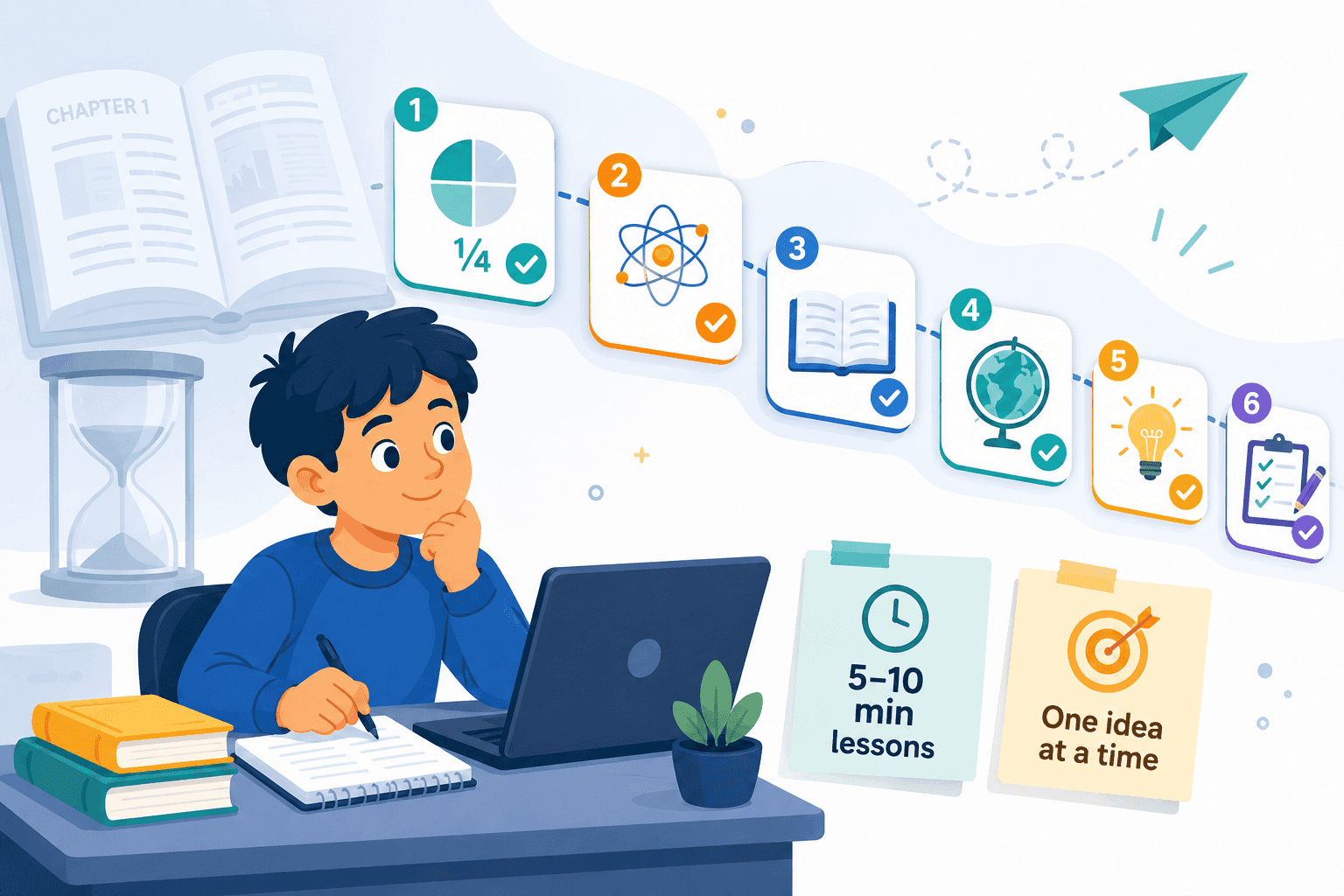
Microlearning is a teaching method built around one idea per lesson, usually five to ten minutes, delivered through a short video, a quiz, a hands-on activity, or a quick reading passage. In microlearning, larger topics are broken into smaller, focused learning units, with each lesson centred around one clear objective. Instead of introducing several concepts together, students build their understanding one step at a time.
For example, instead of covering an entire chapter on fractions in one class, a teacher may first help students understand what fractions represent. The next lesson may focus on comparing fractions, followed by addition, subtraction, and eventually solving real-life problems. Each concept builds naturally on the previous one.
An effective microlearning lesson usually includes:
- One clear concept that students can focus on without distractions.
- Simple explanations that avoid unnecessary information.
- Quick activities or quizzes to check understanding.
- Opportunities for revision, allowing students to revisit concepts whenever needed.
- Practical examples that help children connect learning to everyday life.
It is important to remember that microlearning does not replace teachers or classrooms. Teachers continue to guide discussions, encourage curiosity, answer questions, and help students apply their knowledge. Microlearning simply changes how information is introduced and reinforced.
Why is Microlearning Becoming so Popular?
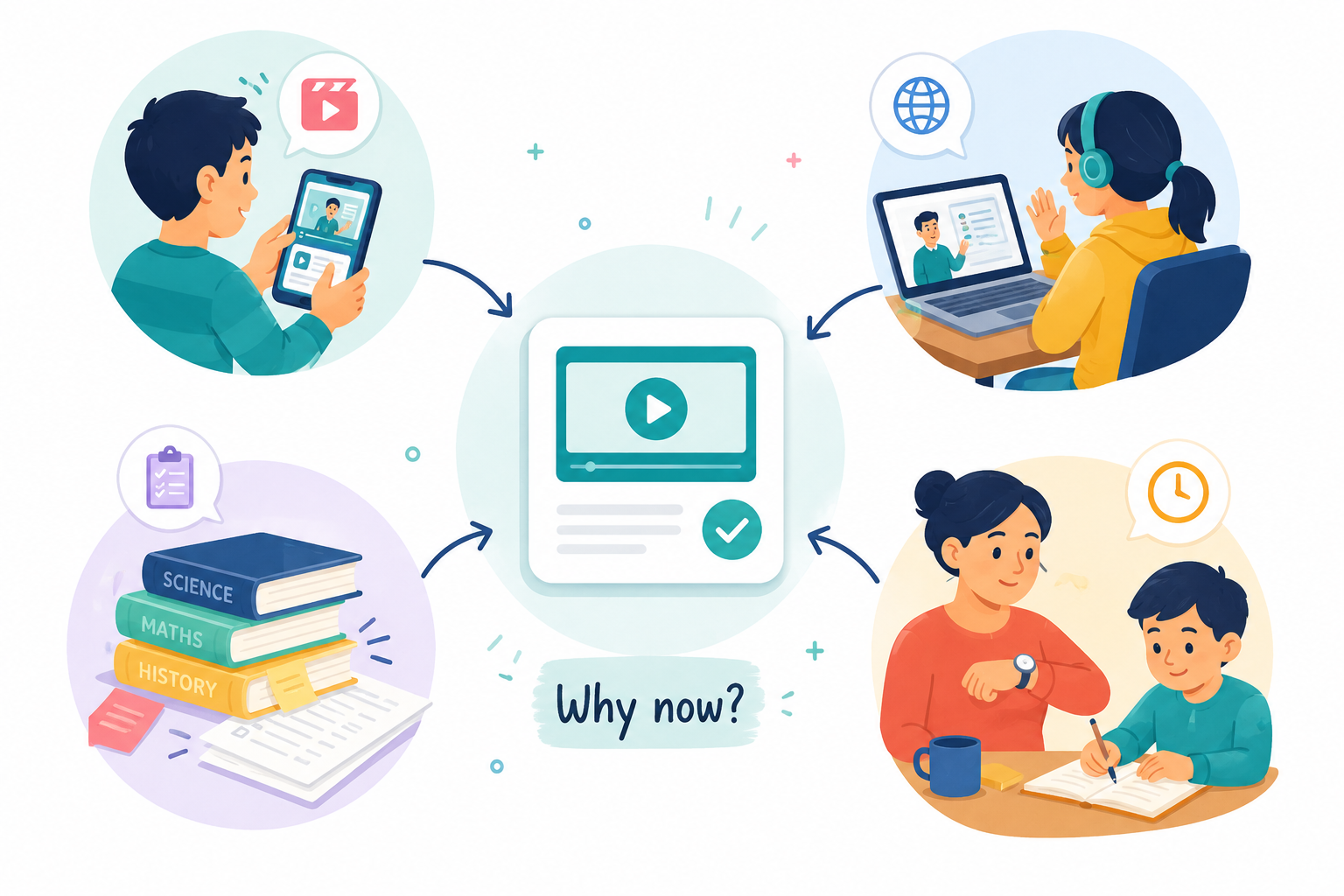
There have been several reasons in the last few years that have sort of pushed us all towards microlearning. Kids raised on short videos and quick explainer clips have, in a fairly literal sense, trained their brains around small bursts of information. Then the pandemic pushed millions of students into online classes almost overnight, and teachers learned fast that a child cannot hold focus on a screen the way they might sitting in a physical room.
School syllabuses have also grown heavier nearly everywhere, leaving less time for the kind of repeated revision that used to happen naturally through a normal school week. And parents, stretched thin themselves, need learning tools that fit into whatever small window is actually free, a car ride, a snack break, ten minutes before bed.
There's a psychological reason behind all this, and it predates every app on your phone. Back in the 1880s, a psychologist named Hermann Ebbinghaus mapped what's now called the forgetting curve. Without reinforcement, people lose roughly half of what they've just learned within an hour.
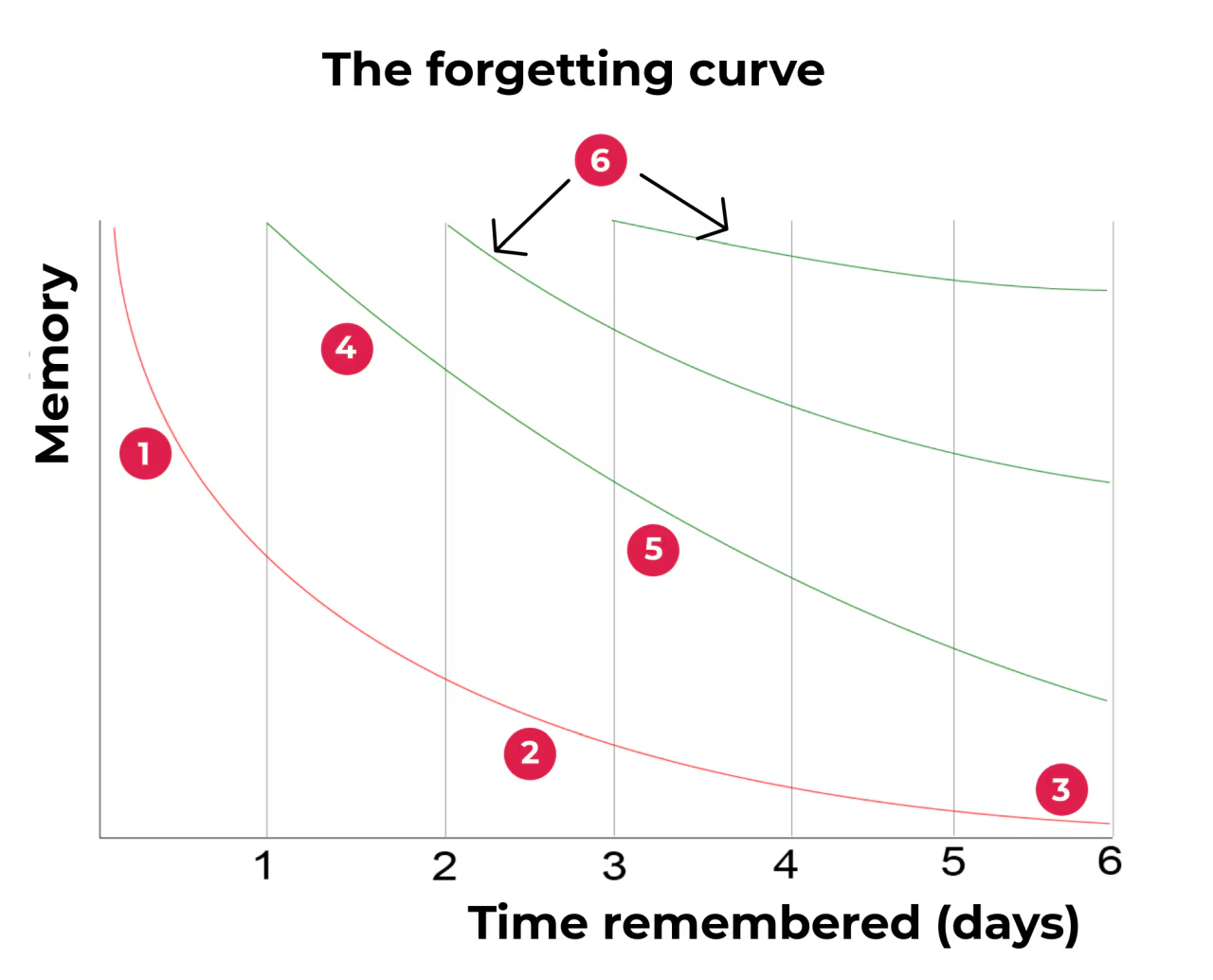
As per Ebbinghaus’ curve, (1) we forget the fastest in the first 24 hours. (2) We keep on forgetting as days go on, (3) forgetting most of the information by day 6. (4) Revision makes the memory stronger, (5) it slows down the speed of forgetting. (6) With consistent revision, this improves and we can leave longer and longer periods of time between revisions.
Thus, smaller, focused lessons are more manageable in comparison. Instead of sitting through a long lesson filled with multiple unfamiliar concepts, students can spend time understanding one idea before moving to the next. This allows them to ask better questions, identify areas where they need support, and build confidence along the way.
How Does Microlearning Affect the Brain?
Microlearning relies on very specific and proven psychological principles. It usually involves learning sessions that last only five to ten minutes. The teacher focuses on one single core idea at a time. Once the concept is explained, the student applies it immediately.
This targeted method works incredibly well for several distinct reasons, such as:
- Eliminates Mental Fatigue: Short sessions prevent academic burnout completely.
- Creates Frequent Wins: Students experience quick moments of success and daily achievement.
- Boosts Motivation Naturally: These small victories release dopamine in the brain.
- Encourages Future Focus: Dopamine makes the child actively want to keep learning more.
- Protects Memory Storage: Frequent screen breaks allow the brain to store facts securely.
- Builds Permanent Knowledge: Revisiting topics often supports long-term retention.
Check Out | Online Schools vs. Traditional Schools | What Has Changed in 2026
How The World Ecademy is Facilitating the Transition to Microlearning
The World Ecademy, or TWE, is an online K-12 school built under the Knowledgucate Group of Institutions, a multinational education group headquartered in the UAE with a presence across India, the UK, and Canada. It teaches students from Pre-Primary through Grade 12. Families aren't locked into one curriculum. They can choose NIOS or BOSSE for an Indian pathway, Pearson Edexcel for UK IGCSE and A Levels, or the Ontario Secondary School Diploma for a Canadian qualification.

TWE's thinking on microlearning shows up clearly in its skill development programmes. Coding, robotics, chess, public speaking, and financial literacy are all taught in age-specific modules. A Grade 4 student learning to code works through short sessions that build on each other, week by week, rather than being handed an entire syllabus in one go. Chess batches are kept deliberately small, usually between ten and twenty students, so coaches can watch how each child plays and correct them individually.
That same instinct runs through TWE's core academics as well. Its connectED platform holds every recorded lesson along with timetables, scores, and resources, so a student can revisit material at whatever pace works for them. This is spaced learning by design, not accident. Guidance counsellors and academic advisors work with students one-on-one, and no child is expected to keep pace with whoever happens to be sitting next to them, virtually or otherwise.
Students don't need to switch schools to access any of this. TWE allows children already enrolled elsewhere to join its skill programmes on their own, which matters for a parent who wants focused support in one area without upending their child's regular schooling.
Flexibility runs through the rest of TWE's programme too. It suits young athletes and performers juggling demanding practice schedules, students who need a pace slower or faster than a typical classroom allows, and those preparing for competitive exams like JEE or NEET alongside regular coursework. The school currently reaches students across India, the UAE, Saudi Arabia, Qatar, Bahrain, Kuwait, Oman, Sri Lanka, Singapore, and Canada, teaching entirely in English through a faculty drawn largely from experienced educators in the private schooling sector.
For more information on this and similar other schools, check out this list of the best online schools in India.
 as a preferred source on