









In today's globalized world, education cannot be limited to the four walls of a classroom. Textbooks may define cultures, economies, and the world's systems; however, to understand a culture, one needs to live it. As the world of education adapts to meet the needs of a globalized world, exchange programmes for students have emerged as one of the most effective learning experiences available today.
An exchange programme is more than just a trip to another country or another city. It is an experience of moving out of one's comfort zone, adjusting to new surroundings, learning to be independent, and developing a worldview that cannot be achieved in any classroom session. For students, it can be a very important part of their lives.
Through this article, we’ll explain the advantages of an Exchange program and how students can benefit from it. We’ll also delve into how one of the best schools in Faridabad, Manav Rachna International School, Sector 14, offers its students the opportunity to move abroad
Going Beyond Tourism: Experiencing Cultural Immersion
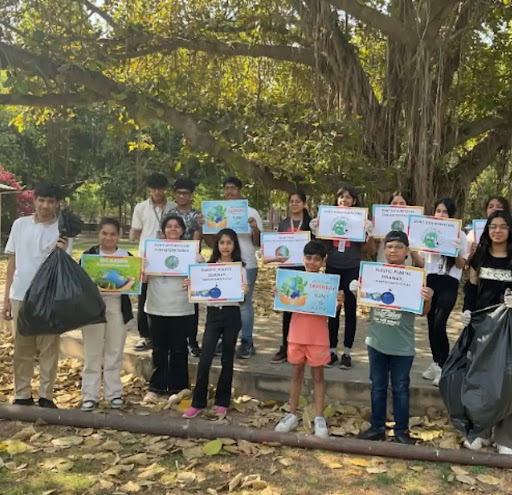
When students go for an exchange programme, they do not go as tourists. They live as students. They attend classes, mingle with local students, see how classes are conducted in the new environment, and experience life in a new cultural setting.
This helps students:
- Experience cultural diversity in person
- Shatter stereotypes by actually meeting people
- Develop a sense of empathy and understanding of the world
- Learn to appreciate different viewpoints
This is a very valuable experience in the current globalized environment. Employers today do not look at marks. Instead, they look for flexibility, communication skills, cultural understanding, and resilience. These are qualities that are naturally developed when students participate in an exchange programme.
Learning to be Independent and Confident
For most students, an exchange programme may be the first time they are staying away from home for such a long time. Handling daily routines, exploring new places, and communicating in new environments are effective ways of developing as a person.
Students learn to:
- Solve problems on their own
- Communicate effectively
- Make informed decisions
- Learn to adapt to change
What once seemed daunting becomes empowering. By the end of the programme, students go home more confident, self-assured, and grown-up.
A Broader Perspective on Identity
Notably, exchange programs also help students develop a better understanding of their own identity. As students embody their school, city, or country, they think about their own culture more deliberately.
They begin to wonder:
- What is unique about my community?
- How do people view my country?
- What are my values?
This introspection enhances self-awareness and cultural pride with a willingness to learn from others.
Also Read| Promoting Holistic Development in an IB Setup at MRIS-14, Faridabad
Academic Exposure and Learning Innovation
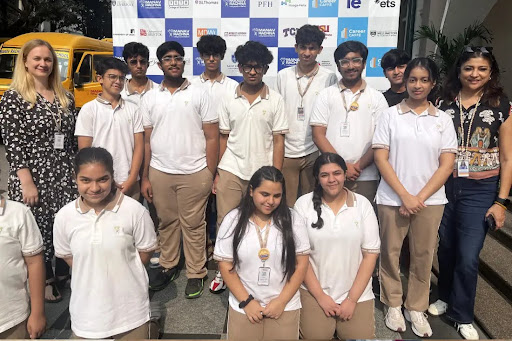
The way education is structured and delivered varies worldwide. Exposure to other teaching methods widens the students' perspective on learning possibilities.
Some schools focus on project-based learning, while others focus on research, teamwork, experiential education, or inquiry-based learning. Observing these differences opens students' eyes to the flexibility of learning and often sparks them to think about their own education more innovatively.
Exchange programmes also promote interdisciplinary learning. Students observe how subjects relate to each other in the real world, especially how geography relates to economics, how science relates to policy, and how art reflects society. This integrated knowledge fosters intellectual curiosity.
Building Lifelong Networks
The most valuable part of an exchange programme is the connections students make. Friendships made across borders can last for years, even a lifetime.
These networks:
- Increase global awareness
- Foster cross-cultural understanding
- Offer future academic or professional networking
- Foster collaborative thinking
In a world where collaboration knows no borders, early exposure to global friendships instills familiarity with diversity and teamwork.
Language and Communication Skills
Even if students travel to English-speaking countries, accents, dialects, and communication patterns differ. Students learn to listen actively, communicate effectively, and decode non-verbal communication.
For students travelling to countries where other languages are predominantly spoken, even simple interactions help students develop language confidence and appreciation for multilingualism. Learning a language becomes experiential and meaningful, rather than purely conceptual.
Resilience Through Real Experience
Small difficulties, such as buses not arriving on time, changes in schedules, and cultural misunderstandings, are what teach resilience.
Students learn that uncertainty is not something to be feared but something to be navigated. This approach readies them for college and the corporate world, where flexibility is the key.
Read Further| Building a Strong Sports Culture Alongside Academics
Explore the World with MRIS Sector 14, Faridabad
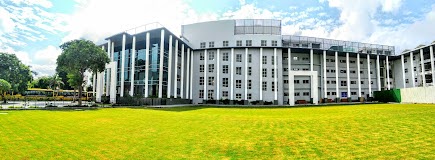
Realizing the immense value of global exposure, Manav Rachna International School (MRIS), Sector 14, Faridabad, incorporates exchange programs into its overall vision of comprehensive education.
At MRIS Sector 14, education is more than just academics. The school thinks that students need to be equipped not only for the exam but for life in the global world. Exchange programs are carefully planned to give students meaningful international exposure while ensuring their safety and proper learning outcomes.
Global Learning with Purpose
MRIS Sector 14 arranges exchange programs that help students discover different educational systems and cultural settings. These programs are carefully planned to ensure that students work on collaborative projects, attend engaging sessions, and undergo cultural immersion activities.
Instead of restricting interactions to tourism-related activities, MRIS ensures that learning remains at the forefront of all activities. Students get to interact with other students from other countries, visit academic facilities, and engage in discussions that open their minds to new ideas.
Building Global Citizens
The school's ideology is built on the foundation of developing global citizens who are aware and responsible. By engaging in exchange programs, MRIS students get to experience diversity, inclusion, and understanding firsthand.
Such programs fit within the school's ideology of developing students in the areas of:
- Building confidence
- Developing leadership
- Excellent communication
- Ethical accountability
Students get to return home not only with memories but with open minds and confidence.
Safe, Organized, and Student-Focused
For parents, safety and supervision are naturally the top priority. At MRIS Sector 14, exchange programs are organized in a manner that is properly supervised and guided by qualified faculty members. Organized programs, academic relevance, and proper supervision make such programs enriching and safe for students.
This approach to exploration and supervision gives parents peace of mind while still giving students the freedom they need to grow.
Transformative Outcomes
Students who have engaged in exchange programs have shown confidence in speaking in front of people, improved teamwork capabilities, increased curiosity about the world, and improved adaptability.
Such programs supplement what students learn in class and reinforce the school's ideology of developing well-rounded individuals equipped to handle the world.
Preparing Students for a World Without Borders
With higher education and the workforce increasingly crossing borders, early exposure to global settings is a huge plus. Universities around the world look for students who have cross-cultural experiences and global awareness.
Such exchange programs demonstrate a student's initiative, curiosity, and bravery, which are qualities that stand out in a competitive environment.
More importantly, however, beyond the resume and the accomplishments, the experiences of exchange build character. They impart lessons in humility, in gratitude, in flexibility, and in empathy. They help students realize that knowledge has no boundaries and that working together through different cultures can result in innovation.
Final Thoughts
Each child deserves the chance to move out of their comfort zone and see the world from a fresh, new point of view. Student exchange programs are not an indulgence but a learning experience that helps to create confident, empathetic, and capable individuals.
In this way, schools are doing their part to ensure that children are equipped to live in a world that believes in connection and collaboration, not competition and isolation.
MRIS Sector 14, Faridabad, through its carefully designed exchange programs, is a shining example of how schools can help students to explore, engage, and develop.
And sometimes, the best learning comes not from a textbook but from the world around us.
For more information on MRIS and other similar schools, check out this list of the best schools in Faridabad.
 as a preferred source on