







Have you ever seen a child light up while helping someone else? That spark of kindness doesn’t just build character; it builds a better society. Today’s education system is evolving beyond textbooks, recognizing that real learning also happens in streets, communities, and everyday acts of compassion.
Parents want their children to grow into responsible, empathetic citizens, young individuals who understand challenges beyond their own world and are willing to take action. Schools that integrate social outreach into learning teach students that their role isn’t limited to classrooms; it extends to the community around them.
This article explores how outreach programs nurture social values, why early community engagement matters, and how The Millennium School (TMS) inspires students to become change-makers who care, lead, and contribute meaningfully to society.
Also Read | Nurturing Leaders with Values: The Millennium School’s Vision in Action
Why Social Outreach Is Essential in Modern Education
Social outreach helps children understand the world by being a part of it. It turns learning into experience and shapes young minds with values that textbooks alone cannot teach.
- Builds empathy
When students interact with people from different backgrounds, whether underprivileged children, elderly citizens, or community workers, they begin to appreciate experiences different from their own. These interactions nurture compassion, emotional intelligence, and the ability to care for others, which form the foundation of strong human relationships. - Teaches responsibility
Outreach activities teach students that their actions matter. Whether planting trees, keeping surroundings clean, or volunteering for social causes, children learn they have the ability and responsibility to contribute to the well-being of society. This sense of duty stays with them as they grow into responsible adults. - Strengthens civic awareness
Real issues such as pollution, inequality, or lack of resources become more than just chapters in a book. Students learn how communities function, what challenges exist, and how collective effort can bring change. This awareness helps them become informed citizens who can participate actively in nation-building. - Promotes leadership & teamwork
Outreach programs encourage students to step up planning activities, dividing responsibilities, coordinating with peers, and communicating effectively. These experiences build confidence and leadership, while teaching cooperation and respect for different ideas within a team. - Encourages gratitude & humility
Seeing real struggles teaches students to appreciate the opportunities they have. They become more grateful for their education, family support, and resources. At the same time, helping others instills humility and the belief that success is meaningful when shared.
How Students Engage in Outreach: Learning Through Action
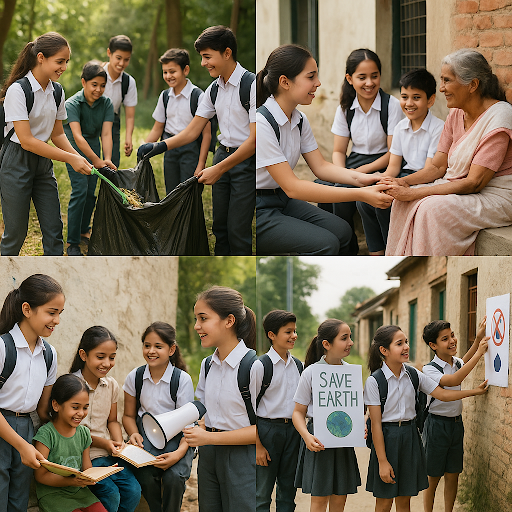
When education steps outside the classroom walls, knowledge becomes meaningful. Social outreach helps students apply values and learning in real-life situations, nurturing social responsibility along the way. Effective outreach programs often include:
- Community cleanliness and plantation drives
By participating in activities that improve their surroundings, cleaning public spaces, planting trees, and reducing waste, students learn the importance of environmental care. They see firsthand how small, consistent actions contribute to a cleaner and greener community. - Visits to old-age homes
Spending time with senior citizens helps students learn respect, empathy, and patience. Through conversations, games, and shared experiences, children understand the value of companionship and learn to appreciate the wisdom and stories of older generations. - Support for underprivileged children
Whether assisting with basic learning, initiating collection drives, or organizing fun-filled happiness sessions, students become aware of social inequalities and are inspired to help bridge these gaps. This builds kindness and the belief that education can uplift lives. - Awareness campaigns
Students take active roles in spreading messages about hygiene, road safety, cyber awareness, and sustainability. By communicating with peers and community members, they develop confidence, public-speaking skills, and a sense of purpose in their advocacy. - Village or suburban outreach
Visiting nearby communities, engaging in development efforts, and contributing to small improvements, like building libraries or promoting literacy, help students understand that meaningful change can begin anywhere, even with the simplest gestures.
Each outreach experience transforms students into active participants in society, not just observers. They don’t just learn about values, they practice them, discovering the impact they can make on the world around them.
Check Out | Fostering Every Learner: Inclusive Behaviour Support at The Scindia School
The Millennium School: Nurturing Hearts that Lead with Kindness
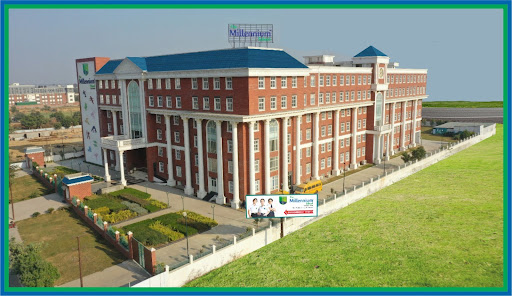
The Millennium School (TMS) believes that education is complete only when students learn to uplift others along the way. Social outreach is therefore integrated as a core pillar of school life, not an occasional activity but a sustained journey that encourages students to grow into empathetic, responsible, and socially aware individuals.
Key Highlights of TMS Social Outreach
- Student-led community drives
Students take ownership of planning and executing outreach initiatives, learning leadership, teamwork, and accountability while working for real causes that matter. - Sustainability campaigns
From cleanliness drives to tree plantation and zero-waste initiatives, students actively promote environmental responsibility within and beyond the school campus, building a habit of caring for the planet. - Happiness and literacy programs
Through book donations, fun-based learning sessions, and resource support, students help bring smiles and educational opportunities to underprivileged children, understanding the transformative power of knowledge. - Visits to elderly care homes
Interacting with senior citizens helps students develop stronger emotional intelligence, respect for elders, and the ability to form bonds across generations, bringing comfort, joy, and dignity to those who need it most. - Partnerships with local communities
Regular engagement with nearby neighborhoods ensures consistent contribution and long-term impact. Students learn that community service is not a single event, but a continued responsibility.
At TMS, outreach is a collective effort where students, teachers, and parents join hands to support meaningful development in society. By stepping out into real-life environments, children discover the difference their actions can make.
For more information on this and other similar schools, please click on the link below




 as a preferred source on