






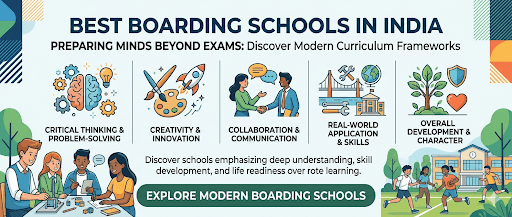

As a parent, you often start with the basics: what board the school follows, what subjects are taught, and how the results look. But slowly, those questions begin to shift. You start to wonder if your child really gets what they're learning. Are they getting ready for real life or just tests? Today, education is not just about finishing a syllabus; it's about learning new skills, changing your way of thinking, and being able to adapt.
In a world where careers are evolving rapidly and information is everywhere, what truly matters is how children learn, not just what they learn. That’s where modern curriculum frameworks come in. And as you begin exploring the best boarding schools in India, you’ll notice that many schools are moving beyond traditional methods, focusing more on application, critical thinking, and overall development, like JAIN International Residential School(JIRS), Bangalore. Because in the end, it’s not about raising students who can memorise, it's about raising individuals who can think.
Also Read | What Makes the American Curriculum Different in Today’s Education System?
What Is a Modern Curriculum Framework (In Simple Terms)?
Let’s keep it simple. A modern curriculum framework is not just a list of subjects or chapters. It’s a structured approach to learning that focuses on:
- Understanding concepts deeply
- Applying knowledge in real situations
- Building skills alongside academics
- Encouraging curiosity and independent thinking
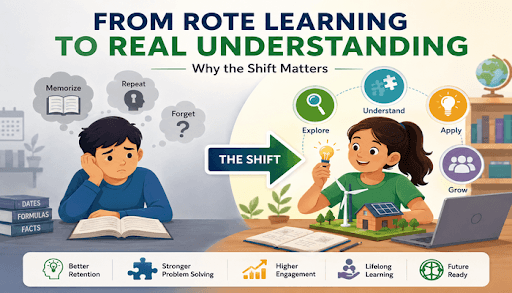
Unlike traditional systems that often prioritise rote learning, modern frameworks aim to make learning more meaningful. Children are not just taught answers. They are taught how to think.
Why Traditional Learning Alone Is No Longer Enough
As parents, many of us grew up in systems where marks were everything, score well, get into a good college, and build a career. But today, that path is no longer so straightforward. According to global education studies, nearly 65% of children entering primary school today will end up working in jobs that don’t even exist yet.
Which means memorising information is no longer enough. Kids need to learn how to deal with change, solve problems, talk to others, and think for themselves. Even though traditional ways of learning are still important, they don't fully meet these changing needs. That's why modern curriculum frameworks are becoming so important.
Key Features of Modern Curriculum Frameworks
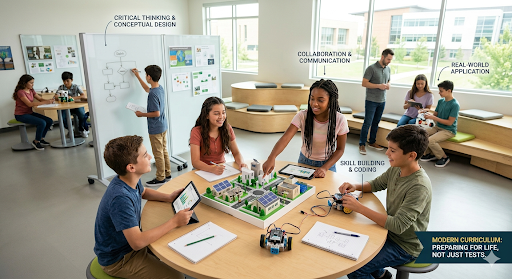
Here's what really changes from a parent's point of view:
- Concept-Based Learning: The goal is to understand why something works instead of quickly going through chapters.
- Developing skills along with academics: Communication, teamwork, and creativity are all part of daily learning.
- Real-World Application: Kids are taught to connect what they learn in school with things that happen in real life.
- Ongoing Assessment: It's not just about the end-of-year tests. Projects, activities, and regular feedback are used to keep track of progress.
- Student-Centered Approach: Every child learns in their own way, and modern frameworks try to take that into account.
Check Out | A Curriculum That Prepares for Life: Academic Framework
How JAIN International Residential School (JIRS), Bangalore, Brings This to Life?
This is where things become more real for us as parents. At JAIN International Residential School (JIRS), Bangalore, modern curriculum frameworks are not just a concept; they are part of everyday learning. And honestly, that makes a difference you can see, from what parents observe, the school focuses on:
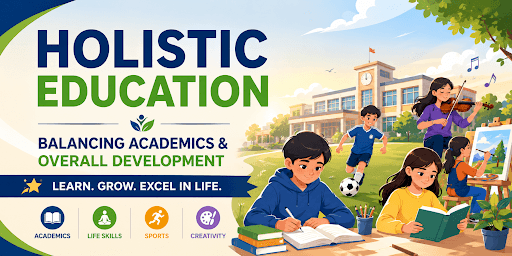
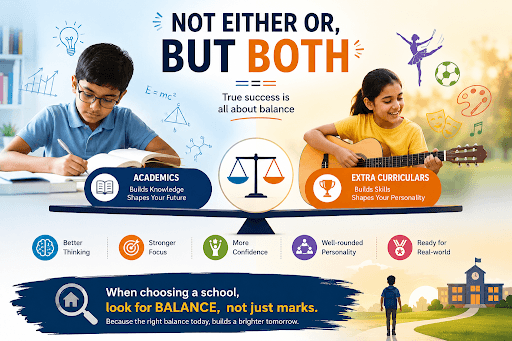
- Balanced Learning Approach: Academics are strong, but they are not the only focus. Equal importance is given to skills, activities, and personal growth.
- Interactive Classrooms: Learning isn't just one way. Students are told to ask questions, get involved, and think for themselves.
- Teaching with Applications: It's easier to learn when ideas are connected to real-life situations.
Parents can see how their child is doing in school and how they are growing as a person. Grades are not the only way to do this.
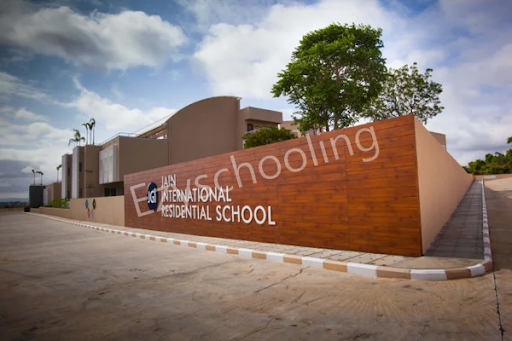
JIRS is a boarding school, so students have the chance to learn outside of the classroom. This helps them become more independent, confident, and disciplined. As a parent, you start to see the change: your child is more curious, more expressive, and more sure of their own thoughts. It doesn't happen all at once, but it does happen steadily. It's not just about reputation or results when you choose a school these days; it's also about how well it fits with your needs.
We want a school that not only teaches well, but also knows what our kids need in the long run. And this is where JAIN International Residential School appears to be more cautious. For the school, modern curriculum frameworks aren't just about changing what kids learn; they're also about making learning better for all kids. The goal is to build a place where:
- Students are told to think, not just memorize.
- Reading books isn't the only way to learn; you also need to know how things work in the real world.
- You learn how to talk to people, solve problems, and be independent in addition to your studies.
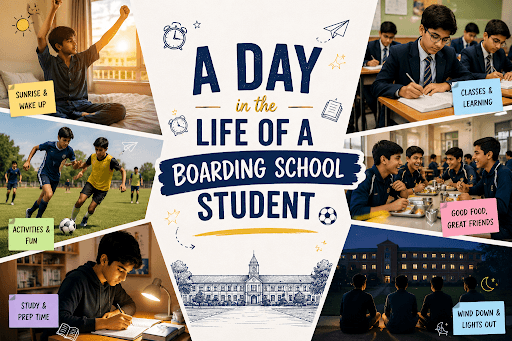
JIRS is a residential school, and it also knows something important: learning doesn't stop when class is over. The way people live their daily lives becomes part of the curriculum. Students learn:
- Managing time, taking care of things
- Responsibility
- Collaboration with peers
- Independence in decision-making
And as parents, that gives us some peace of mind because the world around our child keeps them on the right path even when we're not there every day. Schools like JAIN International Residential School also make sure that parents are involved in the process.
There is a clear effort to keep us informed about more than just our grades. Regular updates, structured feedback systems, and open communication all help with this. And that makes a difference in how we as parents experience school. We don't feel like we're not a part of things; we feel like we are.
We don't just see results; we know how we got there. In a lot of ways, it turns into a partnership where the school makes the space, and we, as parents, support the growth. Because at the end of the day, modern education is not just about preparing children for exams; it’s about preparing them for life. And when both school and parents move in the same direction, that preparation becomes stronger, more meaningful, and far more complete.
The Final Thought
As parents, we often look for visible outcomes, high scores, rankings, and achievements that can be measured. But real education goes deeper than that. It shows up in the way your child begins to think independently, how they approach problems, and their ability to adapt, communicate, and grow. These are not qualities that come from memorising textbooks; they come from how children are taught. That’s why understanding modern curriculum frameworks has become so important today, because when learning evolves, children evolve with it.
As you keep looking for the best boarding schools, you start to see that the right school isn't just the one that finishes the syllabus. It's also the one that gets your child ready for a future that is always changing. In the end, grades may open doors, but it's skills, attitude, and confidence that help kids get through them. And that's what really matters as a parent.
To learn more about this and other boarding schools in India, check out our list here

 as a preferred source on