







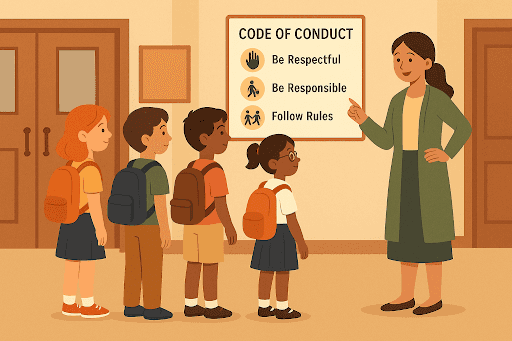

Have you ever noticed how some schools feel calm, orderly, and welcoming the moment you step inside? Students greet others politely, transitions happen smoothly, and classrooms function with quiet confidence. That atmosphere doesn’t appear by chance, it grows from a clear, practiced, and student-friendly code of conduct that guides everyday behaviour.
Parents today want more than academic achievement. They want environments where children learn integrity, discipline, empathy, and self-management, skills that matter long after exams are forgotten. A strong code of conduct helps create this foundation, shaping attitudes and habits that influence how children carry themselves in school and in life.
This article explores how a well-designed code of conduct builds responsible behaviour, strengthens school culture, encourages respectful communication, and supports consistent expectations for all. It also highlights how The Keystone Ankuram School, Pune, one of the best schools in Pune, takes pride in nurturing integrity, discipline, and social awareness through a thoughtful, student-centric code of conduct.
Also Read | The Power of Domain-Based Learning in Early Education at TKA, Pune
The Importance of a Strong Code of Conduct in Schools
A well-defined code of conduct is more than a rulebook, it is a framework that shapes how students think, behave, and interact every single day. When expectations are clear and consistently reinforced, students gain the structure they need to grow into responsible, respectful, and emotionally balanced individuals.
A strong code of conduct helps schools by:
- Building a positive school culture: Clear guidelines around behaviour help create an environment where students feel safe, respected, and supported. This sense of security allows them to focus on learning without distractions or conflicts.
- Promoting respectful communication: When students are taught how to speak, listen, and respond appropriately, it strengthens peer relationships and improves their ability to collaborate both inside and outside the classroom.
- Ensuring punctuality and discipline: Expectations related to attendance, time management, and classroom discipline help students develop habits that translate into lifelong skills, like responsibility, reliability, and self-control.
- Encouraging personal accountability: A good code of conduct teaches students to take ownership of their actions. They understand consequences, learn from mistakes, and develop a mindset built on honesty and integrity.
- Supporting both academic and personal success: By setting consistent standards, a code of conduct ensures that the school environment remains orderly and conducive to learning. Students are less likely to face disciplinary issues and more likely to channel their energy towards growth, leadership, and academics.
How a Code of Conduct Shapes Student Behaviour
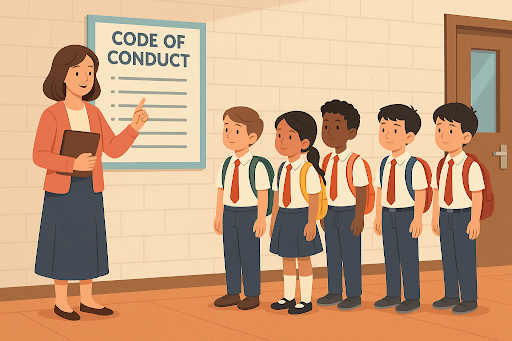
A clear and consistent co0de of conduct becomes a daily guide that students internalise over time. Rather than simply following rules out of obligation, they start understanding why those behaviours matter and how they affect the larger school community. When expectations are clearly laid out, students respond with confidence, discipline, and a sense of responsibility.
A well-implemented code of conduct shapes behaviour by:
- Setting clear expectations: Students know exactly what is acceptable in terms of behaviour, communication, punctuality, and classroom conduct. This removes confusion and allows them to behave with confidence and predictability.
- Creating structure and stability: Children thrive in environments where routines and expectations are consistent. A structured code of conduct ensures they understand boundaries while feeling secure within them.
- Promoting thoughtful decision-making: When students are taught to consider consequences, reflect on actions, and choose respectful responses, they naturally become more self-aware and responsible in their choices.
- Strengthening social awareness: Knowing how to behave in shared spaces, hallways, classrooms, playgrounds, helps students develop courtesy, empathy, and awareness of how their actions impact others.
- Building long-term life skills: Habits formed through discipline, punctuality, respectful behaviour, and accountability extend beyond school life. Students carry these qualities into higher education, professional environments, and personal relationships.
Key Areas Covered in an Effective Code of Conduct
A strong code of conduct works because it covers the everyday actions, habits, and interactions that define school life. These guidelines help students understand what responsible behaviour looks like, ensuring that everyone on campus feels respected, safe, and valued. When these expectations are communicated clearly, students naturally develop discipline and awareness that support both academics and personal growth.
An effective code of conduct typically emphasises:
- Punctuality and time-management: Arriving on time for classes, assemblies, and school events teaches students the value of responsibility and respect for others’ schedules. Over time, this nurtures reliability, a skill that becomes essential in higher education and workplaces.
- Respectful communication: Students are encouraged to speak politely, listen attentively, and resolve disagreements calmly. This creates a positive atmosphere where peers and teachers feel heard, valued, and supported.
- Discipline and self-control: Guidelines around classroom behaviour, movement in corridors, and participation in group activities help students stay focused and maintain order. This strengthens concentration and reduces disruptions that affect learning.
- Personal responsibility: Students learn to take ownership of their actions, whether it’s maintaining cleanliness, completing assignments on time, or following school norms. This builds integrity and accountability.
- General decorum and conduct: Expectations around uniform, behaviour in shared spaces, and digital etiquette ensure that students present themselves with confidence and dignity. It prepares them for future environments where professionalism matters.
- Safety and mindful behaviour: Rules related to safe interactions, careful use of school property, and awareness of surroundings help prevent accidents and create a secure campus culture where everyone feels protected.
Check Out | Nurturing Leaders with Values
The Keystone Ankuram School: A Student-Friendly Code of Conduct

The Keystone Ankuram School, Pune, one of the best CBSE schools in Pune, takes immense pride in shaping students who embody integrity, discipline, and social awareness. The school’s Code of Conduct is not just a rulebook, it is a values-driven framework that helps students learn how to behave responsibly, respectfully, and thoughtfully within a growing community of learners.
Key Highlights of The Keystone Ankuram School’s Code of Conduct
- Respect as a foundational value
Students are expected to interact with kindness, listen actively, respect differences, and maintain positive relationships with peers and teachers. This emphasis on respect creates an atmosphere where everyone feels valued and safe. - Punctuality and attendance discipline
The school instills the habit of arriving on time for classes, assemblies, and activities. Consistent attendance and punctual behaviour help students develop reliability and a strong sense of responsibility. - Honesty, integrity, and accountability
Students are encouraged to take ownership of their actions, be truthful in their interactions, complete work on time, and uphold academic honesty at all times. These practices strengthen character and build trust. - Maintaining general decorum on campus
Whether walking in corridors, participating in group work, or interacting during events, students are guided to display courtesy, self-control, neat appearance, and professional behaviour that reflects the school’s ethos. - Safe and mindful conduct
The school emphasises using resources carefully, behaving responsibly in shared spaces, and looking out for peers. This encourages safety, reduces conflicts, and teaches students to be aware of their surroundings. - Positive use of technology
Students are taught digital etiquette, using devices responsibly, avoiding misuse of social media, and understanding the consequences of harmful online behaviour. This prepares them for a safe digital life beyond school.
At The Keystone Ankuram School, the Code of Conduct is not enforced through fear, it is cultivated through understanding, reflection, and consistent reinforcement. Students learn why each guideline matters and how their actions contribute to the well-being of the entire school community.
By nurturing discipline, personal responsibility, and respect, Keystone Ankuram ensures that students develop the habits and character traits essential for both academic success and personal excellence. Here, discipline is not a restriction, it is a pathway to confidence, leadership, and lifelong integrity.
For more information on this and other such schools in the area, check out this list of the best schools in Pune.







 as a preferred source on