








Have you ever noticed how the most respected individuals are not just achievers, they’re contributors? In today’s fast-changing world, education is no longer limited to academics. It must also shape students into responsible, empathetic citizens who understand their duty toward society.
Modern schools are realizing that community service isn’t an optional activity, it’s a vital part of real education. When students engage in social outreach, they learn lessons that no textbook can teach, compassion, teamwork, leadership, and the power to make a difference.
In this article, we explore why social initiatives are essential in schools, how such programs nurture empathy and civic awareness, and how JM International School (JMIS), one of the best schools in Delhi, sets a benchmark with its structured social responsibility program, JMIS-SEVA, designed to build hearts as well as minds.
Also Read: Indian Values, Global Outlook: A New Approach to Schooling at JMIS
Why Social Responsibility Matters in Education
Schools are more than just academic institutions, they are the first environments where children learn how to coexist, share, and care. Introducing social awareness at this stage helps them see beyond themselves and understand their role in shaping the world around them. It builds empathy, emotional strength, and a deeper sense of belonging.
- Developing Empathy and Compassion: When students engage in community activities, teaching others, visiting shelters, or supporting social causes, they begin to understand experiences outside their own. This fosters emotional intelligence and a sense of responsibility toward people who live different realities.
- Building a Sense of Purpose: Social initiatives give children a tangible way to make a difference. Whether it’s cleaning a public park or raising awareness about literacy, they realize that their actions have real-world impact, and this awareness helps them find meaning in what they learn.
- Enhancing Life Skills: Participating in group projects or service campaigns naturally develops essential life skills. Students learn to communicate effectively, lead teams, plan projects, and navigate challenges, experiences that prepare them for both professional success and personal growth.
- Strengthening Civic Values: Involvement in community-based programs makes children more aware of issues like cleanliness, sustainability, equality, and inclusivity. It teaches them that good citizenship is not about following rules but about actively contributing to society’s well-being.
- Connecting Academics to Real Life: Social responsibility programs bridge the gap between classroom learning and real-world application. For instance, a science lesson on pollution becomes more meaningful when followed by a local cleanliness drive or awareness campaign. Students see knowledge as a tool for impact, not just grades.
Through such engagement, education transforms from instruction to inspiration, helping young learners grow into compassionate, responsible individuals ready to make the world a better place.
Learning Beyond the Classroom: The Power of Service Programs
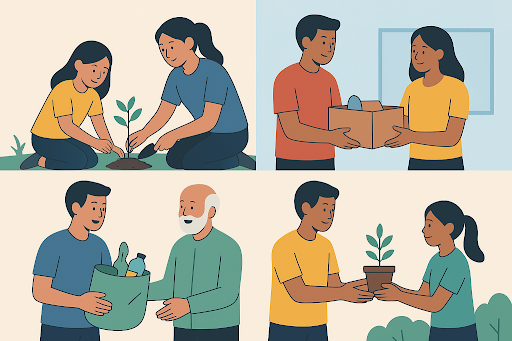
Social engagement programs transform learning into action. They allow students to live the values they study, empathy, responsibility, and collaboration, instead of just reading about them. Through such initiatives, schools turn moral lessons into meaningful experiences that shape both heart and mind.
- Holistic development: Social responsibility initiatives nurture emotional intelligence alongside academics. When students work with underprivileged communities or participate in environmental projects, they learn patience, empathy, and humility, qualities that make them better humans, not just better students.
- Teamwork and leadership: Service projects rarely happen alone. They require coordination, delegation, and shared effort. As students plan campaigns, divide roles, and solve challenges together, they naturally develop leadership, accountability, and communication skills that prepare them for adult life.
- Social awareness: Classroom lessons on inequality, climate change, or literacy become more real when students experience them firsthand. Exposure to such issues helps them understand society’s complexities and encourages them to think critically about sustainable, inclusive solutions.
- Empowerment through contribution: Nothing inspires confidence like making a real difference. When children see the smiles their efforts bring or the improvements their projects create, they feel a deep sense of purpose. This belief, that even small actions matter, becomes a powerful motivator for lifelong service.
Through such programs, schools move beyond academics to build character. They don’t just produce achievers who succeed individually, but compassionate citizens who uplift others and contribute meaningfully to the nation’s growth.
The Lasting Impact of Service Learning
The true power of social engagement lies not just in the projects completed, but in the mindset it builds. When service becomes a habit, students carry empathy, leadership, and civic responsibility into every part of their lives.
- Values in action: Service learning transforms moral education into daily practice. Respect, compassion, and accountability stop being abstract ideals and become real behaviors students display both in and outside school.
- Real-world problem-solving: Projects like community cleanups, literacy drives, or sustainability campaigns teach students to identify problems, plan solutions, and adapt strategies, essential skills for future innovators and leaders.
- Empowered citizenship: When students contribute to society at a young age, they develop a lifelong sense of civic duty. They grow up viewing social challenges not as distant problems, but as shared responsibilities.
- Emotional resilience: Working on community initiatives often exposes students to different life realities. Learning to face discomfort, setbacks, and limitations with empathy and persistence builds mental strength and emotional maturity.
- Ripple effect of kindness: Students who engage in service often inspire peers and even families to join in. The culture of giving and caring expands beyond school walls, multiplying its positive impact across the community.
By integrating service learning into education, schools ensure that lessons extend far beyond the syllabus, shaping individuals who think deeply, act responsibly, and lead with purpose.
Check Out: Merging Academics and Creativity for Holistic Growth
JM International School: Learning to Lead with SEVA
JM International School (JMIS), one of the best CBSE schools in Delhi, believes that true education must go beyond academics, it should shape compassionate, socially conscious individuals who act with purpose. Through its flagship initiative, JMIS-SEVA, the school has built a structured framework where empathy, responsibility, and leadership are woven into the everyday learning experience.
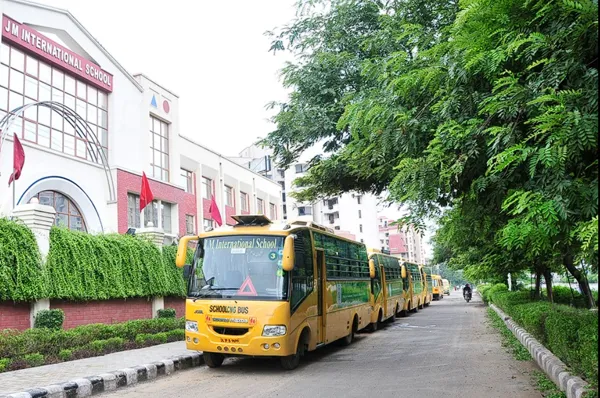
Highlights of the JMIS-SEVA Program:
- SAKSHAR (Literacy Project): A powerful student-driven movement that focuses on teaching underprivileged children essential reading, writing, and numeracy skills. Beyond academics, it instills in students a deep respect for equality and the transformative power of education.
- CFC (Children for Change): A peer-learning initiative that turns conversations into catalysts for change. Through interactive discussions on social issues, environmental challenges, and moral values, students learn to think critically, express opinions respectfully, and take collective responsibility.
- SAHYOG (Community Outreach): Students actively collaborate with NGOs, health organizations, and local bodies to participate in social drives, from organizing donation campaigns to participating in tree-planting and waste-management projects. These experiences cultivate empathy and teamwork while connecting education to community well-being.
- DAYITV (Responsible Citizenship): This segment of SEVA helps children internalize civic sense and sustainability. They engage in cleanliness campaigns, awareness marches, and eco-friendly projects, learning that small, consistent actions can lead to significant social change.
Each of these initiatives goes beyond the classroom, transforming knowledge into impact. Students don’t just read about leadership or empathy, they practice it, experience it, and see the results of their efforts in real life.
At JM International School, community service is not treated as an extracurricular activity but as a way of life. The school’s commitment to SEVA ensures that every child graduates not only as an achiever but as a compassionate changemaker, someone who values service as much as success.
For more information on this and other such schools in the area, check out this list of the best schools in Delhi.





 as a preferred source on