






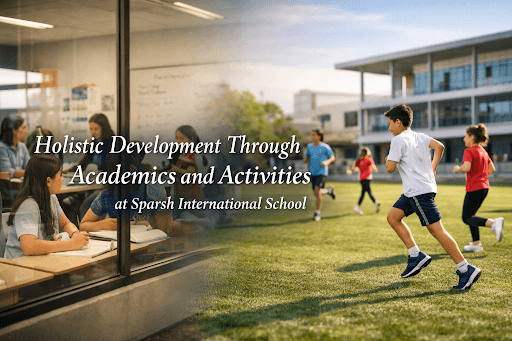

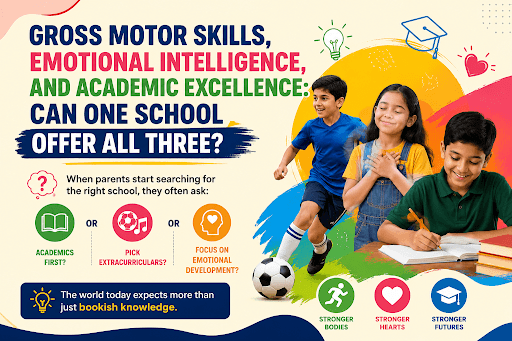
What does it really mean to educate a child? Is it for just marks and grades alone?
Holistic development sounds like one of those phrases schools love to print on brochures. It looks good, it feels complete, but in reality, it is messy. We need to understand that it cannot be forced into a timetable alone.
A child does not grow in straight lines; growth happens in fragments and is a slow-evolving process. At a young age, your kids' growth happens in classrooms, on the playground, and in other places. Parents are mostly concerned about their kids getting the right kind of education and guidance. Besides them, they trust their schools for this, and that’s where Sparsh International School, one of the best schools in Noida, comes into the scene. Let’s see how!
Also Read | Integrating Social Responsibility into Student Life at SIS, Greater Noida
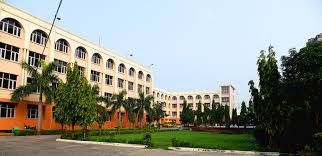
Academics: The Foundation, Not the Finish Line
Let’s begin with the obvious. Academics matter. Structured learning builds discipline. It sharpens thinking. It introduces young minds to mathematics, literature, science, history and the frameworks that shape society.
A strong academic system teaches children how to think, not just what to memorise. Inquiry-based lessons. Discussion-led classrooms. Concept clarity instead of rote learning. But here’s the catch. Academics alone cannot create confidence. Or resilience. Or empathy.
A student may solve complex equations yet struggle to speak in front of ten people. She may score high in theory, yet hesitate when faced with uncertainty. That’s where activities step in. Not as “extra-curricular”. But as an essential curriculum.
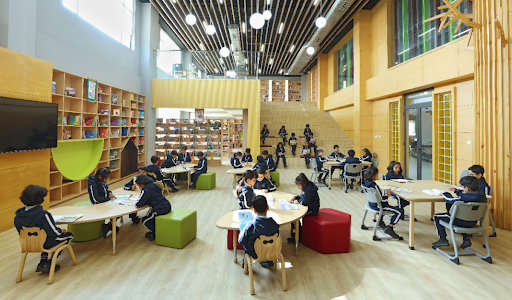
The Quiet Power of Activities
Picture this. A shy student stands backstage before her first debate competition. Her hands tremble. She forgets half her lines. But she walks onto the stage anyway.
She doesn’t win. But something shifts. That shift matters more than trophies. Sports fields teach something textbooks can’t. Teamwork. Loss. Recovery. Discipline without supervision. The understanding that effort does not always equal victory, and that’s okay.
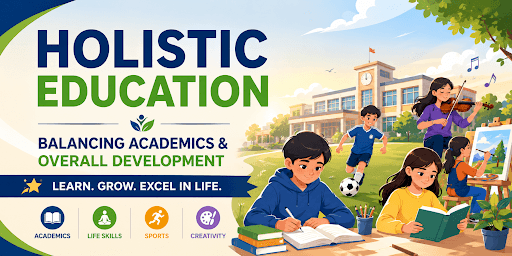
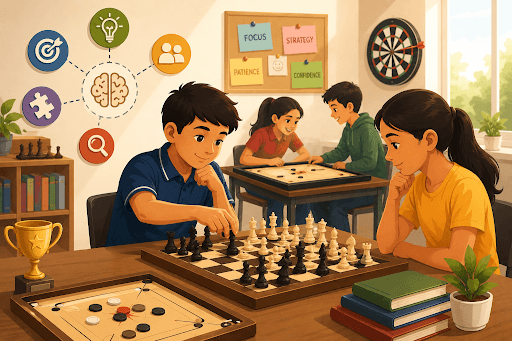
Art rooms teach patience. Music rooms teach rhythm and collaboration. Drama teaches expression. Robotics clubs teach problem-solving beyond diagrams. When students move beyond desks, they discover dimensions of themselves they didn’t know existed. Holistic development happens in those discoveries.
-
Balancing Structure and Freedom
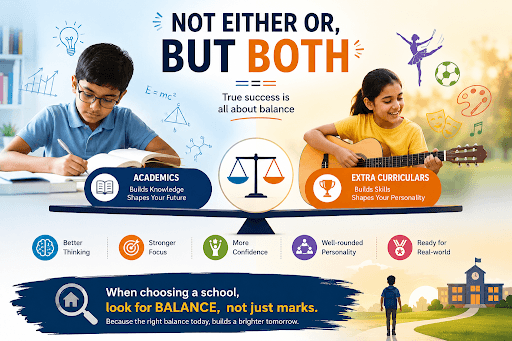
The challenge is not offering activities. The challenge is balance. Too much pressure and children burn out. Too little structure and they drift. A well-designed educational environment blends academic rigour with creative breathing space.
Students need deadlines. But they also need reflection. They need exams. But they also need exhibitions. Performances. Competitions. Projects that don’t have only one correct answer.
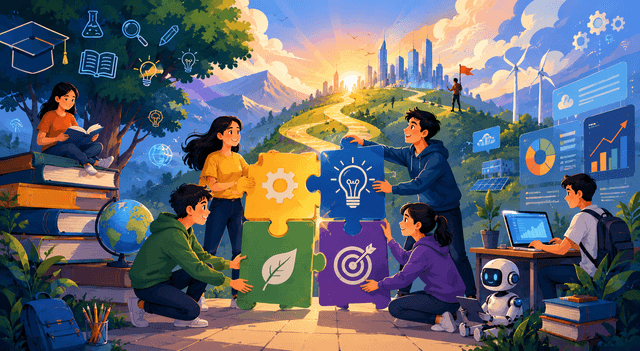
When learning becomes multi-dimensional, students stop seeing education as a burden. It becomes exploration. And exploration builds confidence naturally.
-
Emotional Growth: The Missing Conversation
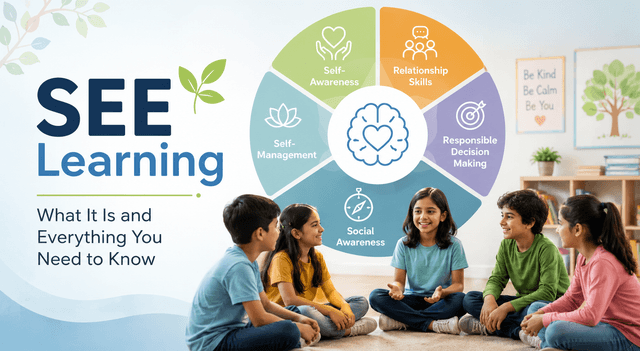
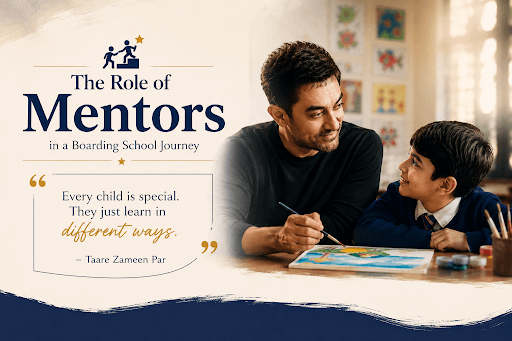
We often measure intelligence. Rarely emotional strength. Yet resilience defines adulthood more than grades do. Schools that focus on holistic development integrate emotional learning into daily life. Peer collaboration. Leadership opportunities. Conflict resolution. Open conversations with mentors.
A classroom discussion about failure can be more transformative than a perfect score. Students must feel safe enough to fail. To question. To disagree respectfully. Because real life will not hand them answer sheets. It will handle these situations. And situations demand character.
-
Technology and Real-World Exposure
Today’s learners are digital natives. Ignoring technology is not an option. But overusing it is equally dangerous. Balanced exposure matters. Smart classrooms. Digital research tools. STEM initiatives. Innovation labs.
These build modern competence. But outdoor activities, community outreach, and experiential learning ground that competence in reality. Field visits. Social responsibility projects. Environmental initiatives. These experiences connect theory to society. And when education connects to life, it sticks.
Check Out | Coding the Future: The Automation Advantage at WisdomWood High
A Glimpse into Practice: Sparsh International School
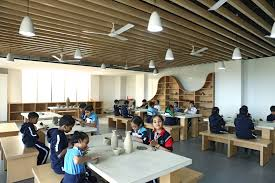
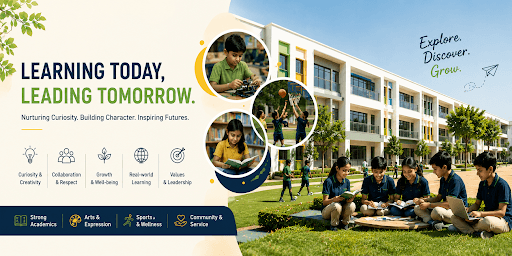
At places like Sparsh International School, this idea of holistic growth isn’t just printed on a wall somewhere. It lives in the daily routine, in the timetable, in the small decisions nobody notices.
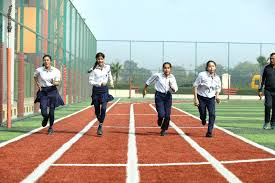
Classes are planned carefully. Lessons are not rushed. Concepts are explained until they actually make sense, not just memorised for the next test. Assessments happen regularly, quietly tracking progress.
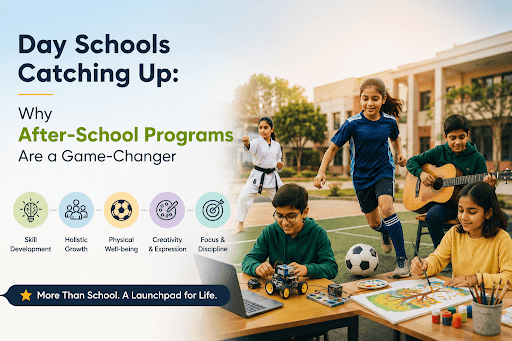
But then the bell rings. And the campus changes rhythm. The same students who solve equations in the morning are on the football field by afternoon. Or rehearsing for a performance. Or leading a club meeting with surprising confidence. Leadership roles are not reserved for a few loud voices; they are encouraged, slowly, sometimes awkwardly.
It’s structured. Yet flexible. Seriously. Yet alive. And somehow, both academics and activities are treated with equal weight, not because it sounds impressive, but because the school believes they matter. Even if not everyone realises it immediately.
Why Does This Approach Matter Now?
Years later, students rarely remember specific chapters. They remember experiences. The day they anchored the annual function. The football match went into extra time. The science exhibition that almost failed but didn’t. The teacher stayed back after class to explain one more concept.
Holistic development shapes adaptability. In universities. In workplaces. In relationships. A student who has balanced academics with activities is more likely to manage pressure. To collaborate. To lead without arrogance. To recover from setbacks. Because she has practised those skills already.
The Final Thought
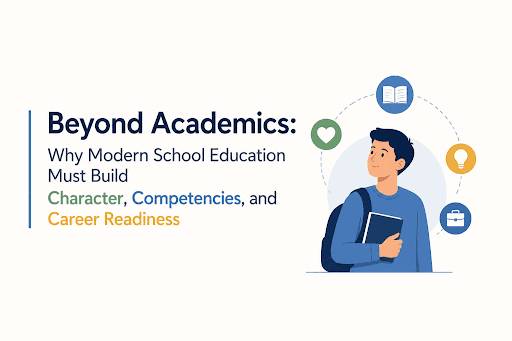
The world is unpredictable. Careers evolve. Industries shift. Knowledge updates faster than textbooks can. Memorisation alone cannot keep up. Critical thinking. Creativity. Emotional intelligence. Physical wellbeing. These are no longer optional add-ons.
They are survival skills. Schools that understand this are not simply educating for exams. They are educating for life. Holistic development is not a marketing slogan. It is a responsibility. And when academics and activities are woven together intentionally, students don’t just perform well. They grow well.
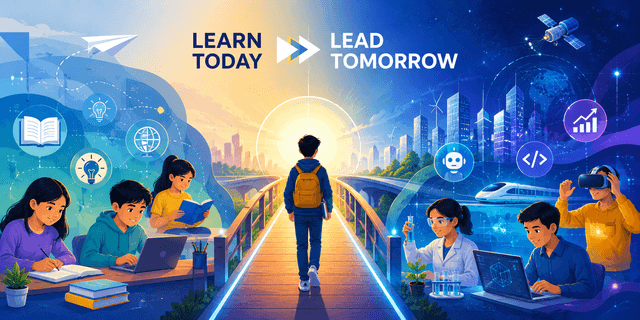
Education should not feel like confinement. It should feel like preparation. Preparation to think. Preparation to act. Preparation to adapt. Holistic development is not loud. It does not always show immediate results. But over time, it builds individuals who are steady, capable, and aware.
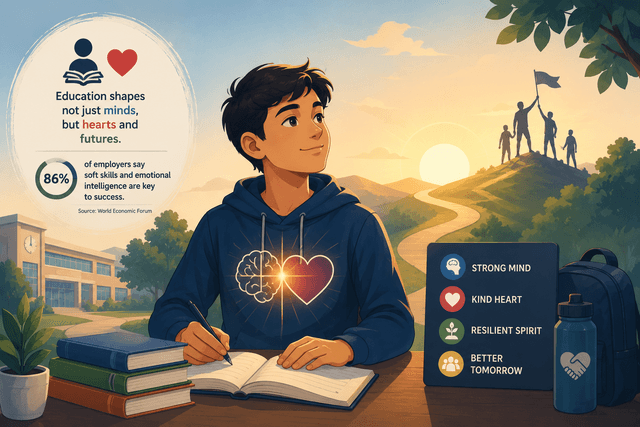
Because true education is not about filling minds. It is about shaping human beings. Slowly. Steadily. Completely.
For more details on this and other nearby boarding schools, see this list of the top Schools in Greater Noida.
 as a preferred source on