








For decades, schools have treated creativity as the subject you do when the "real" subjects are done. A slot on Friday afternoon, a stage production once a year, an art class wedged between science and maths. But the world students are walking into doesn't see it that way. The skills the creative economy demands — storytelling, collaboration, digital fluency, adaptability — aren't extras anymore. They're the core. One of the top schools in Greater Noida, Sheoran International School, Greater Noida, has taken that shift seriously with its Academy of Fine Arts & Films, a structured program that gives students hands-on access to cinema, art, and theatre — not as a club, but as a genuine learning pathway.
Why Film Education Belongs in Every School

The Skills Economy Has Changed
Students today are competing in environments that reward people who can communicate compellingly, think creatively, and work across disciplines. The ability to write a script, direct a scene, or edit footage is no longer niche knowledge — it's professional currency across marketing, media, tech, and corporate communication. Schools that treat film as a fringe activity are sending students into this world underprepared, not because they didn't learn enough trigonometry, but because they never had a structured space to develop creative confidence.
The Creator Economy Is Already Here
YouTube, Instagram, streaming platforms, and podcasting have created a genuine economy around content creation. Students who understand storytelling, production, and audience engagement have an edge that wasn't available to previous generations. But this isn't just about becoming a creator. Businesses and institutions increasingly communicate through video. A student who can't engage with visual media — read it critically or understand how it's made — is operating with a real blind spot, regardless of what career they pursue.
Also Read| 5 Skills your child will need in 2035
What Students Actually Learn Through Filmmaking
From Script to Screen
A film project doesn't start with a camera. It starts with a story. Students write scripts, develop characters, structure a narrative, and make deliberate choices about what they want to say. That builds language skills and critical thinking in a way that feels urgent because there's a real output at the end. From writing, they move in front of the camera — where acting, expression, and empathy develop — then into visual composition, framing, and lighting. Students begin to understand that every frame is a decision, and that visual storytelling has its own grammar.
Sound, Editing, and the Technical Side
Music and sound design are often the last thing audiences notice and the first thing they feel. Students quickly discover how much the emotional texture of a scene depends on what they hear, not just what they see. Then there's editing — where raw footage becomes a finished piece, and the real analytical work begins. It demands patience, precision, and hundreds of small decisions. Most students find it humbling at first, and then one of the most satisfying parts of the process.
Teamwork You Can't Fake
A film production is one of the few school activities where genuine collaboration isn't optional. Someone writes. Someone directs. Someone operates the camera, manages sound, and handles the edit. Every role matters. The working dynamics — delegating, managing disagreements, meeting deadlines — mirror professional environments far more closely than most group projects do. You can coast through a group assignment. You cannot coast through a film.
The Deeper Skills Film Education Builds
Resilience and a Growth Mindset
Film projects almost never go as planned. Lighting fails. A scene that looked brilliant in the script falls flat on screen. Learning to keep going — to revise, adapt, and accept feedback — is the kind of resilience teachers try to build in students across every subject. Film education does it in a context where students actually care about the outcome, which makes the lesson stick differently.
Confidence and Communication
Students who perform in front of a camera, present their work to peers, and defend their creative choices develop communication confidence that's hard to build through traditional classroom methods. They also learn that making something and sharing it takes courage — and that doing it anyway, even imperfectly, is worth more than keeping a good idea to yourself.
Also Read| Where Every Child’s Potential Matters and How Schools Cater to It?
How Sheoran International School Brings This to Life
The Academy of Fine Arts & Films
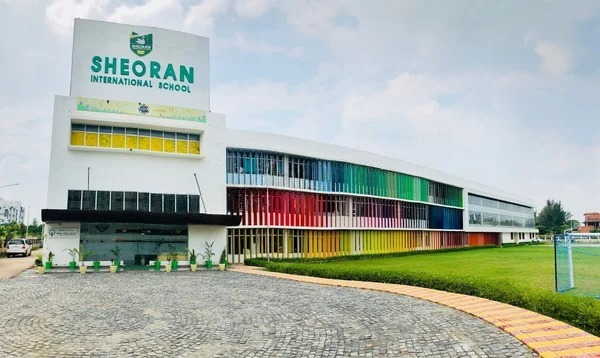
At one of the best CBSE schools in Greater Noida, Sheoran International School, the Academy of Fine Arts & Films is a one-year certification program that takes students into the world of cinema, art, and theatre through structured, hands-on learning. This isn't an after-school club or an annual event — it's a program with a clear arc, guided by professionals, designed to give students real experience of what it takes to conceive, produce, and deliver creative work.
The SSquare Production Partnership and Boishali Sinha
What makes the Academy genuinely distinctive is who's behind it. The program runs in collaboration with SSquare Production, which has been discovering and developing young creative talent since 2019. Leading this partnership is Boishali Sinha — a well-known Designer, Art Director, and Artist in the Hindi film industry whose credits include Rowdy Rathore, Special 26, Dhoom 3, Gabbar Is Back, and Salt City. Having someone with that depth of industry experience mentor students at the school level changes the nature of what they're learning. They're not working through a theoretical curriculum — they're getting real creative insight from someone who has made real decisions on major productions.
Conclusion
Film education isn't a luxury add-on for students who are "into art." It's a structured way to build storytelling, technical literacy, teamwork, resilience, and creative confidence — skills that matter across virtually every career path. Sheoran International School's Academy of Fine Arts & Films is exactly that kind of commitment — not a gesture toward creativity, but a real investment in it.
To know more about other schools in Greater Noida, visit our page
 as a preferred source on