







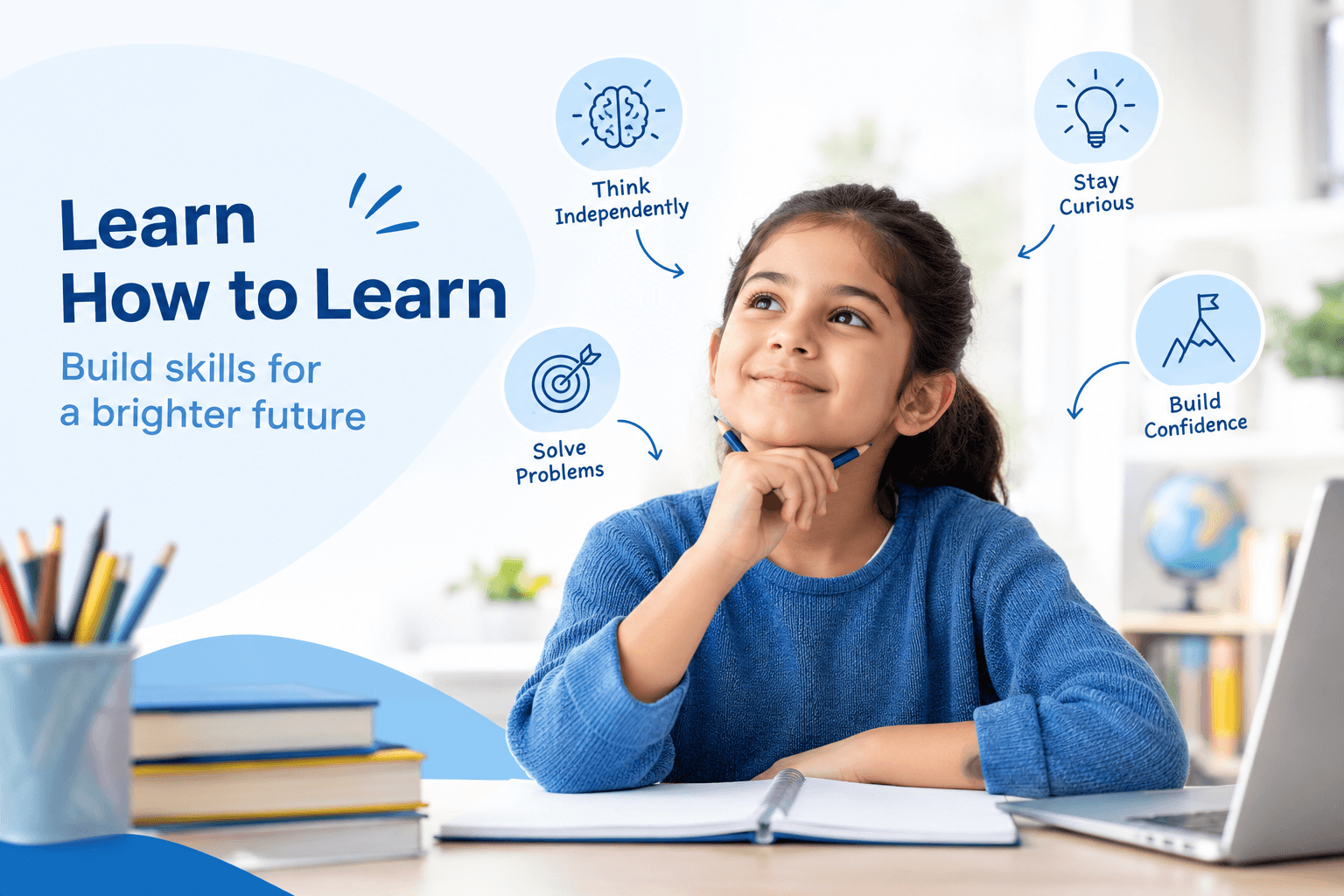

Parents naturally want their children to do well in school. Good marks, strong concepts and regular study habits all matter. But there is another question that often gets missed: Can a child learn without being told exactly what to do at every step? This question becomes especially important when parents compare the Top Schools In Greater Noida West, including Ramagya School, Greater Noida West. A school can teach many subjects, but children also need to understand how to approach a new problem, remember information, correct mistakes and keep going when something feels difficult.
Think about a child preparing for a test. If a parent sits beside them and keeps saying, “Read this,” “Revise that,” and “Have you finished?”, the work may get completed. But what happens when the child has to study independently later? The real goal of education is not simply completing today's homework. It is gradually helping children become capable of managing tomorrow's learning.
What Does It Mean to “Learn How to Learn”?
Learning how to learn means understanding what works when something is new, confusing or difficult. It includes skills such as planning, remembering, checking mistakes, asking questions and changing strategies when the first attempt does not work.
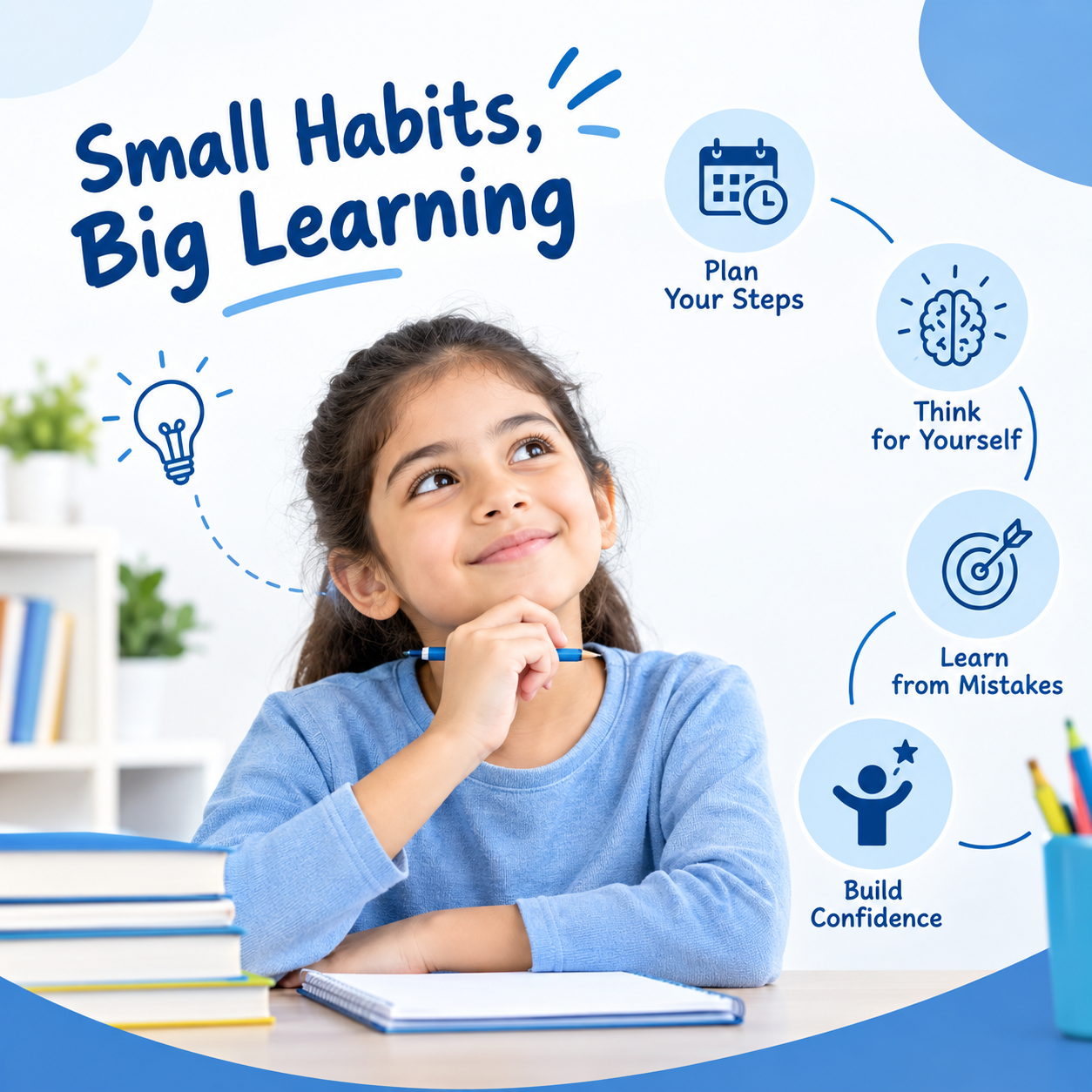
Harvard's Center on the Developing Child describes executive function and self-regulation as skills that help people focus, plan, manage information, make decisions and control impulses. These abilities are not simply present from birth; they develop through experience and practice.
For a child, this can look very ordinary:
- A Class 4 student decides to divide a large homework task into smaller parts.
- A Class 6 student notices that simply rereading a chapter is not helping and starts testing themselves.
- A teenager realises that leaving a project until the night before creates unnecessary stress and changes their schedule next time.
These may look like small habits, but together they build independence.
|
Instead of only teaching… |
Children can also learn to… |
|
“What is the answer?” |
Explain how they found the answer |
|
“Read the chapter again.” |
Choose a useful revision method |
|
“Finish your homework.” |
Plan when and how to complete it |
|
“You made a mistake.” |
Find the mistake and try another approach |
Why Struggling a Little Can Actually Help
It is tempting to remove every difficulty from a child's learning. If a child cannot solve a maths question, an adult may immediately show the method. If they forget a word, someone may give them the answer. This feels helpful, but always removing the struggle can reduce opportunities to practise thinking.
Educational psychology has identified retrieval practice and spacing as useful learning strategies. Retrieval practice means trying to remember information instead of only looking at it again, while spacing means spreading learning across time rather than doing everything in one sitting. A 2022 review in Nature Reviews Psychology examined evidence for both approaches and their connection with metacognition, or awareness of how one learns.
A simple example is vocabulary. Instead of reading ten new words five times on Sunday evening, a child could learn them on Monday, test themselves on Wednesday, and recall them again on Saturday.
Research also supports the value of spaced retrieval. A 2021 meta-analysis covering 29 studies found a substantial benefit for spaced retrieval practice compared with massed practice, although the exact effect can vary by learning situation.
This does not mean children should be left to struggle alone. It means adults can provide scaffolding: enough help to get a child moving, followed by gradually less help as their ability grows.
What Can Parents Do at Home?
Parents do not need complicated educational programmes to encourage independent learning. Everyday routines can become practice opportunities.
When a child says, “I don't know how to do this,” instead of immediately providing the solution, a parent might ask, “What have you tried so far?” or “Which part is confusing?” This shifts the conversation from getting an answer to understanding the problem.
Parents can also try these simple habits:
- Let children make small plans. Ask them when they want to complete homework, reading or revision instead of planning every minute for them.
- Ask for explanations. If a child gives an answer, ask how they reached it. Explaining a thought process can reveal whether the concept is actually understood.
- Normalise mistakes. A failed science experiment or an incorrect maths solution can become a chance to ask what should be changed next time.
- Use everyday activities. Cooking can involve measurement, shopping can involve budgeting, and planning a family outing can involve time and decision-making.
- Reduce reminders slowly. If a child needs five reminders today, aim for four after some practice, rather than expecting complete independence overnight.
This connects with a useful idea from developmental science: children build these skills through repeated practice, supportive relationships and gradually increasing responsibility.
Also Read| Montessori vs Play Way: Which Method Is Actually Best for Your Child?
How Ramagya School Connects Learning With Independence
For parents exploring the Top Schools In Greater Noida West, Ramagya School, Greater Noida West presents an approach that connects academic learning with broader skill development. The school's official information describes a CBSE curriculum supported by experiential learning, technology-enabled classrooms and skill-building, with activities intended to encourage curiosity, creativity and learning beyond the classroom. Its Noida Extension campus is located at Plot No. A-229, Knowledge Park V.

The school's stated approach includes opportunities across academics, activities, sports and other experiences. Its admissions information describes learning across different stages, from child-centred methods in the early years to greater emphasis on communication, critical thinking, leadership and application-based learning in later years. This kind of environment can give children more chances to practise not only what they know, but also how they use that knowledge.
The Bigger Goal Is Confidence With Learning
A child will not always have a teacher, parent or textbook telling them exactly what to do. They will eventually face unfamiliar questions, new subjects, difficult decisions and situations where the answer is not immediately available.
That is why education can be viewed as more than collecting information. It can also be about developing the habits needed to approach information, question it, remember it, apply it and learn from mistakes.
For parents, the useful question may therefore be less about whether a child always gets the right answer and more about whether the child is slowly becoming better at finding their own way towards it. When children learn how to learn, everyday challenges can become opportunities to build curiosity, responsibility and confidence.
Want to know about this School and other schools in the nearby area



 as a preferred source on