








School education is not only about textbooks, examinations, and classroom learning. Children also need opportunities to move, play, explore, and develop skills outside academics. This is where co-scholastic activities can make an important difference. For example, one of the best schools in Bangalore, New Oxford School’s co-scholastic program includes skating as an activity that encourages children to stay active while developing physical skills.
Skating can be much more than a recreational activity. When children learn to skate, they gradually develop balance, coordination, concentration, confidence, and body control. With regular practice and proper guidance, it can become an enjoyable part of a child’s school experience.
Benefits of Learning Skating
Skating Makes Physical Activity More Enjoyable
Children need regular physical activity as they grow. However, not every child enjoys traditional forms of exercise. Skating offers a different and engaging way to stay active.
Instead of feeling like a routine workout, skating can feel like play. Children move around, practise new skills, and gradually become more comfortable on their skates. This can make physical activity something they look forward to rather than something they have to be encouraged to do.
Regular movement also supports overall fitness and helps children develop an active lifestyle from an early age.
It Helps Develop Balance and Coordination
One of the most important skills children learn through skating is balance. Staying upright while moving requires children to understand how their body position affects their movement.
At the same time, skating requires coordination between different parts of the body. Children have to control their feet, legs, arms, posture, and direction while moving. With practice, these movements can become smoother and more controlled.
These abilities are useful beyond skating. Better balance and coordination can support participation in many other physical activities and sports.
Skating Can Improve Concentration
Skating also requires children to pay attention to what they are doing. They need to remain aware of their movement, their surroundings, and instructions from their coach.
When learning a new skating skill, children often have to repeat the same movement several times before they become comfortable with it. This teaches them to focus on a task instead of giving up after an unsuccessful attempt.
Over time, this kind of practice can encourage patience and concentration. Children learn that improvement often comes through consistent effort.
It Builds Confidence Through Small Achievements
Learning to skate does not happen instantly. A child may initially feel uncertain about standing, moving, or maintaining balance. As they practice, however, they can gradually master one skill after another.
These small achievements can have a positive effect on confidence.
A child who successfully learns a new movement may begin to understand that difficult things can become easier with practice. This is an important lesson that can also apply to academics, creative activities, and other areas of life.
The experience of progressing from "I cannot do this yet" to "I can do this" can be valuable for a growing child.
Skating Teaches Patience and Perseverance
Like many physical activities, skating involves practice. Children may not learn every skill correctly on their first attempt. They may need time to understand their movements and become comfortable with new techniques.
This creates an opportunity to teach perseverance.
Instead of expecting immediate results, children learn to keep practising and learn from their mistakes. They begin to understand that progress can happen gradually.
Such a mindset can be useful in school as well. Whether a student is learning mathematics, a musical instrument, a language, or a sport, regular practice often plays an important role in improvement.
Also Read | Why Schools Should Encourage Student Authors
Why Proper Guidance Matters
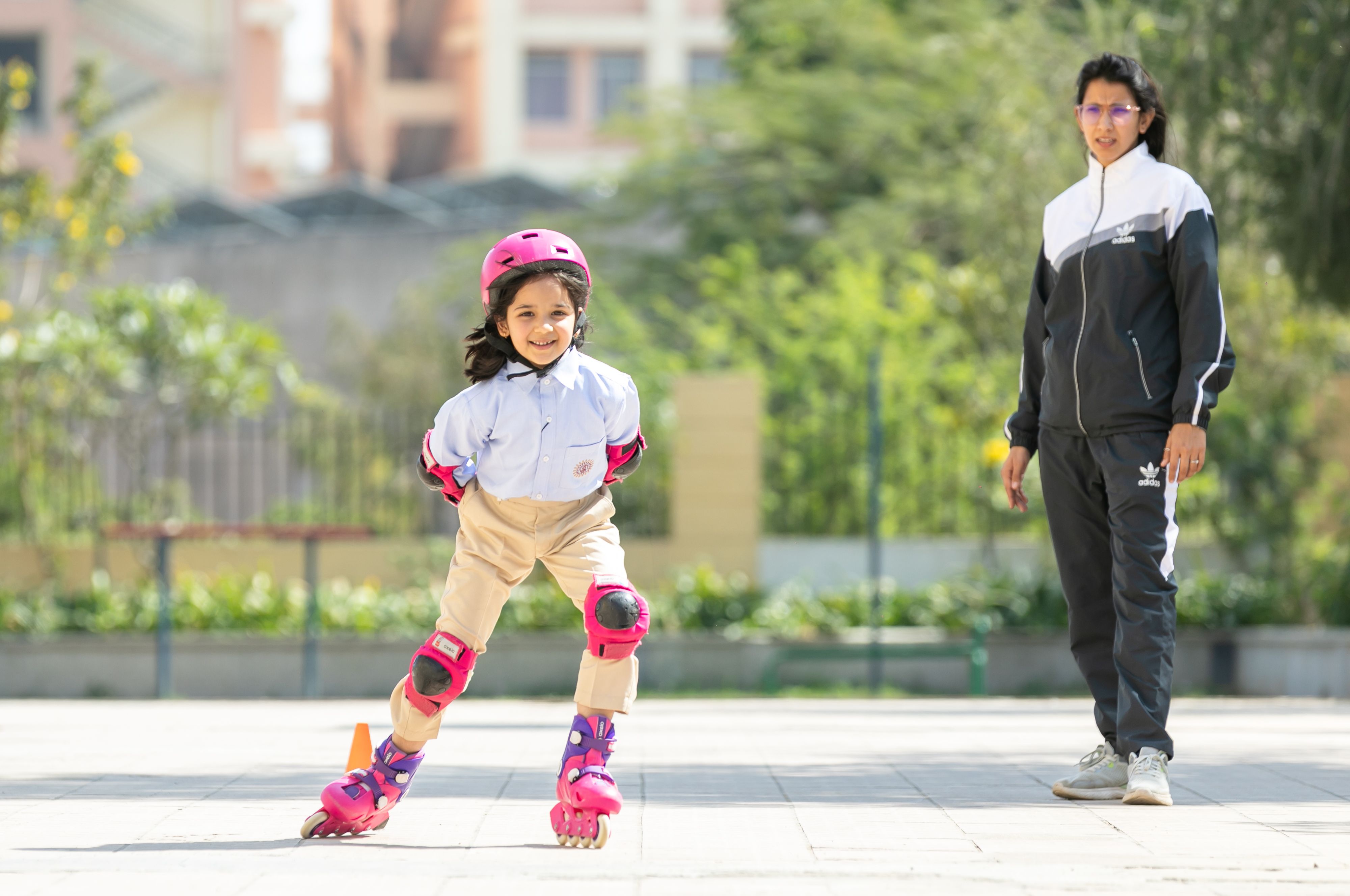
Although skating can be enjoyable and beneficial, learning it should take place in a suitable and supervised environment. Children need to understand basic skating techniques and follow appropriate safety practices.
Experienced coaching can make the learning process more structured. A coach can introduce skills gradually, correct mistakes, and help children develop better control as they become more confident.
For schools, this makes the quality of guidance an important part of providing skating as a co-scholastic activity. The focus should not simply be on getting children onto skates but on helping them learn comfortably and responsibly.
Making Skating Part of School Life
When activities such as skating become part of school life, children get opportunities to develop skills that may not always be addressed through classroom lessons.
A well-rounded school experience can give students space for academic learning as well as physical activity, creativity, communication, teamwork, and personal development. Skating fits naturally into this broader approach because it combines movement with concentration, practice, and confidence-building.
It can also give children a healthy break from sitting for long periods. A structured physical activity during the school routine can help make the overall learning experience more varied and engaging.
Also Read | Why School Libraries Matter
Skating at New Oxford School

Top CBSE schools in Bangalore, like New Oxford School, recognize the value of co-scholastic activities in supporting children's development. As part of its co-scholastic program, the school offers skating as an activity that encourages students to remain active while developing physical abilities.
The school's skating program focuses on the benefits that children can gain from the activity, including improved balance, coordination, fitness, and an active approach to physical movement. The involvement of experienced coaches also provides children with guided learning as they develop their skating skills.
This approach can make skating more than just an occasional recreational activity. With regular opportunities to practice, students can gradually become more comfortable, improve their abilities, and enjoy the process of learning a new skill.
For parents looking at schools, activities such as skating can also be an important part of the bigger picture. A child's school experience should provide opportunities to learn in different ways, including through movement, practice, interaction, and participation.
Giving Children More Ways to Learn
Every child learns and develops in different ways. While classroom education remains essential, activities outside traditional lessons can help children discover new interests and abilities.
Skating offers a simple example of how physical activity can contribute to this broader development. It encourages children to move, concentrate, practise, maintain balance, and work towards gradual improvement. Most importantly, it can make physical activity enjoyable.
With the right environment and experienced guidance, skating can become a valuable part of a child's school routine. Schools such as New Oxford School demonstrate how co-scholastic programs can create space for such experiences alongside academics.
Ultimately, the goal of school education is not only to help children perform well in examinations. It is also to help them become active, confident, curious, and capable individuals. Activities such as skating can play a small but meaningful role in helping children move towards that larger goal.
To know more about other schools in Bangalore, click on the link below


 as a preferred source on