








Ask a child what they want to be when they grow up, and you'll usually hear doctor, engineer, athlete, scientist, or artist. Rarely does a kid confidently say, "I want to be an author." It's not for lack of imagination — quite the opposite, really. Young minds are bursting with stories, questions, adventures, and half-formed ideas. What's usually missing isn't creativity; it's an environment that convinces them those stories are worth writing down.
At one of the best schools in Bangalore, New Oxford School, that's exactly the kind of environment the faculty has been quietly building. Schools have long treated reading as the core academic skill, with writing trailing somewhere behind. But writing deserves just as much attention — and creative writing especially shouldn't be filed away as "just an English assignment." It's really an opportunity for children to build confidence, creativity, empathy, and critical thinking all at once. When a school actively pushes students to tell their own stories, it ends up doing far more than producing young writers — it raises thoughtful communicators and lifelong learners.
Every Child Has a Story Waiting to Be Told
Children see the world differently from adults. They notice the details grown-ups walk past, imagine possibilities where adults see limits, and ask the kind of questions that quietly challenge conventional thinking. All of that lends itself naturally to storytelling.
Writing gives students a way to catch those observations and turn them into something with shape — a fantasy world, a story about friendship, a futuristic invention, a memory worth reflecting on. Along the way, they learn to organise their thoughts, put feelings into words, and get their ideas across clearly.
What grows here goes well beyond vocabulary. It's clarity of thought, patience, creativity, and the ability to connect with someone else purely through words on a page.
Also Read| Importance of School Spaces in Early Learning
Writing Builds Confidence Beyond the Classroom

One of the biggest gifts creative writing gives a child is confidence. Finishing a story, a poem, even a whole novel, means creating something that simply didn't exist before — and that sense of accomplishment quietly tells a student their ideas actually matter.
Unlike subjects with one correct answer, creative writing rewards individuality. Every student's voice sounds different, and every perspective adds something. That confidence has a way of spilling into other parts of school life too — students who trust their own thinking tend to speak up more in discussions, present ideas more willingly, and take on harder assignments without flinching.
Storytelling Develops Emotional Intelligence
Academic performance matters, sure, but education is just as much about helping kids understand themselves and the people around them. Writing a story forces a student to step into someone else's shoes — imagining different emotions, backgrounds, personalities, struggles — and empathy tends to follow naturally from that.
A child writing about a lonely character ends up thinking hard about isolation. Someone writing about courage starts reflecting on resilience. A story about friendship gets them exploring trust, kindness, and forgiveness. Without quite meaning to, students are building emotional intelligence — one of the more essential life skills behind healthy relationships, teamwork, and leadership later in life.
Publishing Gives Learning Real Meaning
Finishing a classroom assignment feels satisfying. Seeing your own story published feels transformative. Once students know their writing will actually be read — by classmates, parents, or a wider audience — they invest in it differently. They revise more carefully, pay closer attention to language, and take real pride in the finished piece.
Publishing teaches something else too: that creativity has value. Seeing your own name attached to a finished piece of writing tends to stick with a student for years, quietly reinforcing the idea that their voice deserves to be heard. Even the ones who never go on to become professional writers carry forward the confidence that they can communicate ideas well.
Also Read| Making Learning Interesting Again
Schools Play the Biggest Role
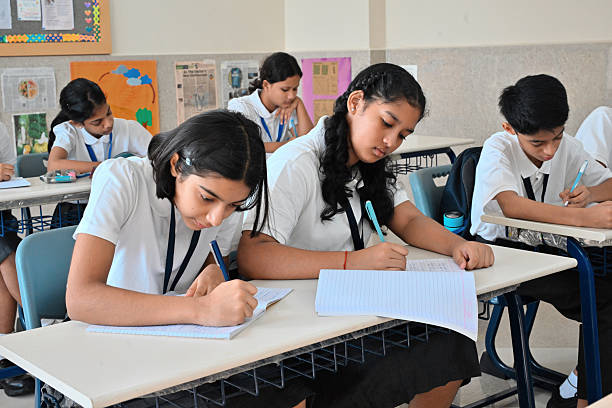
Very few young writers get there entirely on their own. Behind almost every student author is a teacher who pushed for one more draft, suggested a better ending, praised an imaginative idea, or simply believed in a student before the student believed in themselves.
Schools that make room for creative expression open up countless chances for hidden talent to surface — writing clubs, storytelling competitions, classroom journals, reading circles, author interactions, school magazines, and creative workshops all feed into a culture where imagination gets celebrated rather than boxed in. Once creativity becomes part of everyday learning, writing stops feeling like homework and starts feeling like self-expression.
Celebrating Young Authors at New Oxford School
.jpeg)
This philosophy plays out in real life at one of the best CBSE schools in Bangalore, New Oxford School, through stories like Aditi Singh's — a young author whose journey shows exactly what happens when talent meets the right encouragement. Recognized by her teachers as a thoughtful observer and an imaginative storyteller, Aditi turned her love of writing into a published creative work built around friendship, courage, and self-belief. It all started with ordinary classroom assignments, where teachers noticed something distinctive in her storytelling and nudged her to take it further, into a complete story of her own.
At New Oxford School, creative writing isn't treated as an occasional extracurricular add-on but as a genuine part of holistic education. The school runs writing workshops, story-building sessions, reading initiatives, and teacher mentorship, and gives students real opportunities to publish their work — helping them find their own voice while building confidence in both communication and creative thinking.
It fits into the school's broader philosophy of nurturing every child's potential beyond academics. Alongside its CBSE curriculum, modern learning environment, library, and activity-based approach, New Oxford School builds a space where imagination is encouraged just as much as exam performance. Students are pushed not only to do well on paper but to explore their interests, express themselves creatively, and grow into confident individuals in their own right.
Final Thoughts
Aditi's story is a good reminder that remarkable achievements usually start with something as simple as encouragement. Every student author who gets published quietly inspires others to believe their own ideas are worth sharing — and schools that invest in creativity today are, in a very real sense, shaping the communicators, innovators, and leaders of tomorrow.
After all, every great author was once just a student staring at a blank page, and someone who believed they had a story worth telling.
If you want to know more about this and other nearby Bangalore schools, then check out the list of the top Schools in Bangalore.

 as a preferred source on