









A child may know the answer in class but hesitate to raise their hand. Another may avoid trying a new activity because they are afraid of making a mistake. Some children become quieter when they are constantly compared with classmates. For parents, this can raise an important question: How can schools build confidence without turning every activity into a test of performance?
Confidence does not always mean being the loudest child in the room. It can mean asking a question, trying again after getting something wrong, sharing an idea, working with others, or simply feeling comfortable being oneself. When parents look for the Best CBSE School in Bangalore, it is therefore useful to consider not only academic results but also how a school helps children develop these everyday forms of confidence. Naavu School, Whitefield, Bangalore, is one example of a school that places confidence alongside culture, character, community, and conviction in its stated educational approach.
Also Read| Why Inquiry-Based Play is the Foundation of Future Success
What Does Healthy Confidence Look Like in Children?
A confident child is not necessarily one who always performs well or wins competitions. Healthy confidence develops when children begin to believe that they can learn, contribute, and handle challenges.
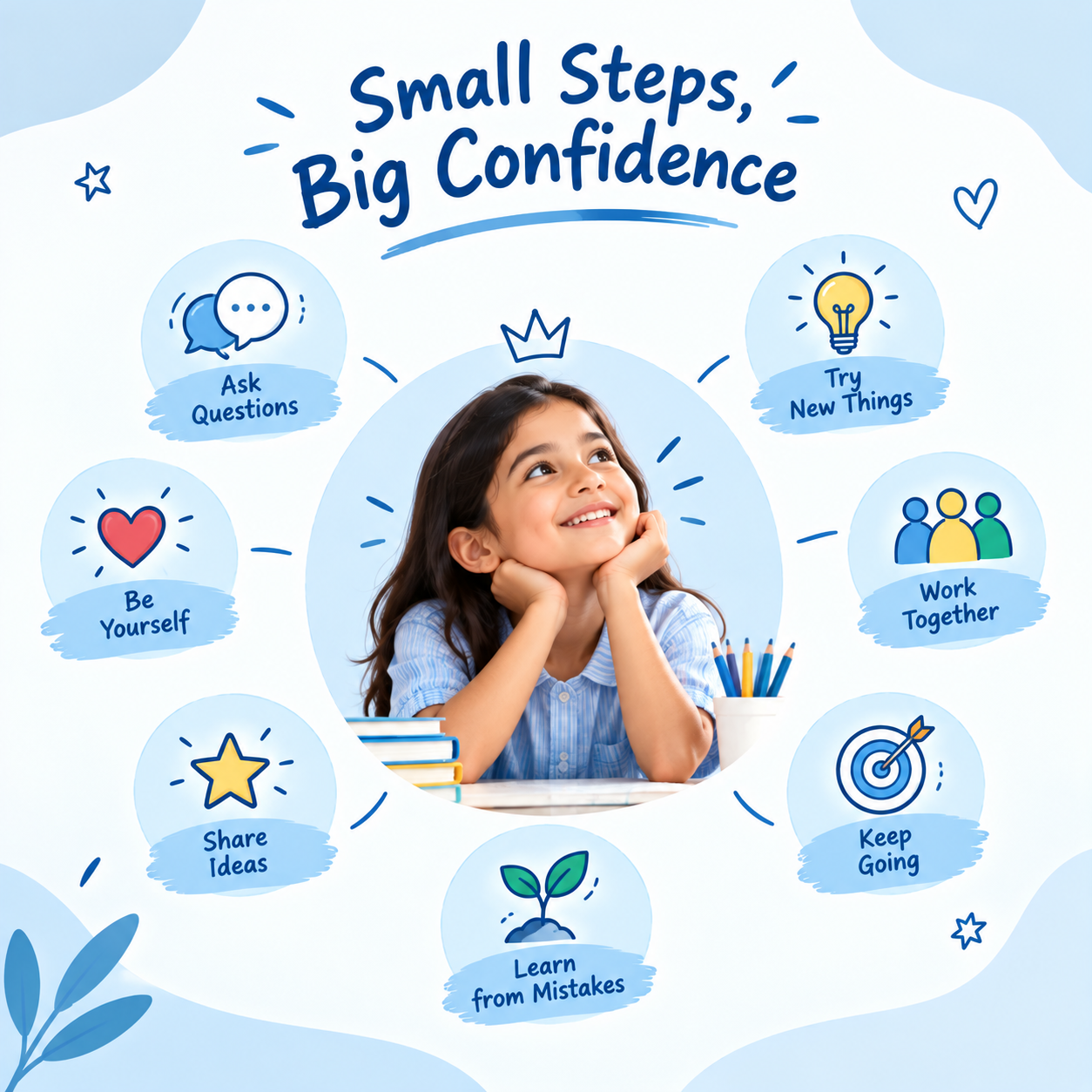
At school, this may look like a child who:
- Asks questions without worrying about having the “wrong” answer.
- Volunteers to participate in an activity.
- Tries something unfamiliar.
- Accepts constructive feedback.
- Works through a difficult task instead of giving up immediately.
- Can admit a mistake and learn from it.
- Expresses an opinion while listening to others.
These behaviours usually develop gradually. A supportive school environment can give children regular opportunities to practise them.
5 Ways Schools Can Build Confidence Without Creating Pressure
1. Make Mistakes Part of Learning
Children can become reluctant to participate when every mistake feels like a failure. Schools can change this by treating mistakes as useful information.
For example, instead of simply marking an incorrect answer, a teacher can ask, “What made you think that?” This gives the child an opportunity to explain their thinking and try again.
The goal is not to remove standards or expectations. It is to help children understand that getting something wrong does not define their ability.
2. Give Children Different Ways to Participate
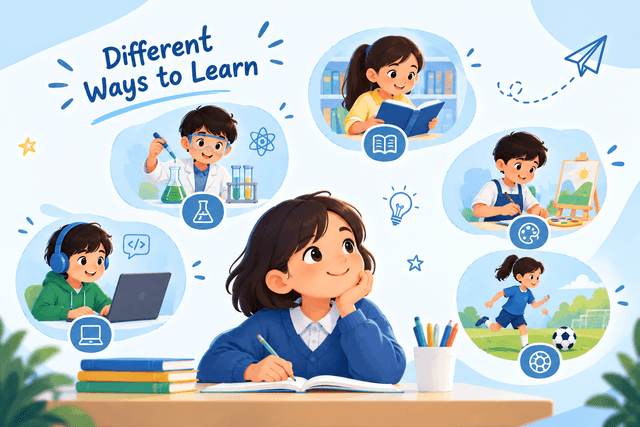
Not every child becomes confident through the same activity. One may enjoy speaking, while another may express ideas through drawing, music, sport, design, or a group project.
This is why a broad school experience can matter. Creative activities, sports, discussions, experiments and collaborative projects allow children to discover different strengths.
Naavu's learning programmes, for example, include creative and design learning, visual arts, music and performing arts, physical development, sports and hands-on exploration.
3. Give Feedback That Encourages Growth
Constant comparison can make children focus more on where they stand against others than on how they are improving themselves.
Constructive feedback can instead focus on specific behaviours. “You explained your idea clearly” or “You tried another method when the first one didn't work” tells a child what they did well and what they can continue developing.
This does not mean praising every effort regardless of the outcome. Children still need honest feedback and appropriate expectations. The difference is that feedback should help them understand how to improve, rather than simply telling them whether they are better or worse than someone else.
4. Give Students Real Responsibility
Confidence grows when children have opportunities to make decisions and take responsibility for their work.
Age-appropriate choices could include selecting a project question, deciding how to present an idea, taking responsibility for part of a group task, or reflecting on what they could do differently next time.
Inquiry-based learning can support this because students are encouraged to explore questions rather than simply wait for every answer from the teacher. Naavu describes its programmes as involving inquiry, interdisciplinary projects, design thinking, research, service and reflection.
5. Build a Sense of Belonging
Confidence is difficult to develop when a child feels that they constantly need to prove themselves.
Children are more likely to participate when they feel known, respected and included. Relationships with teachers and classmates therefore matter alongside academic instruction.
A community-focused school culture can create opportunities for children to listen, collaborate, contribute, and learn from different perspectives. These everyday experiences can gradually make participation feel more natural.
Also Read| What Makes Learning Different at Naavu School, Bangalore?
What Should Parents Look For When Choosing a School?
When visiting a school, parents can look beyond classrooms and ask practical questions about its culture.
Consider asking:
- How do teachers respond when children make mistakes?
- Are students encouraged to ask questions?
- Do children get opportunities to participate in arts, sports and projects?
- How does the school approach competition and comparison?
- Are students given age-appropriate choices and responsibilities?
- Is reflection or wellbeing included in the school day?
- How does the school support children with different learning needs and strengths?
The answers can reveal a great deal about how the school views confidence.
How Naavu School Connects Learning, Belonging and Confidence
For parents exploring the Best CBSE School in Bangalore, Naavu School, Whitefield, Bangalore offers a school model that connects confidence with its wider educational philosophy rather than treating it as a separate skill. The school's stated five pillars include Culture, Character, Community, Conviction and Confidence, while its learning programmes incorporate inquiry, collaboration, creative expression, physical activity, exploration and reflection. Its Middle Years Programme, for instance, includes physical and wellbeing development, exploration studios and reflection and advisory sessions.

Parents researching a Top School in Bangalore can therefore consider not just what children are expected to achieve, but also whether the school gives them regular opportunities to express ideas, work with others, explore interests and reflect on their growth.
Confidence Grows Through Small Experiences
Building confidence is not about making children fearless or pushing them constantly outside their comfort zone. It is about giving them enough support to take the next small step.
A child who asks a question today may volunteer for a presentation later. A child who learns to handle one mistake calmly may become more willing to attempt a difficult task tomorrow.
For parents, the important question is therefore not simply whether a school produces confident children. It is whether the school's everyday environment gives children repeated, safe and meaningful opportunities to become more confident themselves.
For more information on this and similar schools, check out this list of the best schools in Bangalore.

 as a preferred source on