







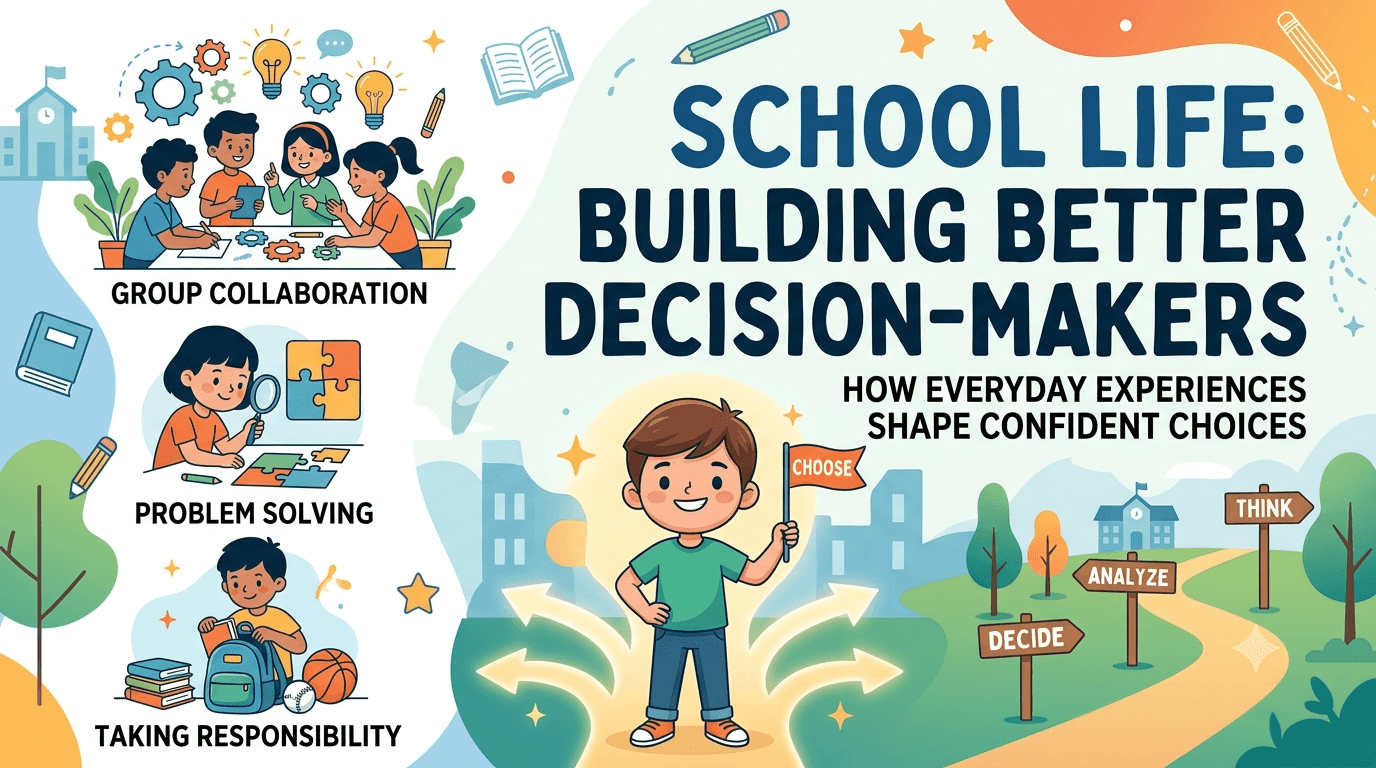

“Should I do this first or that?” “What if I make the wrong choice?” Children ask questions like these every day. While parents naturally want to guide them, children also need opportunities to think through situations and make choices on their own.
Decision-making is not a skill that suddenly appears when a child becomes a teenager. It develops gradually through everyday experiences. School can play an important role because children regularly face situations where they need to think, choose, solve problems, and take responsibility.
For parents considering a Top boarding school in India, it is worth looking beyond academic results and asking a different question: does the school give children enough opportunities to practise making responsible decisions?
Also Read| The Importance of Experiential Learning in Modern Education
Decision-Making Is a Skill Children Learn Through Practice
Children become better decision-makers when they are given age-appropriate opportunities to make choices.
This does not mean allowing them to decide everything. Younger children may choose which activity to complete first, while older students may decide how to approach a project or divide their time before a deadline.
The important part is that children get to think about their options instead of always receiving an answer from an adult.
Over time, these small experiences can help children understand that decisions have consequences. They also learn that making a mistake does not necessarily mean failure. Sometimes, it is simply information that can help them make a better choice next time.
How Everyday School Experiences Build Decision-Making Skills
1. Classroom Problems Encourage Independent Thinking
A classroom does not have to be limited to questions with one correct answer.
When students are asked to explain their reasoning, compare different approaches or find a solution to a problem, they have to think before responding. This encourages them to move beyond memorising information.
For example, instead of simply being told how to solve a problem, students can be encouraged to explain why a particular method works. This small change can help them become more comfortable with analysing situations before making a choice.
2. Projects Give Children Ownership
Projects can provide another useful opportunity for decision-making.
A student may need to decide how to present information, which resources to use, or how to organise their part of a group assignment. There may not be one perfect approach.
This teaches children to compare possibilities and think about what might work best.
It also makes learning more active. When children see the outcome of a decision they made themselves, the lesson can become more meaningful than simply receiving an answer from a teacher.
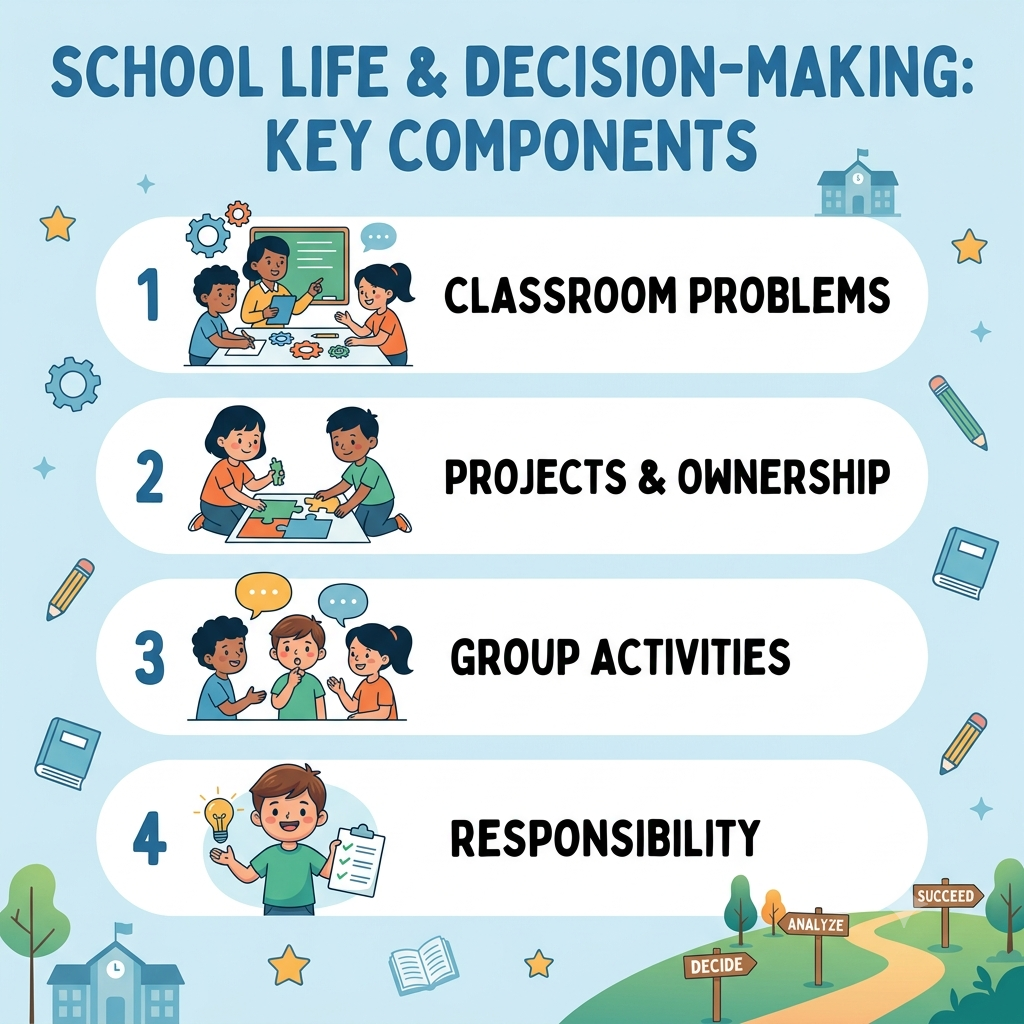
3. Group Activities Teach Children to Consider Other Perspectives
Good decision-making is not only about knowing what you want.
Children also need to learn how to listen to others, manage disagreements, and reach decisions as a group. Group activities provide natural opportunities for this.
A child may want to follow one approach while another student suggests something different. They have to listen, explain their reasoning, and sometimes compromise.
These experiences can gradually teach children that a good decision involves considering different perspectives rather than simply insisting on their own choice.
Responsibility and Independence Go Together
Children cannot become independent decision-makers if adults handle every small responsibility for them.
At school, responsibility can take many forms. Students may have to organise their work, meet deadlines, look after their belongings, complete assigned tasks, or contribute to a team.
These responsibilities may seem ordinary, but they give children repeated opportunities to plan and make choices.
The goal is not to leave children without guidance. Instead, adults can gradually move from “I will decide for you” towards “I will help you think through the decision.”
Why This Can Be Especially Relevant in Boarding Schools
Residential school life can create additional opportunities for children to practise managing everyday responsibilities. Being away from home means students may have to become more mindful of routines, belongings, schedules and interactions with peers.
That does not mean a boarding environment automatically makes every child independent. Support from teachers, wardens and other adults remains important.
What matters is the balance: children receive guidance while gradually being trusted with responsibilities appropriate to their age.
What Parents Can Do at Home
The habits children develop at school can become stronger when parents give them similar opportunities at home.
Give Limited Choices
Instead of deciding everything, offer two or three reasonable options.
For example, ask whether your child would like to complete homework before or after a short break. This allows them to practise making a choice without being overwhelmed by too many possibilities.
Ask Before Giving the Answer
When your child faces a problem, try asking, “What do you think you should do?”
You can then discuss their idea rather than immediately solving the problem for them.
Talk About Consequences
Help children think one step ahead.
Questions such as “What could happen if you choose this?” or “Is there another way?” encourage them to consider possible outcomes before acting.
Let Them Learn From Mistakes
Parents naturally want to protect children from poor choices. However, small and safe mistakes can provide valuable lessons.
Instead of focusing only on what went wrong, ask what the child learned and what they might do differently next time.
What Should Parents Look for in a School?
When evaluating a school, parents can look beyond classrooms and academic facilities.
A supportive environment should give children opportunities to think independently, experiment, collaborate, take responsibility, and reflect on their choices.
This can happen through classroom activities, projects, practical learning, sports, creative activities, and residential responsibilities. The exact activity matters less than whether children are encouraged to participate actively rather than simply follow instructions.
For parents exploring a Top boarding school in India, this broader approach to development can be an important part of evaluating whether a school fits their child's needs.
Also Read| Key Things to Check Before Finalising a CBSE School
How Delhi Public School Yamuna Nagar Connects With This Approach
Delhi Public School Yamuna Nagar describes its educational approach as holistic, with attention to both cognitive and non-cognitive development. The school is a co-educational boarding school, and its campus includes an Atal Tinkering/Robotics Lab where students can build, experiment, and develop problem-solving skills.

Its official information also describes education as involving academics alongside sports, fine arts, music and theatre. These elements provide different settings in which students can practise thinking, collaboration and responsibility. For families comparing options for a Top boarding school in India, these opportunities are worth considering alongside academics when evaluating a Best boarding school in India.
The Goal Is Not to Let Children Decide Everything
Good decision-making does not mean giving children complete freedom.
Children still need boundaries, guidance, and adults who can step in when a decision could have serious consequences. What they also need is enough room to practise making appropriate choices within those boundaries.
Every school day can provide such opportunities. A classroom problem, a group project, a responsibility or even a small disagreement with a peer can become a chance to think and learn.
When schools and parents work together in this way, children gradually learn an important lesson: they may not always make the perfect choice, but they can think carefully, learn from their experiences, and make a better decision next time.
For more information on this and similar schools, check out this list of the best boarding schools in India.
 as a preferred source on