







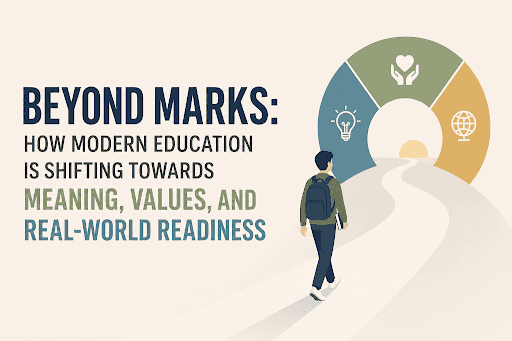

Nelson Mandela once said, "Education is the most powerful weapon which you can use to change the world." But what if the world of education itself is changing? The Education system of India is in the middle of a shift, adapting to the environment around it. And we see a constant shift where education is moving away from what it used to be. The learning ecosystem itself is going through a change, with the aim to create a future that is ready to take humanity to a greater extent. Humanity has been moving towards a rapid technological change, environmental challenges, and increasing social complexity, and in such a situation, the obvious question arises, "Can a student's marks be enough to show their preparedness for the future?"
Traditional education focused too deeply on scoring best, and anyone who didn't was considered a failure by society. However, today education is going through a transformation quietly. Schools have begun to look further than just textbooks and exams, where focus is on nurturing empathy, collaboration, critical thinking, and even a sense of responsibility towards the world. This has resulted in a shifting of goals from creating high scorers to creating individuals who can think, adapt, and contribute meaningfully.
This kind of education is what students at one of the best schools in Greater Noida, The Samurja International School, get with the school, focusing on overall development and support. And that is what we wanted to talk about through this article. We’ll get into why the evolution of education is necessary and how it is changing. We’ll also talk about how Samurja International is bringing this particular philosophy to life.
Problems of Marks-Driven Education
Traditional learning has been present for a very long time in Indian education. The idea was simple: you needed to memorize your book and then regurgitate everything on the exam papers. The entire education depended on the memorization capabilities of a young mind. Unfortunately, the education neither tested for things like understanding of the topics, nor did it try to establish the importance of understanding the topic rather than memorizing it. In all of this, we forget to build the most important thing, which is our life.
The famous psychologist, John Dewey, once said: “Education is not preparation for life; education is life itself.” And it is this particular emotion, because of which, it is important to remember that education should consist of skills that are important in life, and can make our lives easier. But with the kind of education that is dependent on
The whole point of education is to help in the survival of humans, but what if modern education is unable to provide even that? What if the traditional method of education is not able to give you the satisfaction of learning a life skill or a way to build your life, but theories? So while the child might be a topper in school, when it comes to handling simple daily life-related things, they become static. But one thing is definitely clear, in the modern world, with the demands increasing, you would need a structure that is something more than traditional education.
Also Read| Learning Personalized through a 1:10 Teacher-Student ratio
Moving to Holistic Learning
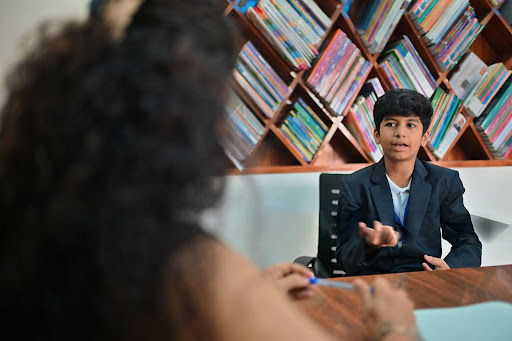
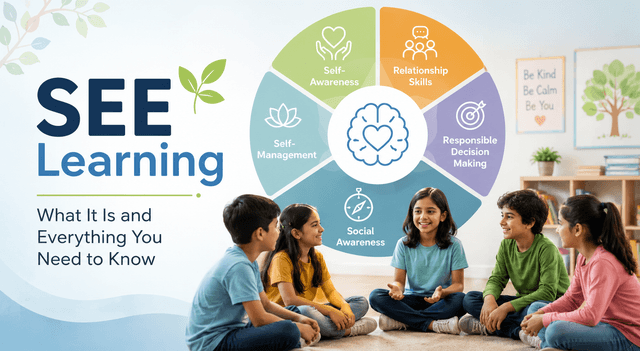
The Greek Philosopher, Aristotle, once said, “Man is a Social Animal,” and that is very true, even a couple of millennia later. It is important for us to be able to have socio-emotional growth so that we can connect with others, and because of this, it is important that socio-emotional learning becomes a part of the curriculum.
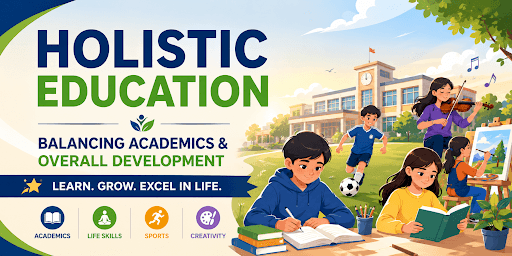
And thus, learning was required where the focus was on overall growth and not just remembering formulas and dates. Holistic Learning basically means equal emphasis on intellectual, emotional, social, and ethical growth. Its sole purpose is to support understanding over memorization, and collaboration over competition. Classrooms are becoming more interactive, learning more experiential, and teaching more student-centered.
In such a time, there has been a meaningful change in what a parent expects from their child. Nowadays, a guardian does not just look for good grades, but wants their child to grow into a better person, who is not just intelligent, but also confident, compassionate, and someone who can find their path.
But to make this shift meaningful and consistent, schools need more than good intentions. They need a clear philosophy—a framework that guides how learning is designed and delivered.
Why Values and Real-World Awareness Matter More Than Ever
The modern student is growing up in a world vastly different from its predecessor. Climate change has made environmental awareness essential. Globalization has made collaboration across cultures a necessity. The digital age has brought unprecedented access to information, but also challenges related to attention, empathy, and mental well-being.
In such a landscape, education must go beyond textbooks. It must help students understand their role in a larger ecosystem. It must teach them not just how to succeed individually, but how to contribute meaningfully.
This is where values-based education becomes critical. When students learn to care for people, respect the planet, work collaboratively, and strive for progress with purpose, they are better equipped to face the complexities of modern life.
Read Further| A Balanced Curriculum Builds Global Citizens
From Philosophy to Practice: A Framework That Connects Learning to Life

Schools have started to bring structured frameworks that integrate values with academics, so that these practices can be brought to life.
One such approach can be seen in how one of the best CBSE schools in Greater Noida, Samurja International School, conceptualizes education through its philosophy of the “5 Ps”—People, Progress, Planet, Peace, and Partnership.
Rather than treating values as an add-on, this framework places them at the core of the learning experience.
Understanding the 5 Ps in a Modern Context
At its heart, the 5 Ps framework reflects the evolving needs of education in today’s world.
People and Peace emphasize the importance of emotional intelligence and human connection. In a time when stress, competition, and digital distractions can affect well-being, creating a nurturing environment becomes essential. Students learn to communicate effectively, respect differences, and build meaningful relationships—skills that are just as important as academic knowledge.
Planet brings attention to sustainability and environmental responsibility. As global challenges become more visible, it is crucial for students to develop an awareness of their impact on the world around them. This goes beyond theory, encouraging a mindset of care and accountability.
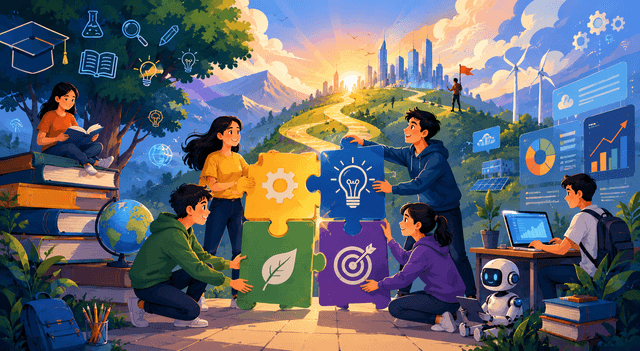
Partnership and Progress focus on collaboration and growth. The future workplace and society demand teamwork, adaptability, and continuous learning. By encouraging students to work together and embrace challenges, education becomes a process of growth rather than just achievement.
What makes this approach effective is not just the ideas themselves, but how they are integrated into everyday learning.
Creating an Environment That Reflects These Values
A philosophy becomes meaningful only when it is reflected in practice. This means creating learning environments where students actively experience these values, rather than simply hearing about them.
Collaborative projects, experiential activities, and open discussions help students engage more deeply with concepts. A supportive and inclusive atmosphere allows them to express themselves, take risks, and learn from mistakes. Over time, these experiences shape not just their knowledge, but their mindset.
In such an environment, learning becomes more organic. It extends beyond classrooms, textbooks, and exams, becoming a continuous process influenced by interactions, experiences, and reflection.
Education That Prepares for Life
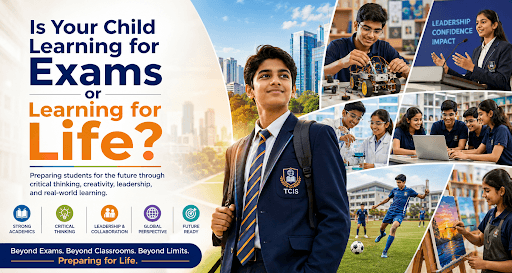
Marks and academic performance will always remain an important part of education. They provide structure, benchmarks, and a sense of achievement. But in isolation, they are no longer enough.
The future belongs to individuals who can think critically, act responsibly, collaborate effectively, and adapt to change. Education, therefore, must evolve to nurture these qualities alongside academic excellence.
By aligning learning with values and real-world relevance, schools are beginning to redefine what it means to be truly educated. And in doing so, they are preparing students not just for exams, but for life itself.
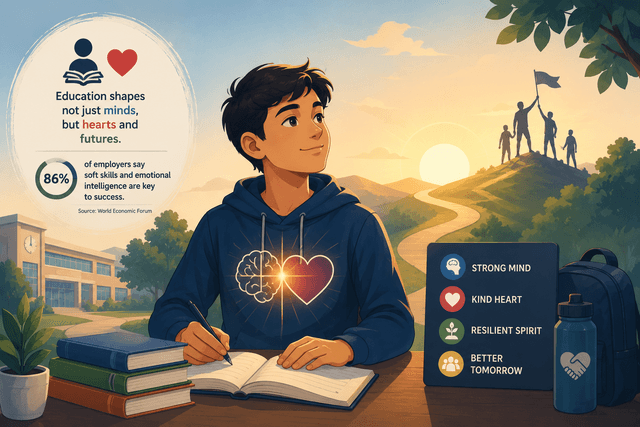
Because in the end, education is not just about how much a child knows—but about who they become.
For more information on this and similar schools in the area, check out this list of the best schools in Greater Noida.
 as a preferred source on