








For decades, education has been tied almost entirely to classrooms, textbooks, and exams. Those things still matter, obviously, but they're only one slice of what a child's education can actually be. Queen Elizabeth's School is one of the best schools in Gurugram because it works from a different starting point — that some of the most valuable learning happens the moment a student steps outside the four walls. From watching an ecosystem up close in a forest to understanding history inside a museum to learning responsibility through gardening, outdoor education turns theory into something lived rather than memorized.
In a world where kids are spending more and more time indoors and in front of screens, outdoor education has stopped being a nice-to-have and become something closer to a necessity. It builds curiosity, sharpens practical skills, improves both physical and emotional wellbeing, and helps students form a real connection with the world they're actually growing up in.
Learning Through Experience Leaves a Lasting Impact
Children learn by exploring — long before they ever open a book, they make sense of their surroundings by touching, watching, questioning, and testing things out. Outdoor education simply builds on that instinct, creating room for learning through direct experience instead of passive listening.
A lesson on plants sticks a lot better once students are actually growing something in a garden. Wildlife becomes far more interesting once it's observed in its own habitat rather than described in a chapter. History feels real when students are walking through a museum or heritage site instead of reading about it secondhand.
These experiences deepen understanding precisely because children are involved, not just informed. Instead of memorizing facts for an exam, they build a genuine grasp of a subject through observation and participation.
Curiosity Thrives Outside the Classroom
One of the best things about outdoor learning is how naturally it sparks curiosity. Nature doesn't follow a lesson plan — every trip outside turns up something new: a butterfly on a flower, an odd cloud formation, a season shifting, a bird call nobody recognizes. Moments like that push students to ask questions, chase down answers, and think for themselves.
That kind of inquiry-based learning builds analytical thinking and problem-solving — skills that matter a great deal in higher education and later careers. Instead of waiting around for a teacher to hand them an answer, students become active participants in figuring things out on their own.
Also Read| Why Transformative Learning Matters
Building Confidence Through New Experiences
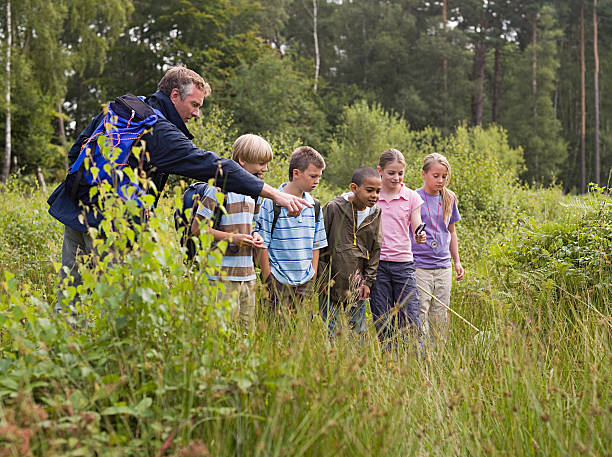
Outdoor education tends to drop children into slightly unfamiliar territory, where they have to adapt, work with others, and make decisions on the spot. Whether it's navigating a nature trail, taking part in adventure activities, or working as a group on a field visit, students gradually build confidence in their own judgment. They start seeing challenges as something to work through, not obstacles to avoid.
These experiences also build resilience. Not every activity goes smoothly, but working through small setbacks teaches perseverance and emotional strength in a way that's hard to replicate at a desk. That confidence tends to follow students back into classrooms, sports fields, and everyday social situations, making them more independent learners overall.
Social and Emotional Growth Beyond Academics
Outdoor learning naturally pulls kids into teamwork. Unlike classroom work, which is often solitary, outdoor activities demand communication, collaboration, and shared responsibility. Students learn to listen to each other, take different perspectives seriously, and work toward something together — all of which strengthens interpersonal skills, empathy, and early leadership instincts.
There's also the emotional side of simply being outside. Time spent in nature has been linked to lower stress, better concentration, and improved emotional wellbeing. Green spaces give kids room for mindfulness, reflection, and a bit of quiet — qualities that matter more than ever in a fast-paced school environment.
Also Read| The Power of Dialogic Learning in Education
Connecting Classroom Learning to the Real World
Every student, at some point, asks: "Why do I need to learn this?" Outdoor education answers that question better than almost anything else. Science concepts click into place once students watch an ecosystem in action. Geography lessons make a lot more sense on an actual landscape. Environmental education stops being abstract the moment children see biodiversity, conservation work, or sustainable farming up close.
These connections make learning feel relevant, and students start to understand that knowledge isn't confined to a textbook — it's happening all around them, all the time. That understanding tends to grow into a lifelong appreciation for learning that outlasts any exam.
Bringing the theory to practice
.jpeg)
Recognizing just how valuable experiential learning can be, one of the best schools in Bilaspur Kalan, Gurugram, Queen Elizabeth's School, has made outdoor education a core part of how it teaches. Built on the belief that meaningful learning goes beyond classroom walls, the school creates real opportunities for students to explore, discover, and engage with the wider world through carefully designed outdoor experiences.
For children in the Pre-Prep and Prep School, this starts small and age-appropriate — nature walks, gardening projects, and adventure play on campus that nurture natural curiosity while building confidence as students explore their surroundings. These early experiences encourage observation, creativity, teamwork, and a growing appreciation for the environment.
None of this is treated as a one-off excursion — it's a purposeful extension of classroom learning, reflecting the school's wider commitment to holistic education, where academic excellence sits alongside character development, curiosity, resilience, and global awareness. By building outdoor exploration into the curriculum this way, Queen Elizabeth's School, Gurugram helps students grow into confident learners who are genuinely prepared to engage with the world around them.
Conclusion
The classroom will always be central to education, but some of the most valuable lessons in life simply can't be taught from a desk. Outdoor education pushes children to question, explore, collaborate, and connect with the world in ways that stick — turning knowledge into experience and curiosity into a lifelong habit.
As schools work to prepare students for an increasingly unpredictable future, outdoor education is no longer an optional extra — it's a core part of raising well-rounded students. Schools like Queen Elizabeth's School, Gurugram, show what's possible when outdoor learning is designed with real intention: children who grow up confident, compassionate, and ready to learn from whatever environment they happen to find themselves in.
To know more about other schools in Gurgaon and nearby areas, click below
 as a preferred source on