






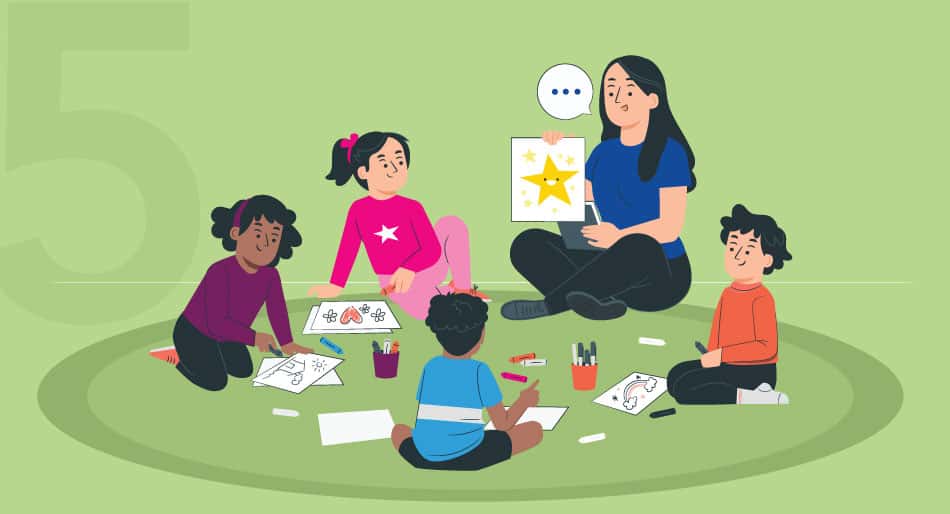

The arts hold a unique power to nurture emotional intelligence. Through creative modalities such as painting, music, drama, and dance, students are given space to explore and express their emotions, build self-awareness, and develop resilience. Far beyond aesthetic value, the arts are essential tools for emotional growth and well-being, fostering deeper connections with the self and others.
At Manav Rachna International School (MRIS), one of the best schools in Faridabad, education goes beyond the classroom. The school aims to infuse the arts into the learning process so that the children develop intellectually and emotionally.
In this article, we will discuss the empowering role of arts in increasing emotional well-being among students. We will also look at the innovative pedagogy of Manav Rachna International School, Sector 14, Faridabad, in integrating arts as a part of their curriculum to produce well-rounded students.
Also Read | A Guide to the IB Curriculum at MRIS Sector 14, FaridabadHow Do the Arts Transform Social Emotional Learning?

The arts are a powerful tool for self-expression, emotional discovery, and personal development. Through the creative process, students gain a better sense of their own emotions and those of others, becoming more emotionally intelligent overall.
- Visual Arts: Art offers a palette for feelings that words cannot convey. Through sculpture, drawing, and painting, students can express deep emotions, work through experiences, and express their internal world.
- Music: Music is an intense source of emotional expression. Singing, playing an instrument, or merely listening, relieves stress and anxiety, creating a sense of tranquillity and emotional equilibrium.
- Movement and Dance: The relationship between mind and body is deepened by movement and dance. Through rhythmic movement, students increase their awareness of self, coordination, and confidence, and gain a stronger sense of self.
- Drama and Narrative: Immersion in different roles through drama allows students to experience emotions beyond their own perspective, enhancing their emotional awareness, empathy, and understanding of diverse human experiences
Through these creative works, students develop self-awareness, resilience, and empathy key competencies for personal and social growth. By incorporating the arts in education, we provide an environment where feelings are accepted, investigated, and known to build a more emotionally intelligent and compassionate society.
How Arts in Facilitates Empathy and Social-Emotional Learning
Empathy is a fundamental aspect of emotional intelligence, and arts programs serve as a powerful medium to nurture this essential skill. By engaging in creative expression, students develop a deeper understanding of diverse perspectives, enhancing their ability to connect with others on an emotional level.
- Theatre and Drama: Acting allows students to step into different characters' lives, immersing themselves in their emotions, struggles, and experiences. This practice fosters compassion and a greater appreciation for the diverse human experience.
- Group Art Activities: Collaborative art projects encourage teamwork, active listening, and mutual respect. These experiences help students develop patience, tolerance, and a sense of shared accomplishment.
- Music and Dance: Exposure to different musical traditions and dance forms introduces learners to a variety of cultures and emotions By experiencing rhythms, melodies, and movements from around the world, students develop a richer appreciation for diversity and the universal language of artistic expression.
The Integration of Arts and Academics for Holistic Learning

Merging art with core subjects makes learning more interesting and significant. Research has proven that integrating arts into learning enhances critical thinking, memory, and problem-solving.
- Music & Mathematics: Rhythms and beats are a concrete means of understanding mathematical patterns, sequences, and concepts like fractions and ratios. Through activities like clapping, drumming, or creating rhythmic patterns, students enhance right brain development allowing them to grasp numerical relationships more intuitively.
- History & Visual Arts: Making history come alive through visual narrative brings dry timelines to life as rich, memorable stories. Drawing out historical events, creating period dress designs, or constructing illustrated timelines deepens the connection to the past and increases understanding.
- Drama & Literature: Acting out scenes from literature enables students to step into the characters' shoes, helping them engage with the emotions and movements of the story. This theatre-based learning enhances comprehension and confidence, making literature an immersive experience rather than just words on a page.
Strategies for Effective Integration of Arts and Academics
To maximize the benefits of arts integration, educators can adopt structured strategies that blend creativity with academic learning:
- Project-Based Learning: Having students develop art projects, performances, or musical pieces from academic content incites higher levels of engagement and comprehension.
- Cross-Disciplinary Collaboration: Teachers can collaborate across subjects, for example, math and music teachers can create fraction lessons based on rhythms.
- Technology Enhanced Arts: Incorporating digital tools such as animation software, virtual reality, and interactive storytelling into arts-integrated lessons can enhance the experience further.
- Performance and Exhibition-Based Learning: Presenting theatrical shows, art exhibitions, or musical recitals that relate to learning themes inspires students to become more responsible learners.
- Sensory Learning Techniques : Using multisensory experiences, like sculpting to learn geometry or dance to learn physics principles, enables students to understand abstract concepts better.
MRIS, Sector 14, Faridabad: Blending Arts for Emotional Growth
Established in 2007, Manav Rachna International School (MRIS), Sector 14, Faridabad is a co-educational school affiliated with the Central Board of Secondary Education (CBSE) and the International Baccalaureate (IB) curriculum. It welcomes students from Pre Nursery to Grade XII with a well-rounded curriculum to promote holistic development.

At MRIS, incorporating arts in the curriculum is the backbone of its pedagogical philosophy. The school places special emphasis on visual arts, music, dance, and drama to help students develop self-expression, creativity, and emotional intelligence. By participating in activities such as drawing, sculpting, painting, and performing arts, students are taught to think analytically and express themselves without inhibition, thereby ensuring their emotional well-being.
The dedicated faculty at MRIS plays a pivotal role in implementing this arts-integrated approach. Their commitment ensures that students receive a balanced education that nurtures both intellectual and emotional growth, laying the foundation for well-rounded human beings.
For more information on this and similar schools in the area, check out this list of the best schools in Faridabad



 as a preferred source on