









A classroom does not always have to produce agreement to produce learning.
Sometimes, the most valuable learning happens when students hold different opinions, question one another, defend a position, and discover that disagreement does not have to become an argument. This is one reason Model United Nations, or MUN, can be more than a public-speaking activity.
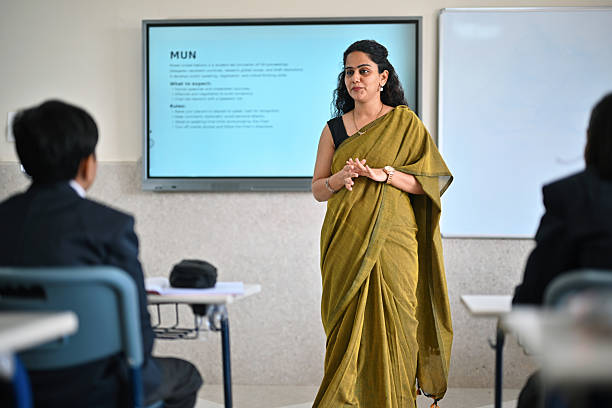
In an MUN, students step into the role of delegates representing different countries. This will be clearly visible with the MUN scheduled for the IBPYP program at one of the best boarding schools in India, the DRS International School. They are going to discuss international issues, listen to opposing viewpoints, negotiate with others, and try to reach solutions. The experience creates a small simulation of a much larger world where people rarely begin with the same priorities.
For children growing up in a connected world, that experience can teach an important lesson: you can disagree with an idea without dismissing the person behind it.
The First Lesson: Every Issue Has More Than One Side
Students often encounter topics in school where there is a clear right answer. Mathematics may have a solution, a science experiment may produce measurable results, and a history lesson may have established facts.
Global issues are different.
Questions about climate change, migration, public health, education, technology, conflict, or economic development involve competing interests. A solution that benefits one group may create difficulties for another.
MUN introduces students to this complexity.
Instead of simply asking, “What do I think?”, students have to ask, “What would the country I represent think, and why?”
That small change in perspective can be powerful. It encourages students to investigate before forming an argument and to understand that an issue can look very different from another person's position.
Learning to Listen Before Responding
Good debate is not simply about speaking confidently. It also requires listening carefully.
During an MUN, students hear several arguments, identify points they agree or disagree with, and decide how to respond. They may have prepared one argument but discover that another delegate has raised an unexpected concern. That requires flexibility.
A student who listens closely may realize that the strongest response is not to repeat their original statement but to address the new point directly.
This is a useful habit far beyond an MUN conference. In group projects, classrooms, friendships, workplaces, and everyday conversations, meaningful communication depends on understanding what another person actually said rather than preparing a response while they are still speaking.
The Difference Between Negotiation and Giving In
One of the more interesting parts of MUN is negotiation.
Students may begin with very different positions. Yet if they want their ideas to become part of a larger resolution, they have to find areas of common ground.
That does not necessarily mean abandoning their original position.
Instead, students learn to ask questions such as:
- What is the other side trying to achieve?
- Which parts of our positions overlap?
- What could we change without losing the main purpose?
- Can we create a proposal that addresses more than one concern?
This introduces children to an important real-world idea: compromise is not always about losing. Sometimes it is about creating a solution that more people can support.
Also Read | Saving Time on Commute with Weekly Boarding
Research Becomes More Purposeful
MUN also changes the way research can feel.
Students are not researching simply because a teacher assigned a topic. They are researching because they need to understand a problem well enough to represent a position.
They may explore a country's policies, history, economic situation, relationships with other nations, or approach to a particular issue.
The research then becomes something they use.
They have to distinguish between useful evidence and weak claims, organise information, and turn their findings into arguments. This gives research a practical purpose and can make students more conscious of where their information comes from.
The deeper lesson is that having information is not the same as knowing what to do with it.
Confidence Without the Need to Be the Loudest
MUNs can also challenge the common idea that confidence means speaking the most.
A thoughtful delegate may not dominate every discussion. Instead, they may make one well-prepared point, ask a useful question, support another delegate's proposal, or introduce an idea at the right moment.
This creates a broader definition of leadership.
Leadership can mean initiating a conversation, but it can also mean bringing people together, recognizing a useful idea, clarifying confusion, or helping a group move forward.
For students, discovering these different forms of participation can be particularly valuable because not every child expresses confidence in the same way.
Also Read | Staying in Touch with Family in Residential Schools
From “Winning” to Building Something Together
Competitive elements can make MUN exciting, but the deeper educational value lies elsewhere.
The real challenge is to move from individual performance toward collective problem-solving.
A student may enter a committee wanting to make the strongest speech. By the end, they may discover that an effective resolution depends on several people contributing different ideas.
That shift—from “How do I stand out?” to “How do we make this work?”—is an important part of collaborative learning.
It also reflects something students will encounter repeatedly as they grow older. Most meaningful problems cannot be solved by one person having the best argument. They require people with different experiences and priorities to work together.
Why This Fits Naturally Into Inquiry-Based Learning

MUN connects particularly well with inquiry-based education because students are not merely receiving information. They are investigating questions, developing positions, testing arguments, reflecting on different perspectives, and taking part in discussion.
This is closely aligned with the broader philosophy of the IB Primary Years Programme, which encourages inquiry, international-mindedness, and learning that goes beyond traditional subject boundaries.
That connection is visible at one of the best IB boarding schools in India, DRS International School, where the school's MUN Club gives students hands-on experience of simulated UN proceedings, including discussion, deliberation, and Rules of Procedure. The school also describes its PYP approach as inquiry-based and focused on helping students develop international-mindedness.
For younger learners, experiences like these can introduce global issues through discussion rather than treating them as distant textbook topics. Students begin to see that the world is made up of different perspectives—and that understanding those perspectives is part of becoming an informed learner.
The Bigger Lesson: Disagreement Can Be Productive
Perhaps the most useful outcome of an MUN is not a polished speech or a successful resolution.
It is the ability to remain curious when someone disagrees.
A student who learns to ask, “Why does this person think differently?” is developing a skill that can travel across subjects and situations. They are learning to question their assumptions, look for evidence, listen carefully, and search for common ground.
The IBPYP MUN 2026–27 at DRS International School reflects this idea through its emphasis on diplomacy, dialogue, and bringing different voices into the same space. Its theme—“One World, Many Voices, One Future”—captures an important reality of modern learning: having different perspectives is not the problem. The challenge is learning how to work with them.
That may ultimately be what makes Model United Nations such a valuable school experience. It does not teach children that everyone should think alike.
It teaches them something more useful: how to think carefully when people do not.
To know more about other boarding schools in India, click on the link below

 as a preferred source on