







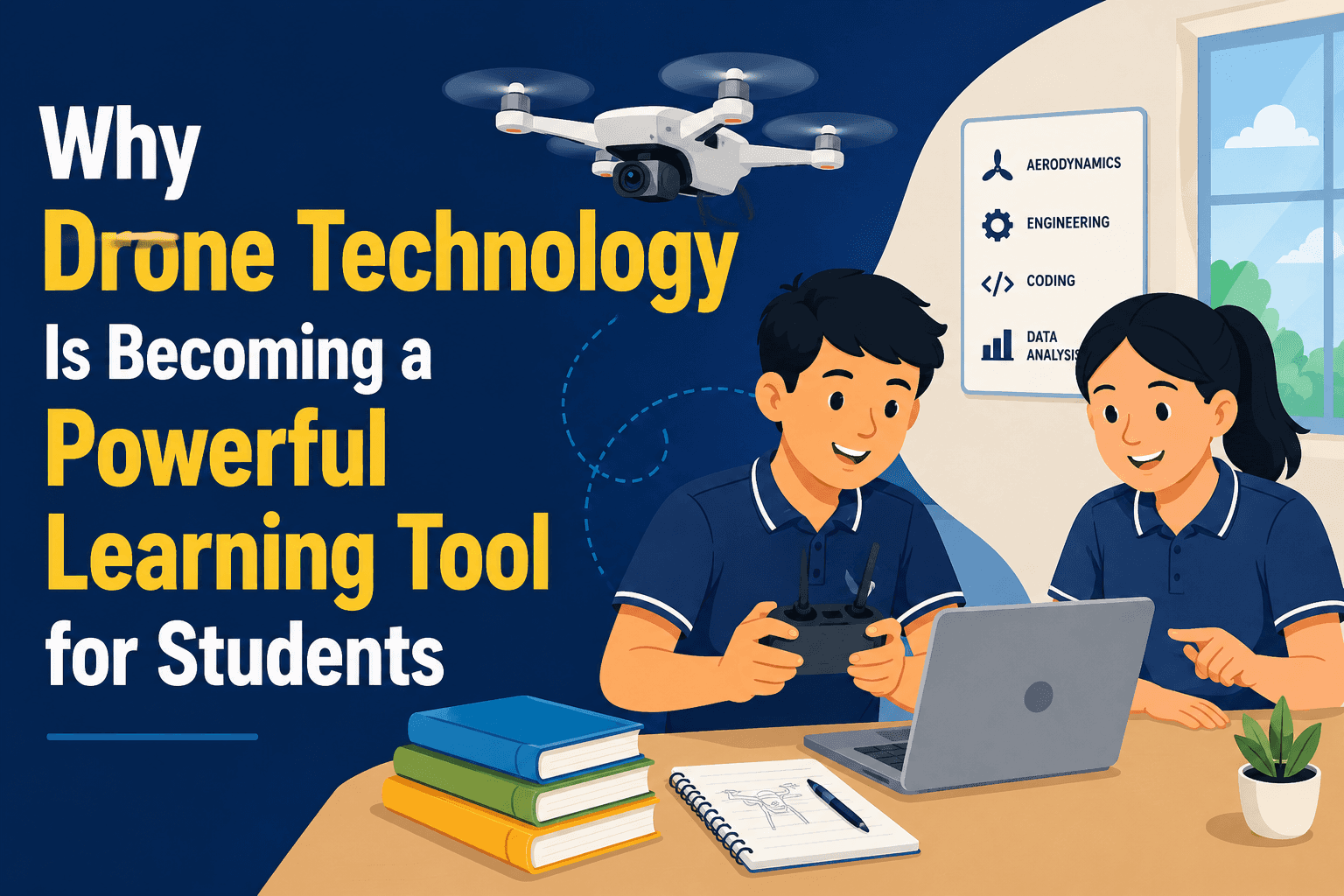

For students growing up in a world shaped by automation, robotics, and intelligent machines, learning about technology can go far beyond using computers and apps. Drone technology, in particular, offers an interesting way to bring engineering, science, and problem-solving into the learning experience. Top schools in Bangalore, such as GoldenBee Global School, Bannerghatta Campus, are introducing students to this area through hands-on experiences in building and controlling drones, allowing concepts such as engineering and aerodynamics to move from the textbook into practical learning.
What Makes Drones Useful for Learning?
A drone may look like a sophisticated flying machine, but it can also become a practical learning tool.
When students explore how a drone works, they encounter several concepts at once. They can learn about movement, balance, forces, design, electronics, programming, and control systems. Instead of studying each idea in isolation, they can see how different parts work together to make a machine perform a particular task.
This makes drones particularly suitable for project-based learning. Students are not simply expected to remember information. They can observe, experiment, ask questions, and understand what happens when different elements of a system interact.
Understanding Aerodynamics Through Flight
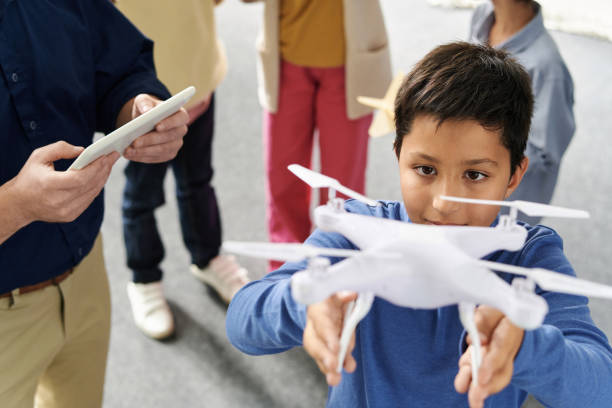
One of the most interesting areas students can explore through drones is aerodynamics.
Aerodynamics is the study of how air interacts with moving objects. In a conventional lesson, students may learn about forces such as lift, weight, thrust, and drag through diagrams and explanations.
A flying drone gives these ideas a much more visible context.
Students can observe how a drone rises, moves, changes direction, and remains in the air. They can begin to connect what they see with the scientific principles they have learned. This can make abstract concepts easier to understand because there is a real object demonstrating them.
The experience also encourages students to ask natural questions: What helps the drone stay balanced? What happens when its movement changes? Why does its design matter?
Such questions can turn a science lesson into an investigation.
Also Read | Financial Literacy Starts from School
Engineering Becomes More Practical
Engineering is fundamentally about using knowledge to design and improve solutions.
Drone-based learning can introduce students to this way of thinking at an early stage. Rather than simply learning what an engineered system looks like, students can explore how different components contribute to its operation.
Building a drone-related project requires students to think about structure, function, and performance. They can learn that even a small change to one part of a system may affect the overall result.
This develops an important engineering mindset: design, test, evaluate, and improve.
Students begin to understand that creating something useful often involves several attempts rather than getting everything right the first time.
Learning Through Experimentation
Perhaps the greatest educational value of drone technology is the opportunity to experiment.
In a conventional lesson, students may be given a problem and then shown the method for solving it. With hands-on drone activities, they can have more room to investigate.
They can make observations, test an idea, and consider why the result was different from what they expected. When something does not work as planned, they have an opportunity to think about what could be changed.
This makes mistakes part of the learning process rather than something to be avoided.
Over time, students can develop patience and persistence. They learn that solving a technical problem may require several attempts and that each attempt can provide useful information.
Depending on the level and design of the learning activity, students may encounter ideas related to robotics, sensors, programming, and automated control. These concepts can encourage computational thinking and logical reasoning.
This can create connections between drone learning and coding or robotics lessons. One project can therefore become a starting point for exploring several technology-related fields.
Developing Problem-Solving Skills
Drone projects are also useful because they naturally present problems that need to be solved.
A student may need to understand why something is not behaving as expected or consider how a particular design could be improved. Instead of immediately receiving an answer, students can be encouraged to investigate the problem.
This develops a step-by-step approach to thinking.
First, they identify what is happening. Then they consider possible reasons, test an idea, and examine the result. If the solution does not work, they try another approach.
This process is valuable well beyond drone technology. Problem-solving skills can be applied to science, mathematics, engineering, everyday decisions, and many future careers.
Drone-based learning can also encourage students to work together. One student might focus on understanding a particular technical concept while another observes results or helps document the process.
Also Read | Nutritious Meals Help in Healthy and Happier Learning
Connecting School Learning With the Real World
One reason practical technology education can be valuable is that it helps students understand how classroom knowledge connects with the world around them.
Drones are already associated with areas such as surveying, photography, agriculture, infrastructure inspection, mapping, and research. Students do not necessarily need to specialise in these fields to benefit from learning about the technology.
The larger lesson is that science, engineering, and technology can be combined to create solutions for real-world needs.
This can also help students see that subjects they study at school are connected rather than completely separate.
How GoldenBee Global School Uses Drone Technology for Learning
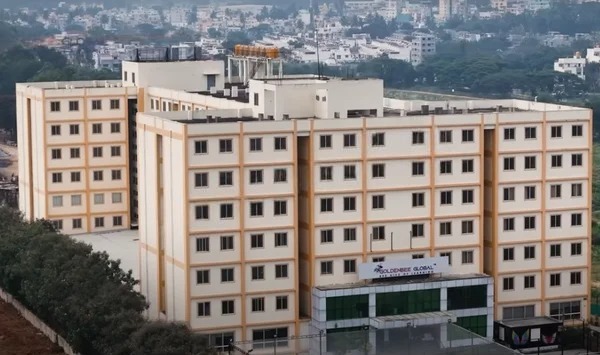
At GoldenBee Global School, Bannerghatta Campus, drone technology forms part of a wider Future Ready curriculum that includes areas such as robotics, coding, STEM, the Internet of Things, 3D printing, and design thinking. The school's drone program specifically focuses on hands-on experience with building and controlling drones while helping students deepen their understanding of engineering and aerodynamics through experimentation.
The learning experience is guided by robotics specialists and industry professionals, bringing practical expertise into the classroom. This is significant because students can learn not only from theoretical explanations but also from people with experience in the technology itself.
The school also describes its wider STEM approach as one where theory is connected to working prototypes and experimentation. Its Innovation Lab provides a dedicated space for robotics, prototyping, and applied STEM projects.
For students, this means drone technology can become more than an interesting activity. It can become a way to explore how science and engineering work together.
Learning to Build, Test, and Think
The real educational value of drones lies not simply in the fact that they can fly. It lies in what students can learn while trying to understand that flight.
They can explore aerodynamics, investigate engineering principles, encounter robotics and coding concepts, work through problems, and learn from experimentation. Most importantly, they can begin to see themselves as people who can build, test, question, and improve technology, rather than simply use it.
This is what makes drone technology such an interesting addition to modern education. When guided thoughtfully, a flying machine can become a classroom for science, engineering, and creative problem-solving—giving students an opportunity to experience concepts that might otherwise remain confined to the pages of a textbook.
At GoldenBee Global School, Bannerghatta Campus, the focus on building and controlling drones reflects this hands-on approach to learning. By combining practical experimentation with guidance from robotics specialists and industry professionals, the experience can help students understand both the technology itself and the thinking that goes into creating and improving it.
To know more about other schools in Bangalore, click on the link below





 as a preferred source on