








“Did you pack your books?” “Did you finish your homework?” “Did you drink enough water?” “Have you set your alarm?”
For many parents, these questions become part of everyday life. They are small reminders, but over time, children can become used to someone else managing their routine. This is why, while exploring the Top Boarding Schools In India, parents may also think about what a child learns when parents are not around to remind them. A residential school can offer something beyond academics: regular opportunities to practise independence in everyday situations.
This does not mean children should suddenly be expected to manage everything themselves. Independence develops slowly, through small responsibilities, supportive adults and repeated practice. A child who learns to organise a school bag, manage study time, share a room and solve a disagreement is learning skills that may remain useful long after school ends.
Also Read| Why Karate Deserves a Spot in Your Child's Weekly Routine
Independence Is Built Through Small Everyday Responsibilities
Independence rarely arrives in one dramatic moment. It usually grows through ordinary tasks.
Consider a child who has to prepare for an early morning class. At home, a parent may have already packed the bag and reminded the child about the uniform. In a residential setting, the child gets more chances to understand the sequence themselves: checking the timetable, preparing belongings, getting ready on time, and remembering what is needed.
This connects with the idea of self-regulation, which includes managing attention, behaviour, emotions and actions to reach a goal. These abilities develop through childhood and adolescence rather than appearing fully formed. Harvard's Center on the Developing Child describes executive-function skills as abilities that help children plan, focus attention, remember instructions and manage competing demands.
Parents can look for opportunities to practise this at home too:
- Let children prepare their school bag using a simple checklist.
- Give them responsibility for keeping track of a few personal belongings.
- Allow them to make age-appropriate choices about when to complete homework.
- Ask them to think about what went wrong when they forget something instead of immediately fixing it.
The goal is not to make childhood overly strict. It is to help children slowly become capable of managing themselves.
A Good Routine Can Teach More Than a Lecture
Children often hear adults say that sleep, exercise, and study are important. But routines can teach these lessons more effectively than repeated instructions.
For example, a child who stays awake late before an examination may discover the next morning that remembering a chapter is harder when they are tired. Research reviewed by the American Academy of Sleep Medicine has found associations between insufficient sleep and poorer attention, memory, daytime alertness, and academic performance in children and teenagers. The evidence also supports age-appropriate sleep as an important part of healthy development.
Physical activity matters too. The World Health Organization notes that physical activity supports children's health and can contribute to cognitive, motor and social development. Its evidence review found particularly strong evidence for benefits related to mathematics performance, while also noting that the overall academic evidence is not uniform.
This is why parents assessing a residential school can ask what an ordinary day looks like rather than only asking about facilities.
|
Area of daily life |
What parents can ask |
|
Study |
When do students study and how much guidance do they receive? |
|
Sleep |
Are bedtime and waking routines structured appropriately? |
|
Exercise |
How much time is given to sports, yoga or physical activity? |
|
Meals |
Do children have regular, balanced meals and learn healthy habits? |
|
Personal care |
Are children supported in managing their own belongings and routines? |
A routine works best when children understand why it exists, not simply when they are told to follow it.
Learning to Live With Other People Is Part of Education
One of the biggest differences between home and residential life is that children spend more time around peers. They may share rooms, dining spaces, activities, and study areas. That creates situations that cannot always be taught through a textbook.
Imagine two students disagreeing about when the lights should be switched off in their room. One wants to sleep early, while the other wants to read for another twenty minutes. A teacher or warden may help them find a solution, but the children are also learning something themselves: other people have needs too.
This is where ideas from social learning theory, associated with psychologist Albert Bandura, become useful. Children learn not only from direct instruction but also by observing how other people behave and respond to situations.
Residential life can therefore give children repeated chances to practise:
- Listening when another person disagrees.
- Sharing common spaces and resources.
- Asking for help instead of reacting immediately.
- Solving small disagreements respectfully.
- Supporting younger or new students.
- Understanding that freedom also comes with responsibility.
Parents can ask schools how adults respond to conflicts. The important question is not whether disagreements ever happen, but whether children are guided towards constructive ways of handling them.
What Parents Should Look for in a Residential School
A boarding school is more than a place where children sleep after classes. The quality of the residential experience can influence how children use their time, build relationships and develop everyday habits.
For parents comparing the Top Boarding Schools In India, it can help to look at the whole day rather than only the classroom.
Useful questions include:
- Who supervises students after academic hours?
- How can children reach a teacher, warden or other trusted adult when they need help?
- What opportunities do students have for sports, arts and practical activities?
- How are study periods structured?
- How does the school balance rules with age-appropriate independence?
- What happens when a child feels homesick or has difficulty adjusting?
- How are parents updated about their child's progress and wellbeing?
These questions matter because a child's education continues outside the classroom. A student may learn fractions during Mathematics, but they may learn patience while sharing a room, planning while preparing for the next day, and responsibility while managing their belongings.
Also Read: The 3 Essential Learning Environments Every Child Needs to Thrive
How Sri Devaraj Urs International Residential School Connects Learning With Daily Life
For parents considering the Top Boarding Schools In India, Sri Devaraj Urs International Residential School offers a residential setting where academics are combined with structured campus life. The school is CBSE-affiliated and describes its campus as an 85-acre setting with residential facilities, library, laboratories, sports facilities and other spaces for student development.
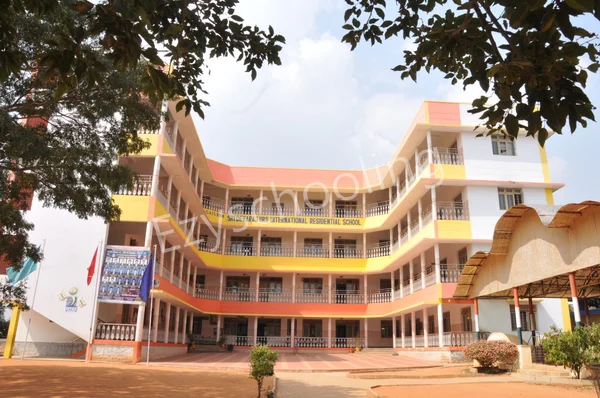
Its residential facilities include rooms with individual beds, study tables and lockers, while the school states that the principal, hostel warden and many teachers reside on campus, allowing students to interact with mentors more easily. The school also describes regular meetings involving student representatives, teachers, the warden, principal and director, creating a channel for student suggestions. Sports are part of the daily routine, with activities including physical training, yoga, karate, football, basketball, cricket, badminton and indoor games.
The larger lesson for parents is that a residential school should not only ask, “What will my child study?” It should also help answer, “What will my child learn to manage?”
Preparing Children for a Life Beyond the School Gate
Eventually, parents will not be there to remind their children about every deadline, decision or difficult conversation. Growing up means learning to make choices, recover from mistakes, work with different people and take responsibility for everyday actions.
A good residential experience can give children repeated opportunities to practise these skills in a safe and structured environment. Parents do not have to look for a school where children are left completely on their own. Instead, they can look for one where guidance gradually leads to responsibility.
After all, education is not only about knowing the right answer. It is also about knowing what to do when nobody is standing beside you to tell you the next step.
For more information on SDUIRS and other similar schools, check out this list of the best boarding schools in India.

 as a preferred source on