






At 3:30 in the afternoon, a child sitting in a classroom may be done with mathematics for the day. The notebook closes, the teacher moves on, and the lesson is over.
But has the learning really stopped? For a child in a boarding school, the answer is usually no. The school day simply changes its form.
A conversation with a friend, a football match after classes, getting ready for study time, deciding how to use an hour before dinner, helping someone who is new to the dormitory, or remembering to keep one's own things in order may not appear on a report card. Yet these ordinary moments can teach children things they will need long after they have forgotten a particular chapter from a textbook.
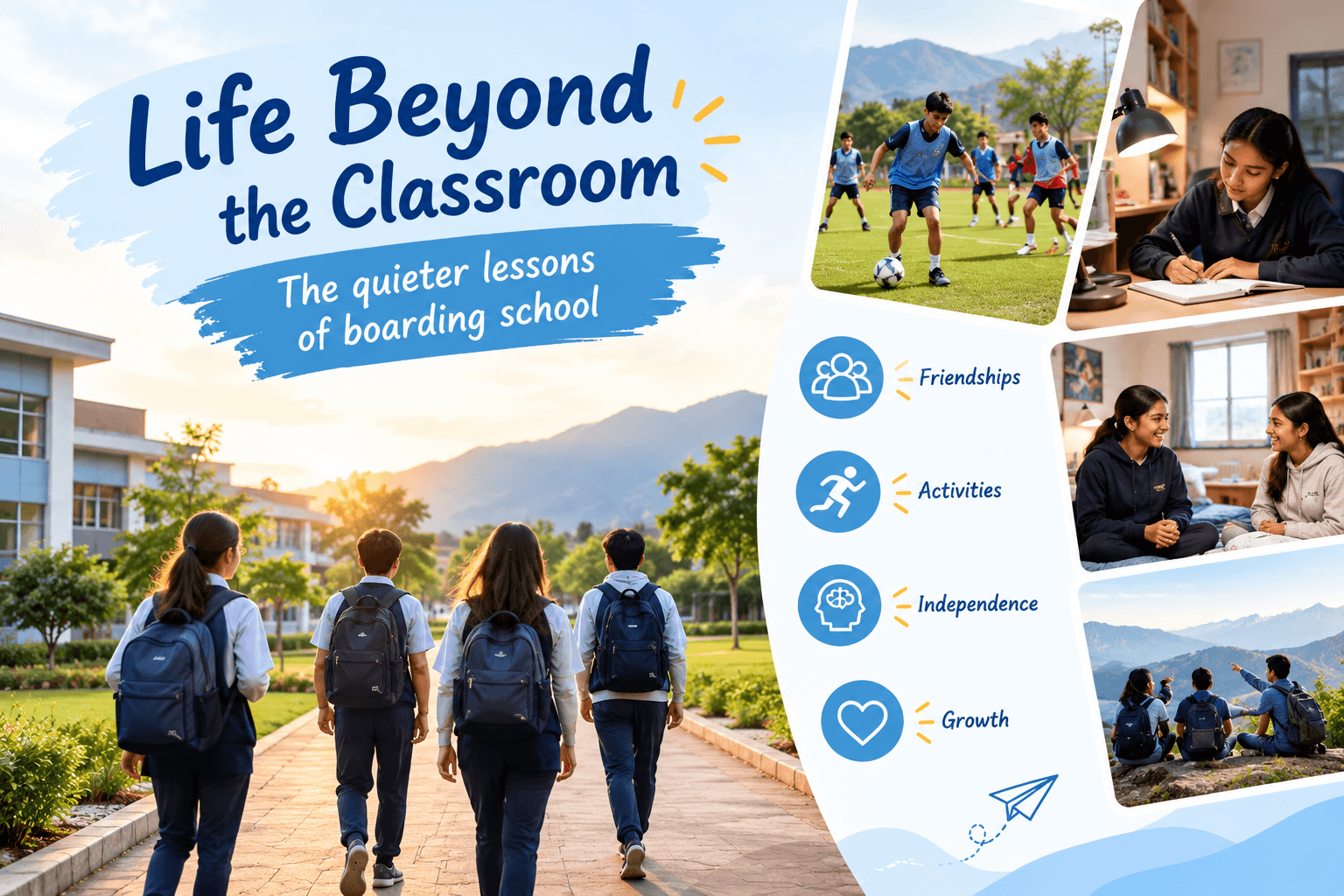
This is one of the interesting things about boarding education. Children do not just spend their school hours in the same place. They live there too. So the corridor, dining room, playground, dormitory and common spaces become part of their experience of growing up. So in this article we will understand what life of boarders looks like after the school recess bell. How they learn and live at the same place, away from home, but for something meaningful. We will take of the example of one of the best boarding schools in Dehradun, The Tons Bridge School, which can be the perfect example to show this.
Also Read: Boarding School Life Beyond Academics
The Lessons Nobody Writes on the Timetable
Think about a child who has always had someone at home reminding them, “Your bag is still there,” “Don't forget your bottle,” or “You have to leave in ten minutes.” Now imagine that child living at school. Nobody is going to follow them around all day checking every little thing. They gradually have to remember their schedule, organise their belongings, arrive where they need to be and ask for help when something is not going right. At first, these may seem like very small responsibilities. Over time, they become habits.
This is where the idea of scaffolding, associated with educational psychologist Jerome Bruner, is useful. Children do not suddenly become independent one morning. They first need support, then a little less support, and eventually more responsibility of their own. Good boarding education is not about leaving children to figure everything out alone. It is about giving them enough support while allowing them to slowly take charge of parts of their daily lives. The same thing happens with friendships. A child may have to share a room with someone whose habits are completely different from theirs. One likes to sleep early; another wants to keep talking. One is extremely organised; another keeps misplacing things. They may disagree. They may get annoyed with each other. But they also learn how to talk, compromise, apologise and move on.
None of this looks like a lesson from a textbook. Yet these are precisely the situations in which social skills develop. At The TonsBridge School, residential life is structured around this sense of community. Its House system brings students into smaller communities with Housemasters, tutors and Matrons providing care and guidance. The school also has support systems that include counselling, a 24-hour medical centre and an Anti-Bullying Council. That matters because independence does not mean children should be left alone. A child can learn to stand on their own feet while still knowing there is an adult nearby when they need support.
What Happens After the Classes End?
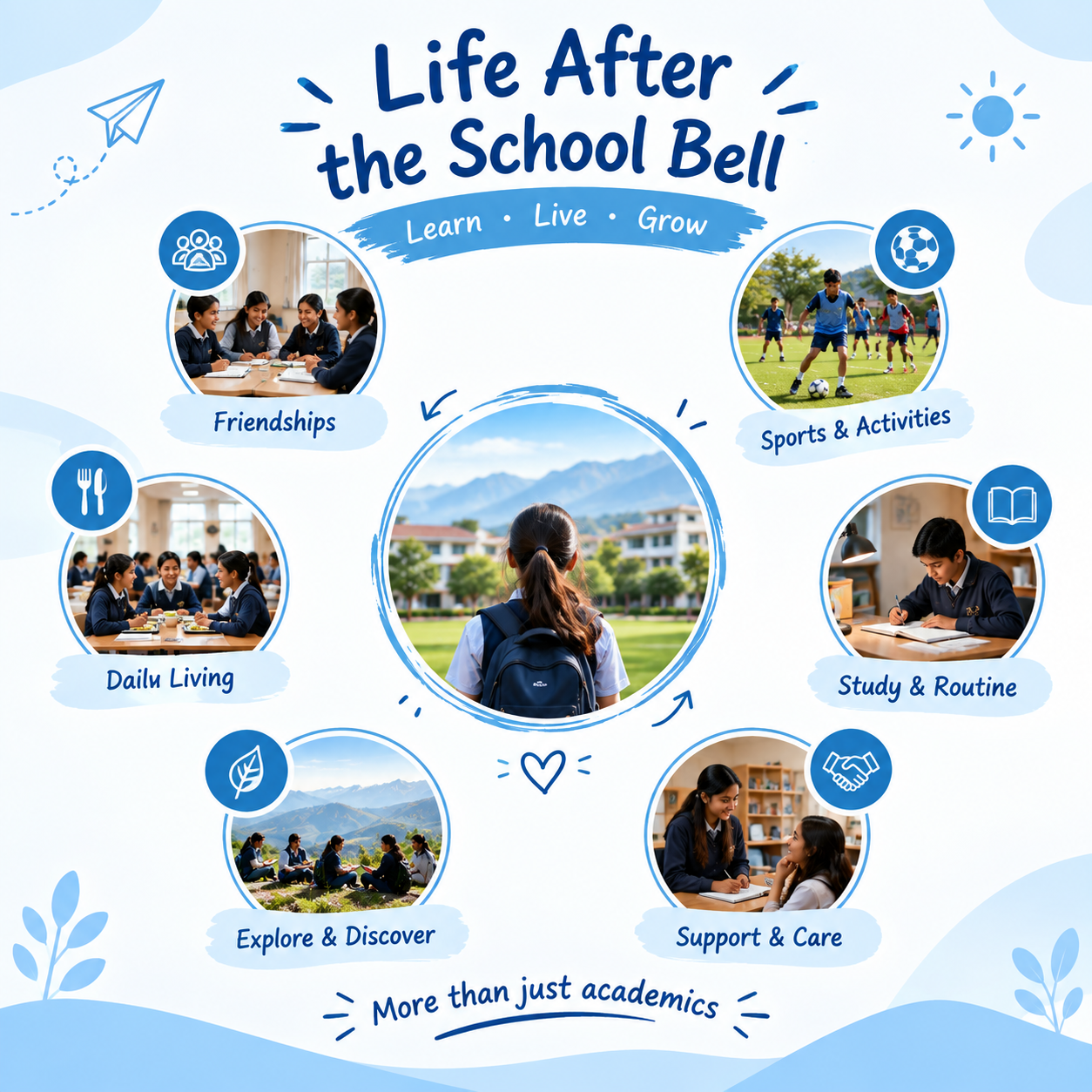
Now picture a typical evening. The academic classes are over. There may be sports, a club activity, study time, dinner and eventually lights out. TBS describes its boarding routine as beginning early in the morning and moving through lessons, activities, sports and preparatory classes before the day winds down.
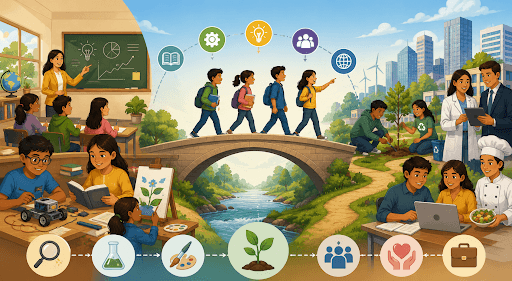
Look closely at that routine and there are little lessons hidden everywhere. A student playing football learns that being talented is not enough when a team needs cooperation. A student participating in a debate has to listen before making an argument. Someone in the Robotics Club may discover that the machine they built does not work the first time—and that the answer is probably not to give up. A child attending the Nature Club may begin noticing things around them that they previously walked past without thinking.
TBS has a wide range of clubs and activities, including Robotics, Science, Debate, Music, Theatre, Yoga, Adventure, Nature, Quiz, Art and Craft and Model United Nations. The value of these activities is not simply that they make the school timetable more interesting. They give children situations in which they have to do something with what they know. There is a big difference between reading about teamwork and actually depending on three other people during a match. There is a difference between being told to be patient and having to practise the same skill again because the first attempt did not work. Even something as unusual as horse riding can become a lesson in patience and self-control. TBS's equestrian programme gives students an opportunity to learn these qualities while working with horses, where being hurried or careless does not necessarily produce the result they want. This is perhaps what makes the learning after the school bell so interesting. Children are not always sitting down with a notebook when they are learning.
Also Read: A Day in the Life of a Boarding School Student
A TBS Becomes a Small Version of the Real World
One of the simplest ways to understand residential education is to think of it as a small community. There are rules, but there are also choices. There are teachers, but there are also peers. There are expectations, but there are also consequences. A child has to learn how to function with other people while gradually understanding themselves better. Even the dormitory becomes part of this experience. At TBS, Best Boarding School in Uttarakhand, junior students stay in groups of eight, while senior students stay in groups of four, with each child having a dedicated study area. The school describes its boarding spaces as being designed to feel homely, with individual spaces and attached washrooms.
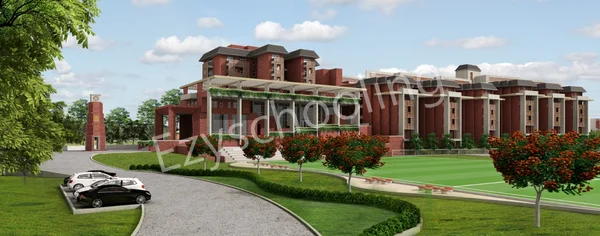
For parents, this is an important distinction. Sending a child to boarding school is not simply about finding a place where they can sleep after classes. The residential environment becomes part of their everyday education. And that education also needs care. A student who is struggling to settle into boarding life may need someone to listen. A student who is finding academics difficult may need guidance. Someone who has had an argument with a friend may need help looking at the situation differently. TBS's approach includes counsellors, tutors, House staff and other support systems so that students have people to turn to while becoming more independent. There is also something wonderfully ordinary about this kind of learning. A child does not wake up thinking, “Today I am going to develop resilience.” They simply go through the day. They lose a game, try again. They forget something, remember it next time. They meet someone new, make a friend. They struggle with a subject, ask for help. Slowly, these experiences become part of who they are.
Conclusion
The most memorable lessons from school may not always be the ones written on the board. Years later, a student may not remember exactly what was discussed in a particular class on a Tuesday afternoon. But they may remember the friend who helped them settle into the dormitory, the match they lost and later won, the teacher who listened when they were struggling, the first club activity they were nervous about joining, or the responsibility they were trusted with for the first time. That is the quiet education that happens after the school bell.
At The TonsBridge School, residential life is designed to bring academics, activities, friendships, responsibility and pastoral care into the same environment. Its House system, study routines, sports, clubs, residential spaces and student-support systems mean that learning does not simply end when classroom teaching does. Because sometimes the lesson a child carries furthest into adulthood is not the one they studied for an examination. It is the one they learned while simply living, trying, failing, helping, sharing, and growing up with others.
For more information regarding this and more residential schools

 as a preferred source on