







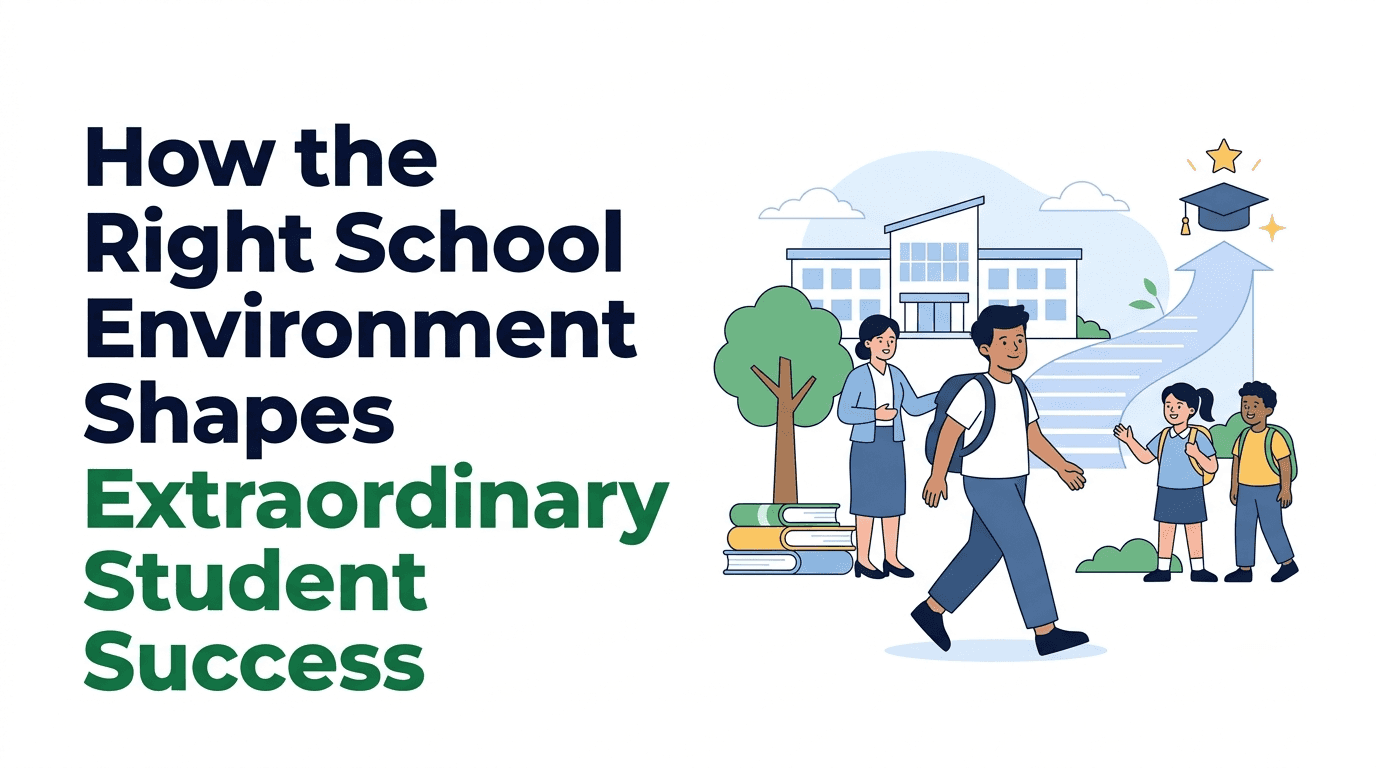

Every remarkable student achievement has a backstory that rarely gets told. Talent and hard work matter, sure, but they almost never flourish on their own. Behind every young innovator, athlete, or leader, there's usually an environment quietly doing the real work — encouraging curiosity, celebrating effort, and handing out chances to learn in ways a classroom alone never could.
It's easy to assume success is just a matter of being smart. But talk to students who've actually achieved something notable, and you'll usually find the same pattern: they had access to opportunities that pushed them, stretched them, and let them figure out what they were actually capable of. Competitions, presentations in front of judges, group projects, real-world problem-solving — these build a kind of confidence textbooks simply can't teach.
Education today is expected to do more than prepare kids for exams. Creativity, collaboration, adaptability — these matter just as much now, if not more. The schools that genuinely stand out are the ones that build an ecosystem where students can chase their interests and actually turn them into something real. Later in this piece, we'll look at how one of the best schools in Ghaziabad, Sapphire International School, Crossings Republik, brings this philosophy to life through one student's journey.
Learning Beyond the Classroom
Grades still matter, but the world outside school rewards a lot more than a good report card.
Students who regularly show up for hackathons, Olympiads, debates, science exhibitions, coding competitions, and cultural events pick up skills that never quite make it onto a transcript. Through these experiences, they learn to:
- Tackle unfamiliar problems without a manual
- Think clearly when the pressure is on
- Communicate ideas so people actually listen
- Work with teams full of different personalities
- Treat failure as part of the process, not the end of it
- Build the kind of resilience that sticks around
Kids exposed to this early tend to see challenges differently — less like roadblocks, more like something worth taking on.
Also Read| Why Schools must Teach Financial Literacy
Why Exposure Changes Everything
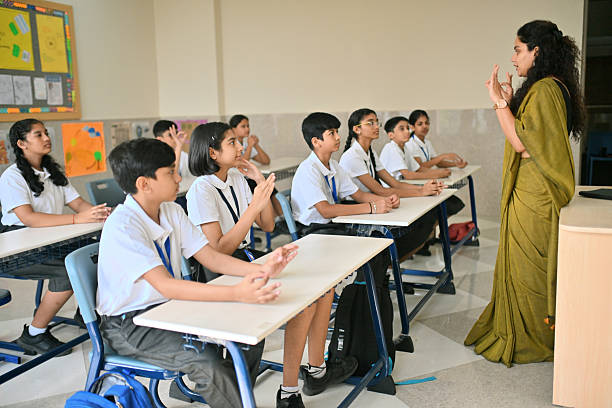
Here's the uncomfortable truth: plenty of genuinely talented kids never discover what they're capable of, simply because nobody ever exposed them to the right opportunity.
Exposure has a strange way of reshaping how a student sees themselves. A coding competition might be someone's first real brush with artificial intelligence. A robotics workshop might spark a lifelong interest in engineering. A single debate might reveal a communication skill a student never knew they had. Each of these moments becomes a small stepping stone — and stepping stones add up.
This isn't just anecdotal, either. Education researchers have repeatedly pointed out that experiential learning strengthens problem-solving, creativity, and leadership far more effectively than memorization ever could — largely because it asks students to apply what they know rather than simply recall it.
Competitions Aren't Just About Winning
There's a common misconception that competitions only benefit the kids who take home a trophy. In practice, everyone who participates walks away with something.
Preparing for a competition teaches discipline, time management, and the ability to keep going when things get hard. Students learn to handle pressure, pitch their ideas, take feedback on the chin, and improve on the next attempt.
Hackathons in particular have become one of the more exciting spaces for young people to test themselves. Unlike a typical exam, a hackathon asks students to think on their feet, collaborate under a ticking clock, and build something that actually works — a far closer mirror to professional life than any written test could offer. Win or not, students usually leave with sharper technical skills, better teamwork instincts, and a noticeable boost in confidence.
Why It Has to Be Sustained, Not a One-Off
A single competition rarely changes a student's trajectory on its own. What actually moves the needle is consistency — years of encouragement, not a single lucky break.
Students grow the most when schools keep showing up for them: offering mentorship, celebrating effort even when the outcome isn't a win, and giving students room to experiment across different interests. Over time, this kind of sustained support lets students discover new passions, sharpen the ones they already have, and take on gradually bigger challenges. The confidence built this way often becomes the base for achievements that stretch well past school life.
Also Read| How Daycare becomes more than just supervision
How Sapphire International School Creates These Opportunities
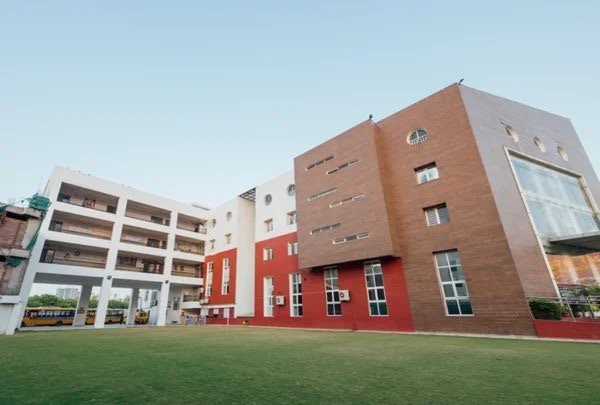
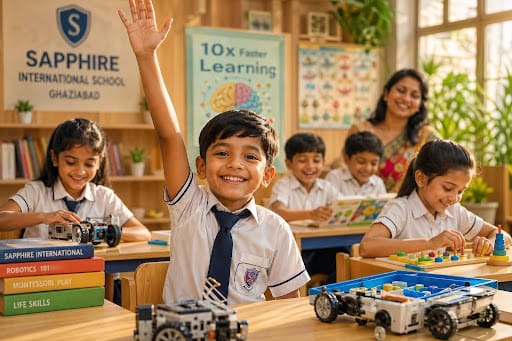
This idea plays out clearly at one of the best CBSE schools in Ghaziabad, Sapphire International School, Crossings Republik, where education stretches well beyond academics to include leadership, innovation, creativity, and all-round development. The school's approach centers on identifying what makes each learner unique, then giving them room to explore that through academics, sports, cultural activities, technology, and experiential learning.
One story that captures this well belongs to Rishit Gupta, a student who has spent eleven years growing alongside the school. Over that time, Rishit represented Sapphire International School across numerous inter-school competitions, with each one adding to his confidence and sharpening his skills a little further.
His track record speaks for itself — a finalist spot at a national-level hackathon, second place at the Lapis Lazuli Inter-School Hackathon, a scholarship earned through strong board exam performance, and currently, a spot in an international hackathon hosted by NASA.
What makes his journey worth telling isn't just the list of wins — it's what they represent: years of consistent encouragement, a push to participate in competitions that actually mattered, and teachers who saw potential worth nurturing beyond the syllabus. By Rishit's own account, the school gave him the platform and guidance to pursue his passion for coding while still growing academically and personally.
His story is a reminder to younger students that big accomplishments rarely happen overnight — they're built through years of showing up, learning continuously, and being willing to try something new even when the outcome isn't guaranteed.
Conclusion
Rishit Gupta's story is a good reminder of something simple but easy to forget: talent alone rarely gets anyone to the finish line. It's opportunity, mentorship, and the right environment that quietly do most of the work of turning potential into something real.
When schools commit to consistently empowering students — giving them room to explore, fail, try again, and dream a little bigger — they're not just helping individual kids succeed. They're shaping the kind of people who will go on to build, lead, and innovate in a world that's changing faster than ever.
For more information regarding the schools that focus on holistic development
 as a preferred source on