







A child's weekly routine is often filled with classes, homework, sports, and screen time. Among all these activities, chess may look like a quiet game that simply happens around a board. But for children, those 64 squares can become a small training ground for thinking, waiting, planning and making decisions. This is one reason parents exploring the top schools in Bangalore, including MVM School, may find chess worth noticing as part of a child's wider learning experience. The real value of chess, however, goes beyond winning a game or learning how a knight moves.
Chess Teaches Children to Slow Down and Think
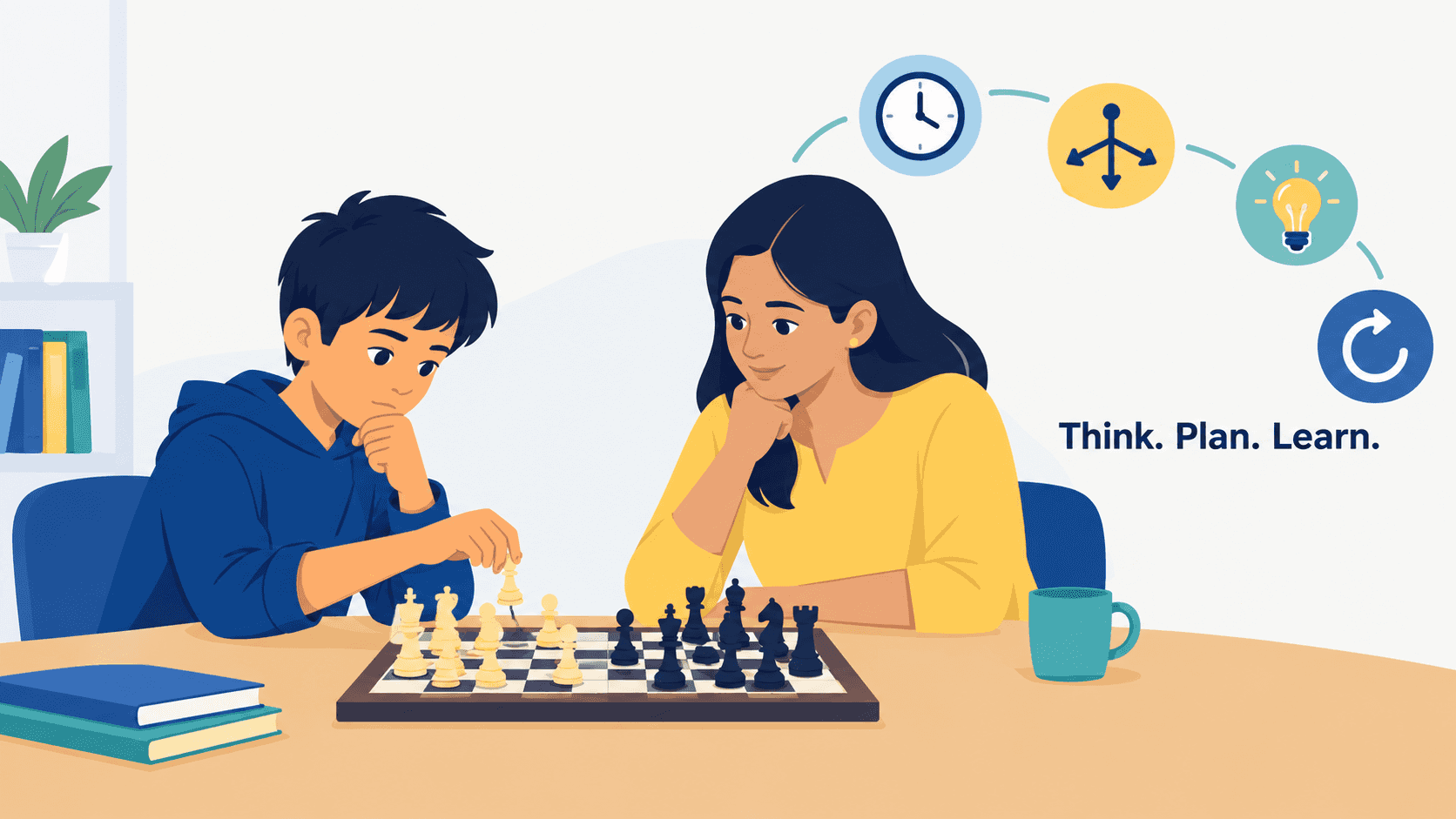
Children are naturally drawn towards quick answers. If a maths problem feels difficult, they may guess. If a game is not going their way, they may want to move on. Chess creates a different rhythm. A child has to look at the board, consider what the other player might do, and then decide whether a move is worth making.
This is closely connected to the idea of executive function, the group of mental skills used to control attention, working memory and behaviour. Chess does not magically develop all these skills, but playing regularly gives children repeated situations where they have to pause, remember information and make a choice before acting.
Consider a simple everyday example. Your child wants to spend all their pocket money on a toy, but they also have a birthday gift to buy for a friend. Chess does not teach the answer directly. It gives practice in thinking about consequences: If I do this now, what happens next?
That habit of looking one step ahead can be useful far beyond the chessboard.
Also Read | AI to Athletics in a School
The Real Lesson May Be What Happens After a Bad Move
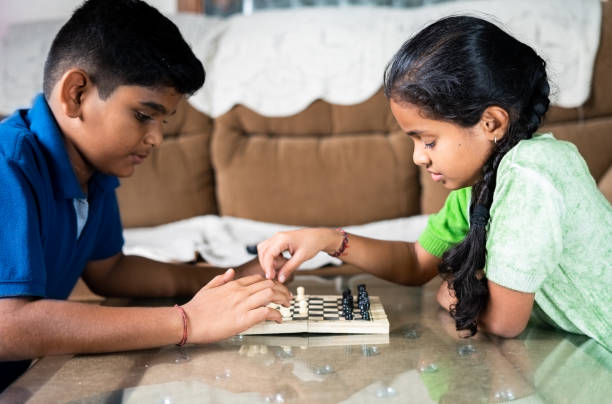
One of the most useful parts of chess is that mistakes are visible. A child may move a queen too early, miss an attack, or lose a valuable piece. Unlike some school tasks where a wrong answer can simply be erased, a chess mistake often changes the rest of the game.
That makes the game an interesting space for learning how to respond to setbacks.
A child can gradually learn to:
- Notice what went wrong without blaming someone else.
- Stay with a difficult position instead of giving up immediately.
- Think about another possible move after an unsuccessful one.
- Accept that another player may sometimes perform better.
- Separate losing a game from being a “bad” player.
This connects with the broader psychological idea of learning through feedback. Feedback becomes useful when a child can use it to change their next attempt. Chess naturally creates this cycle: make a move, see its result, reflect, and try a different approach next time.
Research also suggests that chess instruction can have some positive effects on children's academic and cognitive skills, although the evidence should be interpreted carefully. A 2016 meta-analysis of 24 studies involving more than 5,200 young people found a moderate overall effect, with mathematics showing a somewhat stronger association than reading. However, the researchers also noted limitations in the available studies, including the lack of ideal control designs.
So the strongest argument for chess is not that it will automatically raise marks. It is that it gives children a repeated setting in which useful thinking behaviours can be practised.
Why Regular Practice Matters More Than Occasional Games
Chess is unusual because the game can grow with the child. A younger player may simply learn how pieces move. Later, the same child can begin thinking about openings, patterns, tactics, endgames and an opponent's possible responses.
That means the activity does not have to become “too easy” as children get older. Instead, the questions become harder.
|
At one stage |
Later, the child may begin to ask |
|
Where can this piece move? |
Which square should I control? |
|
Can I capture this piece? |
What will happen after I capture it? |
|
How can I win? |
What is my opponent trying to achieve? |
|
I made a mistake. |
What pattern caused the mistake? |
This is why a regular weekly session can be more useful than playing only before a competition. Research reviewed by Sala and colleagues found that the amount of chess training was associated with the size of observed effects, although the authors also stressed that the evidence does not establish chess as a guaranteed academic booster.
Parents do not need to turn every game into a lesson. A relaxed weekly routine can be enough. Twenty or thirty minutes with a board, a sibling, parent or friend can give a child time to practise concentration without making the activity feel like another class.
Also Read | Why the Secondary Stage Shapes Future Success
How MVM School Gives Chess a Place in Student Life
.jpg)
For families looking at the best schools in Devanahalli, MVM School provides an example of how chess can sit alongside other areas of student development rather than being treated only as a competition activity. Its school infrastructure page specifically lists Chess and connects the game with patience, concentration, creativity, critical thinking and memorisation. The school also describes its wider approach as recognising children's different talents across academics, sports, communication, technology, art, craft and drama.
This fits into a broader school environment where MVM offers sports facilities alongside learning spaces such as its library, laboratories, computer lab and AI & Robotics Lab. Its stated approach emphasises a lively learning environment and opportunities for children to discover and develop their individual potential.
For parents, the larger point is worth remembering: activities such as chess become more meaningful when children have regular opportunities to practise them, reflect on their experiences and gradually take on greater challenges.
Making Chess Part of the Week
Chess does not need to become another source of pressure. Parents can keep it simple by:
- Setting aside one regular time each week for a game.
- Letting children play opponents with different skill levels.
- Asking what they were thinking rather than immediately pointing out mistakes.
- Looking back at one interesting moment after the game.
- Allowing the child to enjoy the game without making every session about winning.
A child does not need to become a tournament player for chess to be worthwhile. Sometimes its biggest contribution is much quieter. It teaches children that a difficult problem can be worth sitting with, that a mistake can contain useful information and that the next move deserves some thought before it is made.
That is a valuable habit for school, friendships, everyday decisions, and many situations that have nothing to do with a chessboard.
To know more about other schools in Bangalore, click on the link below
 as a preferred source on