







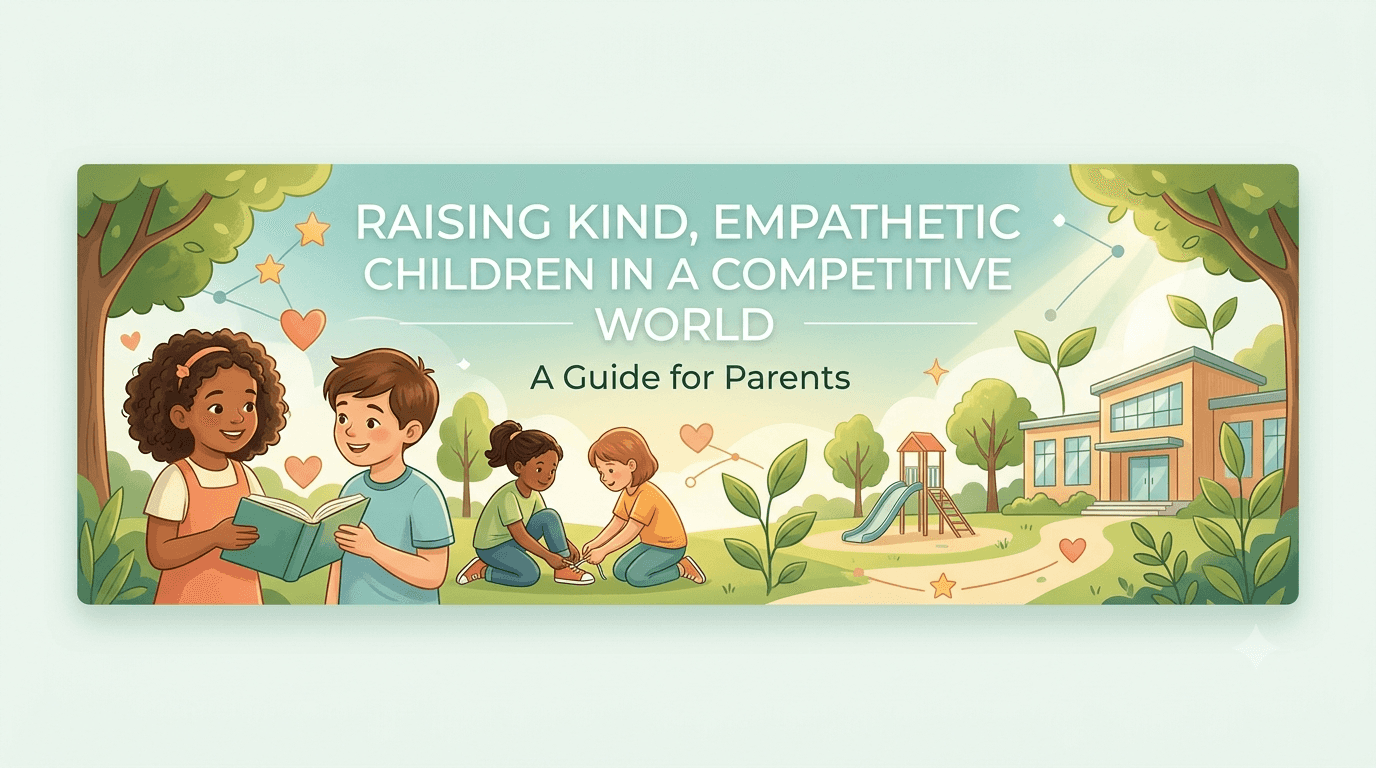

Imagine your child comes home and tells you that a classmate is struggling with a difficult question. Instead of laughing or ignoring them, your child offers help. It may seem like a small moment, but it reflects something important: kindness.
In a world where children are often compared through marks, competitions, and achievements, parents have another important responsibility—to help them grow into caring and empathetic human beings. Academic success matters, but so does the ability to understand others, respect differences, and stand by someone who needs support.
For parents exploring the Best School in Gurugram, it is worth looking beyond classrooms and results. A child's education should also help develop character, emotional awareness, and the confidence to treat others with kindness.
Also Read| Cultivating a Passion for Learning | The KIIT World School Approach
Why Kindness and Empathy Matter in Childhood
Kindness means treating others with care and respect. Empathy goes a step further. It means trying to understand what another person may be feeling or experiencing.
For example, a child may notice that a friend is sitting alone during lunch. Kindness is inviting the friend to join. Empathy is understanding that the friend may be feeling lonely or upset.
These qualities help children build healthy relationships and respond thoughtfully to everyday situations. They also matter in a competitive environment where children may experience disappointment, comparison, and pressure.
A child who understands empathy may learn to:
- Celebrate a friend's success without feeling the need to compete every time.
- Offer help when someone is struggling.
- Respect different opinions, backgrounds and abilities.
- Apologise after making a mistake.
- Express feelings without hurting others.
Kindness does not mean avoiding competition or always putting others first. It means learning to succeed without losing respect for the people around us.
5 Simple Ways Parents Can Raise Kind and Empathetic Children

1. Teach Empathy Through Everyday Conversations
Children learn empathy when parents help them notice and understand emotions.
Instead of saying, "Don't be rude to your sister," try asking, "How do you think your sister felt when you said that?"
This encourages the child to think about another person's experience rather than simply following an instruction.
Parents can also discuss situations from storybooks, cartoons, or daily life:
- Why do you think the character was sad?
- What could the friend have done differently?
- How would you feel if someone treated you that way?
These conversations help children develop emotional awareness in a simple and age-appropriate way.
2. Show Kindness Through Your Own Actions
Children observe adults more closely than we sometimes realise. The way parents speak to family members, domestic workers, teachers,s and strangers becomes an example for them.
If a parent speaks respectfully to someone who makes a mistake, the child learns that mistakes do not make people less deserving of respect.
Small actions can make a difference:
- Say thank you and please.
- Listen without interrupting.
- Help someone who needs assistance.
- Speak respectfully, even during disagreements.
- Acknowledge when you have made a mistake.
You do not need to be perfect. Saying, "I was upset, but I should not have spoken like that. I'm sorry," teaches children that accountability is part of kindness.
3. Help Children Handle Competition in a Healthy Way
Competition is a normal part of school life. Children may compete in exams, sports, debates, drawing competitions, and other activities. The concern begins when winning becomes more important than learning or treating others well.
Parents can help by focusing on effort, improvement, and sportsmanship.
Instead of asking only, "Did you win?" try asking:
- What did you learn?
- What was difficult?
- Did you help or encourage anyone?
- What would you like to improve next time?
Suppose your child loses a race. Rather than immediately comparing their timing with another child, acknowledge the disappointment and discuss what they can learn from the experience.
This approach helps children understand that another person's success does not take away from their own progress.
4. Encourage Sharing, Helping and Responsibility
Kindness grows through practice. Children need opportunities to care for others, not just instructions to be good.
At home, parents can involve children in simple responsibilities:
- Helping a younger sibling with a task.
- Sharing toys or books.
- Preparing a small surprise for a family member.
- Helping organise things after a family activity.
- Donating books or clothes that are no longer needed.
The goal is not to force children to give away everything they own. It is to help them understand that their actions can make someone else's day easier.
Parents should also respect a child's boundaries. Sharing and kindness should be encouraged, not used to make children feel guilty for having their own needs.
5. Teach Children to Respect Differences
Children meet people with different personalities, abilities, interests, and backgrounds. These differences are a natural part of life.
Parents can help children become more accepting by discussing differences without judgement.
For instance, if a child asks why a classmate learns differently or speaks differently, respond with patience. Explain that people do not all learn, communicate,e or behave in the same way.
Books, stories, and age-appropriate conversations can introduce children to different experiences. Parents can also encourage children to include others in games and group activities.
The message should be simple: Everyone deserves respect, even when they are different from us.
Also Read| Give Your Child a Global Network: KIIT's Global Partnership Programs.
How Schools Can Support Kindness and Empathy
Parents play the first and most important role in developing values, but schools also shape how children interact with others.
A supportive school environment gives children opportunities to practise kindness through classroom discussions, group activities, sports, creative projects and everyday interactions.
When children work together, they learn to listen, share responsibilities and manage disagreements. When teachers encourage respectful communication, students see that kindness is part of the learning environment.
Parents choosing a school can ask questions such as:
- How does the school encourage respectful behaviour?
- Are students given opportunities to work in teams?
- How are disagreements and bullying addressed?
- Does the school encourage participation beyond academics?
- Are children taught to respect different abilities and opinions?
These questions can help parents understand whether a school's values are reflected in everyday student experiences.
KIIT World School: Connecting Learning with Character
Parents exploring the Best School in Gurugram may also consider how schools support children's emotional and social development. KIIT World School (KWS), located on Sohna Road, Gurugram, describes holistic education as including psychological, social and emotional growth, communication skills, confidence and the ability to value relationships. Its official website also highlights initiatives such as the Wall of Kindness, which offers a relevant connection to conversations about caring for others.

The school's stated learning ethos includes being reflective, innovative, dynamic, and resilient. These qualities connect with the broader goal of helping children face challenges while developing respect and responsibility. Parents considering a Top School in Gurugram can explore these stated values and ask how they are reflected in classroom activities and student life.
Conclusion
Raising kind and empathetic children in a competitive world is not about keeping them away from challenges. It is about teaching them how to face those challenges without losing compassion.
A child can aim for excellent marks, work hard in sports, and dream of achieving great things while still helping a friend, respecting a teacher, and accepting differences.
As parents, focus on the small moments. Listen when your child talks about feelings. Appreciate thoughtful actions. Teach them to apologise, share, and treat others with respect.
Because success is not only about how far a child goes. It is also about the kind of person they become along the way.
For more information on KIIT World School and similar schools, check out this list of the best schools in Gurugram.
 as a preferred source on