







Have you ever thought about why it is essential to go to school? In today’s world, you can get all that you need at home at your fingertips. So why go to school and spend time and energy?
Schools offer far more than just academic knowledge; they serve as a vital training ground where students acquire the essential life skills needed to thrive in the real world. While classroom learning provides a strong educational foundation, the experiences gained through daily social interactions, extracurricular activities, and diverse peer environments are what truly shape a student's future.
By stepping beyond textbooks, young learners develop core traits like confidence, clear communication, and resilience. Ultimately, these holistic experiences transform students into well-rounded, empathetic, and globally aware citizens who are fully prepared to navigate a complex society.
So, in this article, we will understand how schools are helping kids to become aware not just in terms of studies but also skills, by taking an example of one of the schools in Faridabad, Manav Rachna International School, Sector 21C, Faridabad.
Also Read| How Toddlers Learn Through Play | Toddlers Curriculum at MRIS Sector 21C Faridabad
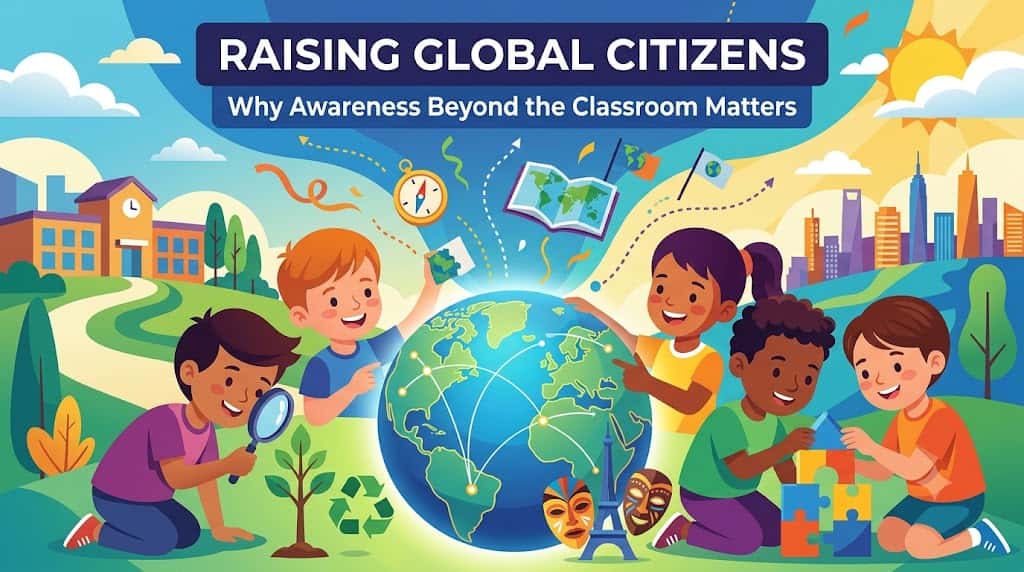
What Does It really mean to be a Global Citizen?
Global citizenship is less about geography and more about perspective. UNESCO describes global citizenship education through three connected areas: knowledge and critical thinking, social and emotional understanding, and responsible action. It encourages learners to understand global and local issues, respect differences, and participate responsibly in their communities.
This can sound like a big idea for a child, but children encounter these ideas every day. Consider a simple classroom discussion about food. A child may learn where rice grows, how farmers depend on rainfall, and why food should not be wasted. Suddenly, geography, science, economics, and responsibility are connected.
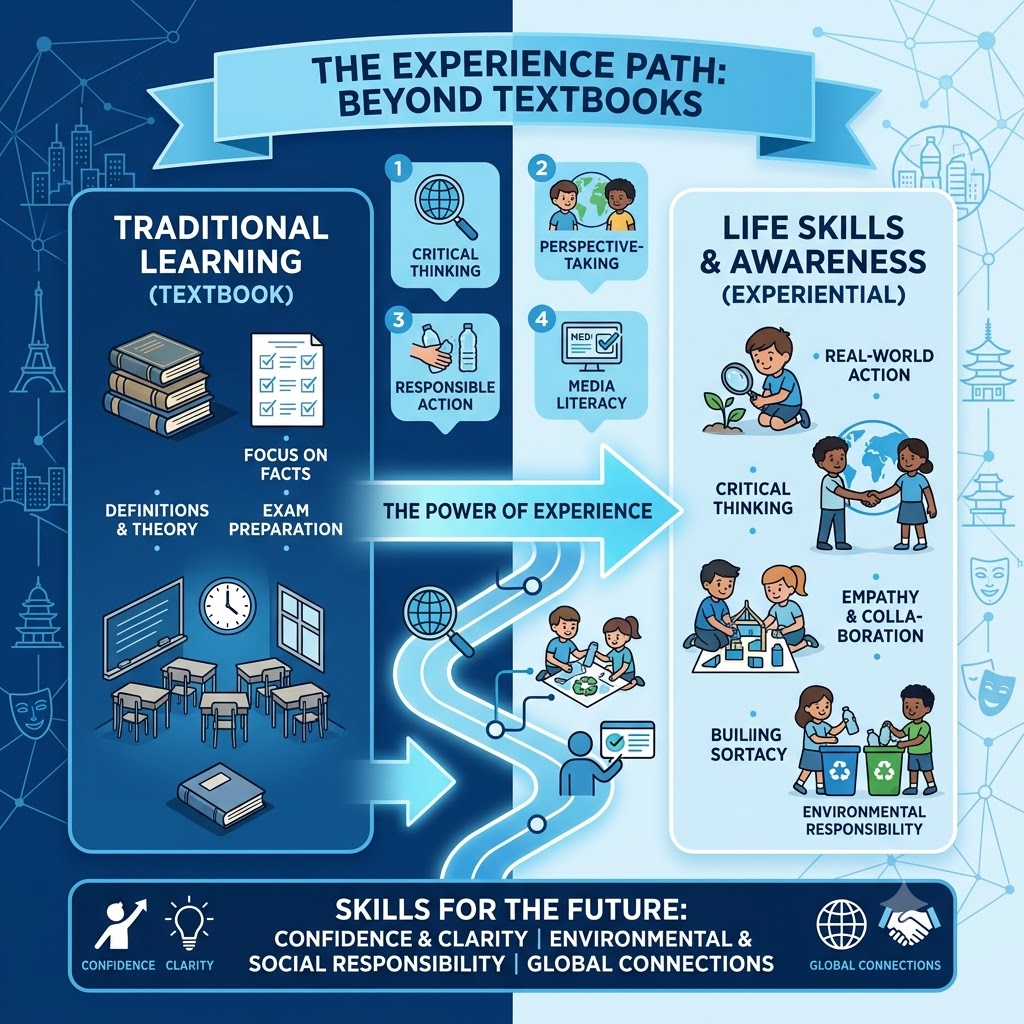
This connects with the idea of perspective-taking, an important part of social and emotional learning. Instead of immediately asking, “Who is right?”, children can first learn to ask, “Why might this person see it differently?”
|
Everyday situation |
Global awareness it can build |
|
Learning about another country's food |
Cultural understanding |
|
Discussing water wastage |
Environmental responsibility |
|
Hearing another opinion |
Perspective-taking |
|
Working in a mixed group |
Collaboration |
|
Checking whether an online claim is true |
Media literacy |
Why Awareness Beyond Textbooks Matters
A child can score well in a geography test and still have very little understanding of how people in different parts of the world live. This is why awareness cannot remain limited to chapters and examinations.
Think about a school project on plastic. A textbook can explain pollution, but a child who counts the plastic wrappers thrown away at home for a week is doing something different. The child is observing a real problem, collecting information and thinking about what could change.
The same approach works with social issues. Suppose students are discussing accessibility. Instead of simply defining the word, they could look around their school or neighbourhood and ask whether a person using a wheelchair could comfortably enter a building. The lesson becomes less about memorising a definition and more about noticing the world.
Parents can encourage the same habit at home through simple questions:
- “What do you think would happen if everyone wasted water like this?”
- “How might someone from another culture see this situation?”
- “How do we know that this information online is true?”
- “What could we do about this problem in our own neighbourhood?”
Also Read| Sparking an Early Love for Learning at MRIS Sector 21C, Faridabad
How MRIS Sector 21C Is Building This Awareness Early
For parents exploring the Best Schools in Faridabad, Manav Rachna International School, Sector 21C, Faridabad presents a learning approach that extends beyond textbooks. The school describes its curriculum as inquiry-led and experience-based, with interdisciplinary learning, experiential projects, technology integration, and skill development. Its learning areas include Future Skills and Sustainability, Visual Arts, Performing Arts, sports and well-being, CREST interdisciplinary learning, numeracy, and languages and literacy.
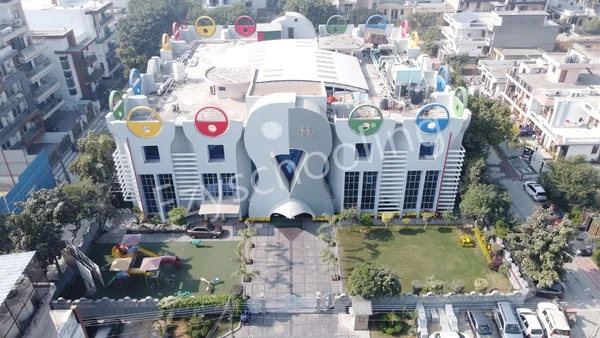
The school's Beyond Academics approach also includes expeditions and exchange, community services, student leadership, future skills and sustainability, and co-scholastic activities. Its student clans are designed around qualities such as integrity, leadership, respect, sportsmanship and character. These opportunities give children ways to practise collaboration and responsibility rather than simply reading about these qualities.
The school also highlights community outreach, cultural experiences, student-led leadership and a multilingual approach that supports communication and cultural understanding. Together, these experiences create opportunities for children to see learning as something connected to people, communities and the wider world.
The classroom remains an important starting point, but the world outside it provides countless lessons. When schools and families make space for those lessons, children can grow not only into knowledgeable students, but also into thoughtful members of a connected world.
For more information on this and similar other schools, check out this list of the best schools in Faridabad.
 as a preferred source on