







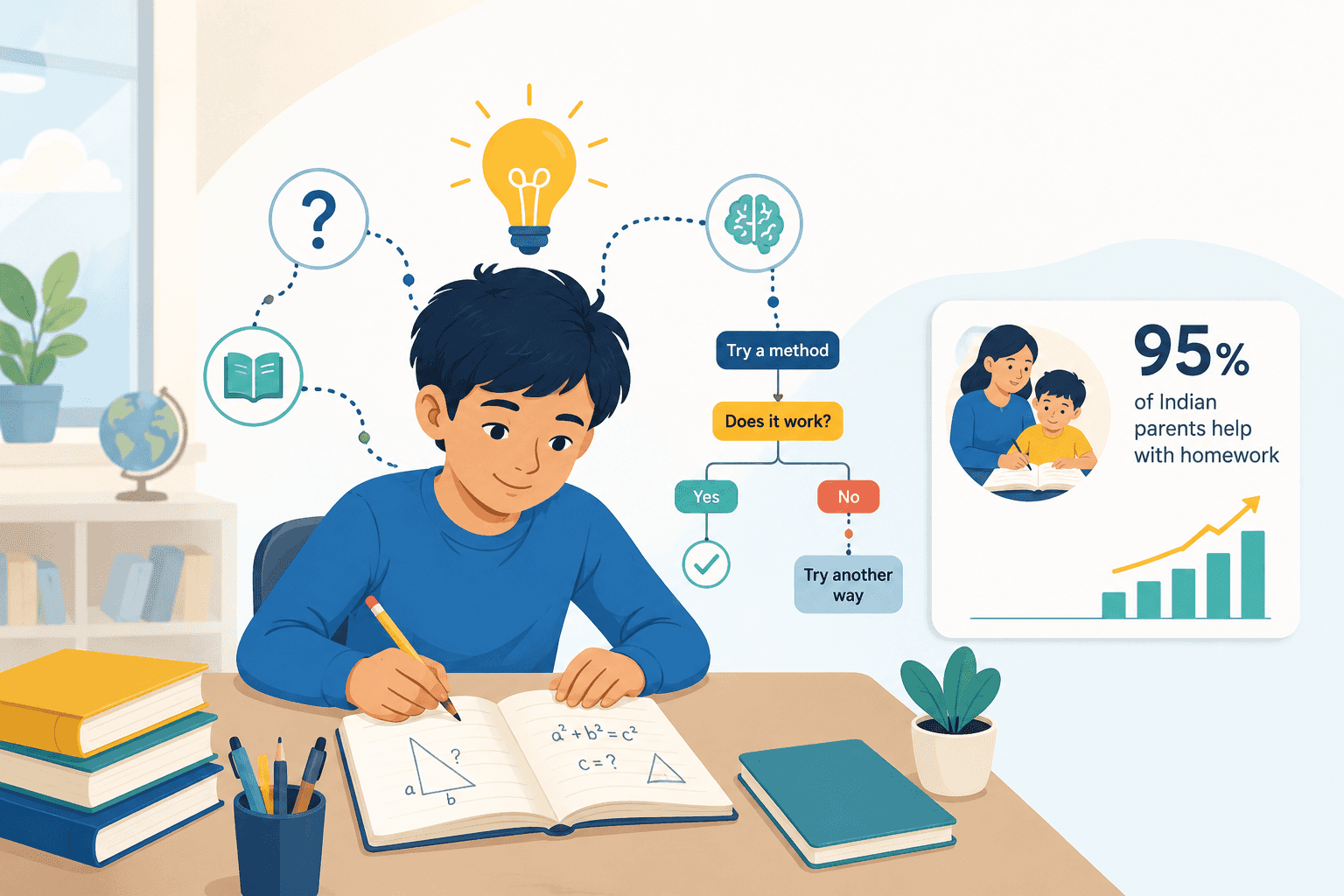

Have you ever watched your child sit down to study alone? How often do they open their books and start studying on their own? How often do they wait to be told what exactly is to be done?
A global survey by the Varkey Foundation found that almost 95% of Indian parents help their kids with homework, the highest percentage amongst the 29 countries that the survey covered. At the same time, UNESCO estimates that millions of children complete years of schooling without developing foundational learning skills. These trends suggest that helping children learn how to think is becoming just as important as teaching them what to learn.
Schools like The Premia Academy, one of the best schools in Hyderabad, are responding to this change by creating classrooms where students participate more actively in the learning process instead of simply receiving information. They build small moments of decision-making and reflection into ordinary classroom routines rather than treating it as a one-off project.
But how far is such learner-centric learning achievable? How does it even work? Read on to find out!
Also Read | Nurturing Young Learners through Student-led Learning
Why Many Children Become Dependent Learners
Let's be honest about homework time at home. Smart kids often freeze up the second they face a new problem. This helpless behaviour does not happen by accident or laziness but comes from well-meaning routines at home and in standard classrooms.
We see this dependency play out in everyday situations that most parents recognise instantly:
- Kids sit waiting for the teacher to give every answer instead of guessing.
- They keep asking, "Will this come in the exam?" before reading a page.
- They rely on needing reminders for homework every single evening without fail.
- You see them giving up after one mistake because a math problem looks messy.
- They stick to memorising instead of understanding what the words actually mean.
Most of these children are simply responding, quite sensibly, to a system that rewards speed and correctness over the messier business of struggling through something. When every wrong turn gets corrected immediately, a child never really gets the chance to notice they have taken one.
What Independent Learning Actually Looks Like
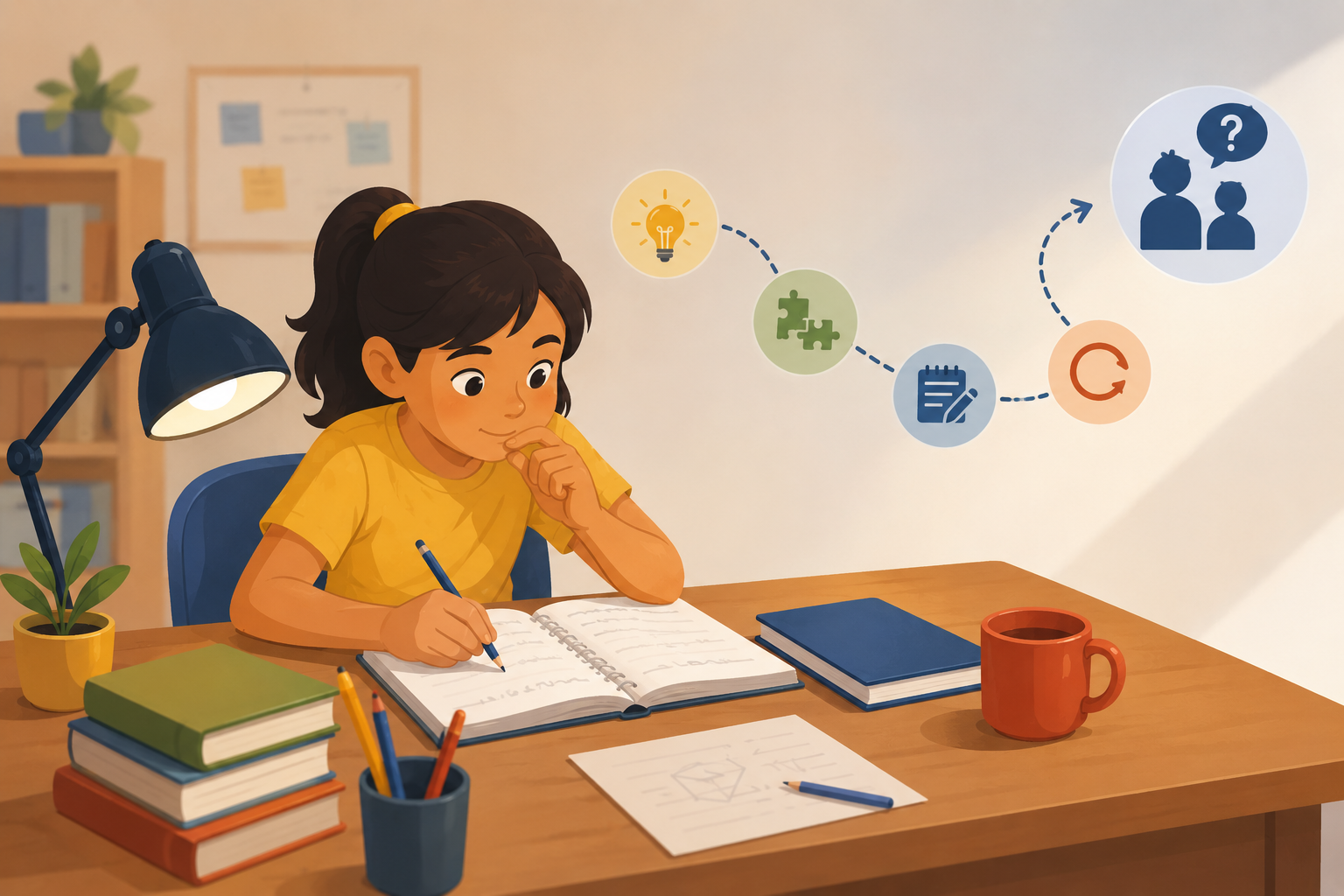
Independent learning usually still involves plenty of adult presence in the room. What changes is the order of things: a child attempts something first, gets stuck, and only then brings the problem to an adult, rather than bringing the problem over before trying anything at all.
Consider a 10-year-old stuck on a maths problem: she rereads the question instead of calling out to her mother right away, tries the method taught the day before, gets it wrong, and tries a different one before finally asking for help. She still ends up asking for help most of the time, but only after attempting the problem her own way, and that difference matters more than it looks.
That pause, between "I am stuck" and "I need help," is where independent learning actually lives.
5 Habits Learner-centric Schools Develop
Schools that take this seriously tend to build the same handful of habits, in different forms, across every grade.
- Curiosity: Curiosity is the real driver of all human growth. When teachers let children ask hard questions, learning feels personal. Students start reading about topics because they care, not just for grades.
- Ownership: Students should get ownership of their work. They need to get to choose parts of a project or topic themselves, so the work feels like theirs rather than something handed down.
- Reflection: Regular, built-in moments where a child looks back and asks what worked, what didn't, and why. Good schools should also teach children to view feedback as helpful advice.
- Decision-making: Small, low-stakes choices, like which problem to attempt first, are offered often enough that bigger decisions later feel less frightening. This responsibility teaches them how to manage hours and honor deadlines.
- Resilience: In a supportive classroom, mistakes are treated as normal learning steps. When children see errors as useful clues, they build emotional strength. They learn resilience and push through hard tasks without wanting to cry or quit.
Check Out | How to Choose the Best CBSE School for Holistic Education
The Premia Academy: Pioneering Self-Directed Learning in Hyderabad
The Premia Academy opened in Attapur, Hyderabad, in 2020, and today offers both the CBSE and Cambridge IGCSE curricula on a single campus. The school’s vision centres on what it calls the RAISE framework, an acronym for Resilience, Agility, Innovation, Social Responsibility, and Empathy, the values it hopes to instil in what it calls its "Premia Pride," its community of learners from kindergarten through Grade 12.
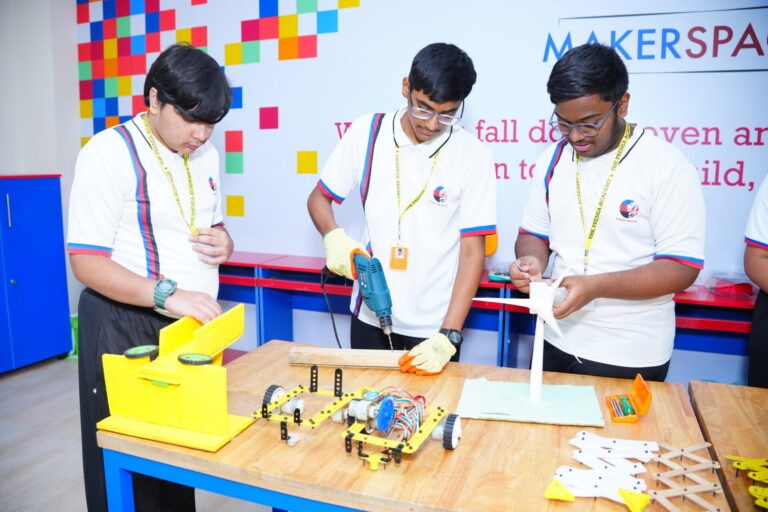
The Premia Academy has a strong stance on learner-centric education, handing students real responsibility, rather than simply discussing the idea in theory. Its Student Voice and Initiative programme includes an elected student council and a four-house system, alongside theme-based "ministries" covering literary, cultural, eco-science, and civic responsibility work that students largely run themselves.
One of the best Cambridge schools in Hyderabad, Premia uses a unique three-part teaching model to keep lessons practical. This setup blends communication skills, group project work, and personal subject exploration. A signature programme called Swadhyay adds another layer to this, built around guided self-reflection that asks students to regularly examine their own thinking and choices, not only their marks.
This sits inside a wider framework the school calls Quotients for Life, covering emotional, social, creative, and adversity-related intelligence alongside academic performance, labelled IQ, EQ, SQ, CQ, and AQ. In practice, this shows up as everyday programmes rather than abstract goals: a financial literacy module for younger grades, and a design-thinking and entrepreneurship track for older students that includes a School Enterprise Challenge where they run actual small businesses.
In the end, The Premia Academy functions as a launchpad for life. It is far more than just a place to prepare for exams. Students learn how to research, innovate, and handle real-world challenges with grace. They build independent study habits that stay with them through college years. By respecting student ideas, the school creates a truly engaging learning space. Children leave campus feeling ready to handle a fast-changing world on their own.
For more information on this and similar other schools, check out this list of the best schools in Hyderabad.
 as a preferred source on